Published Jul 04, 2026
AI-Powered Backtesting for Traders: Crafting Robust Strategies with Data and No Code
Algorithmic trading now commands a substantial share of global markets, accounting for between 60% and 73% of overall U.S. equity trading volume, a dramatic increase from approximately 20% in 2005. This shift underscores a critical reality: successful trading increasingly demands systematic, data-driven approaches, not speculative guesswork. For serious traders, the ability to rigorously test and validate strategies against historical data is paramount. However, traditional backtesting has often been a bottleneck, requiring extensive coding skills or specialized quantitative teams. The advent of AI-powered backtesting is democratizing this institutional capability, enabling traders to transform their ideas into robust, automated systems without writing a single line of code.
Key Takeaways
AI-powered backtesting platforms enable non-coders to design and validate complex trading strategies using natural language, significantly expanding access to systematic trading.
Traders using specialized AI tools report making faster and more precise decisions in 92% of cases, while AI-powered technical analysis can cut manual chart review time by as much as 70%.
Advanced AI backtesting engines move beyond simple indicators, capable of analyzing over 10,000+ stocks at once against up to 50 years of historical data to prevent common pitfalls like curve-fitting and lookahead bias.
These platforms integrate sophisticated machine learning models like Random Forests and Neural Networks, allowing for iterative strategy optimization and the identification of complex, non-obvious market patterns.
The ability to test strategies with out-of-sample data and through Monte Carlo simulations provides institutional-grade robustness, moving traders beyond superficial "looks good" validation to true statistical confidence.
The Evolution of Backtesting: From Manual Scripts to AI Intelligence
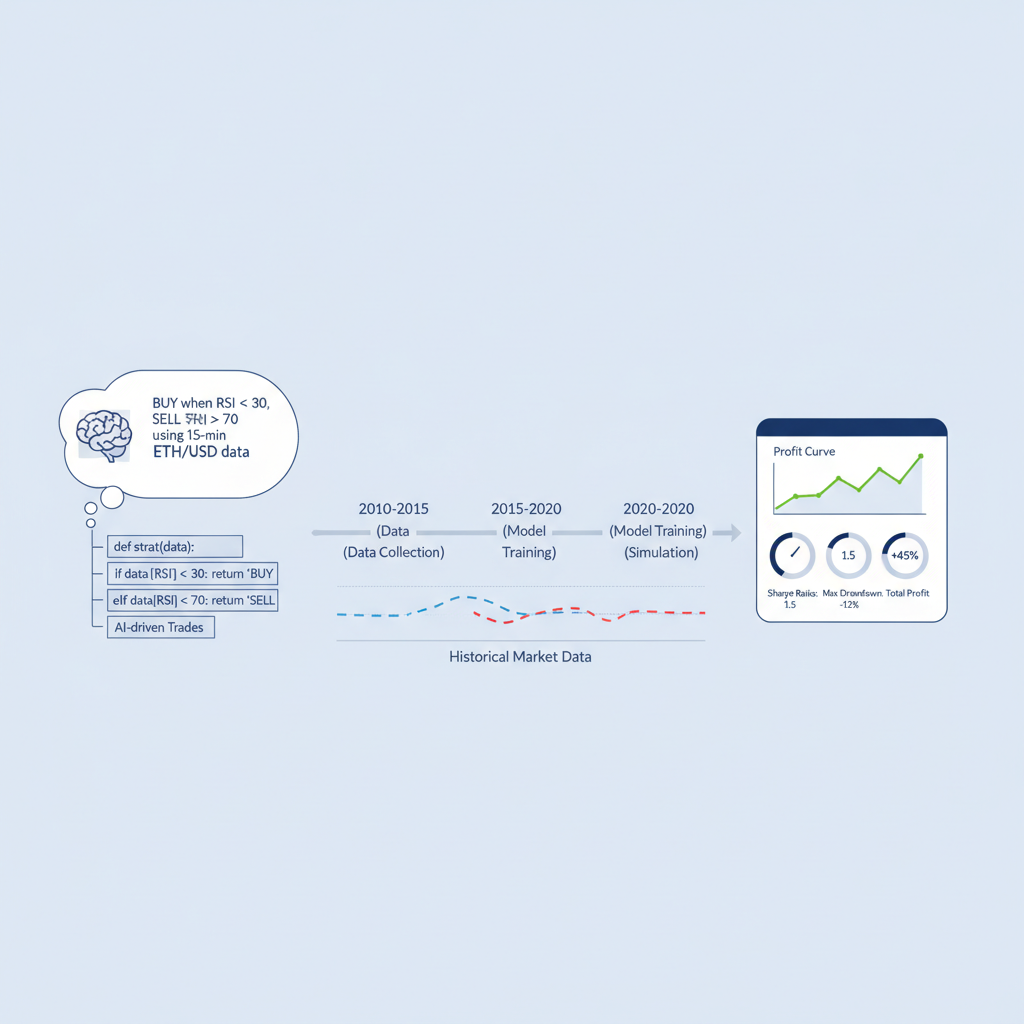
Historically, validating a trading strategy involved either tedious manual chart analysis or complex programming in languages like Python or R. This created a significant barrier for many skilled traders whose edge lay in market intuition and conceptual understanding, rather than coding proficiency. The process was often slow, prone to human error, and limited in its scope of data analysis. However, a seismic shift is underway, with artificial intelligence fundamentally reshaping how strategies are conceived, tested, and refined.
AI-powered technical analysis can cut manual chart review time by as much as 70%, allowing traders to dedicate more time to strategy refinement rather than data gathering.
The core challenge with traditional backtesting stems from its resource intensity. Developing a robust backtesting engine requires "years of engineering ingenuity" to handle real-time data, manage historical events like delistings, and ensure accuracy free from lookahead bias NexusTrade. AI now automates much of this, translating plain-English trading logic into executable backtests and performance reports OpenAlgo. This capability democratizes access to sophisticated validation tools, allowing non-technical traders to leverage powerful analytical frameworks previously reserved for quantitative analysts.
The practical insight here is profound: AI-powered backtesting liberates traders from the dual burdens of manual data processing and complex coding. It allows them to focus on what truly matters: developing and refining their trading ideas, armed with expert-level feedback that feels like it's coming from a seasoned quant TradrLab. This shift makes advanced strategy validation accessible, turning conceptual edges into rigorously tested, actionable systems.
AI-Powered Strategy Generation: Crafting Robust Systems Without Code
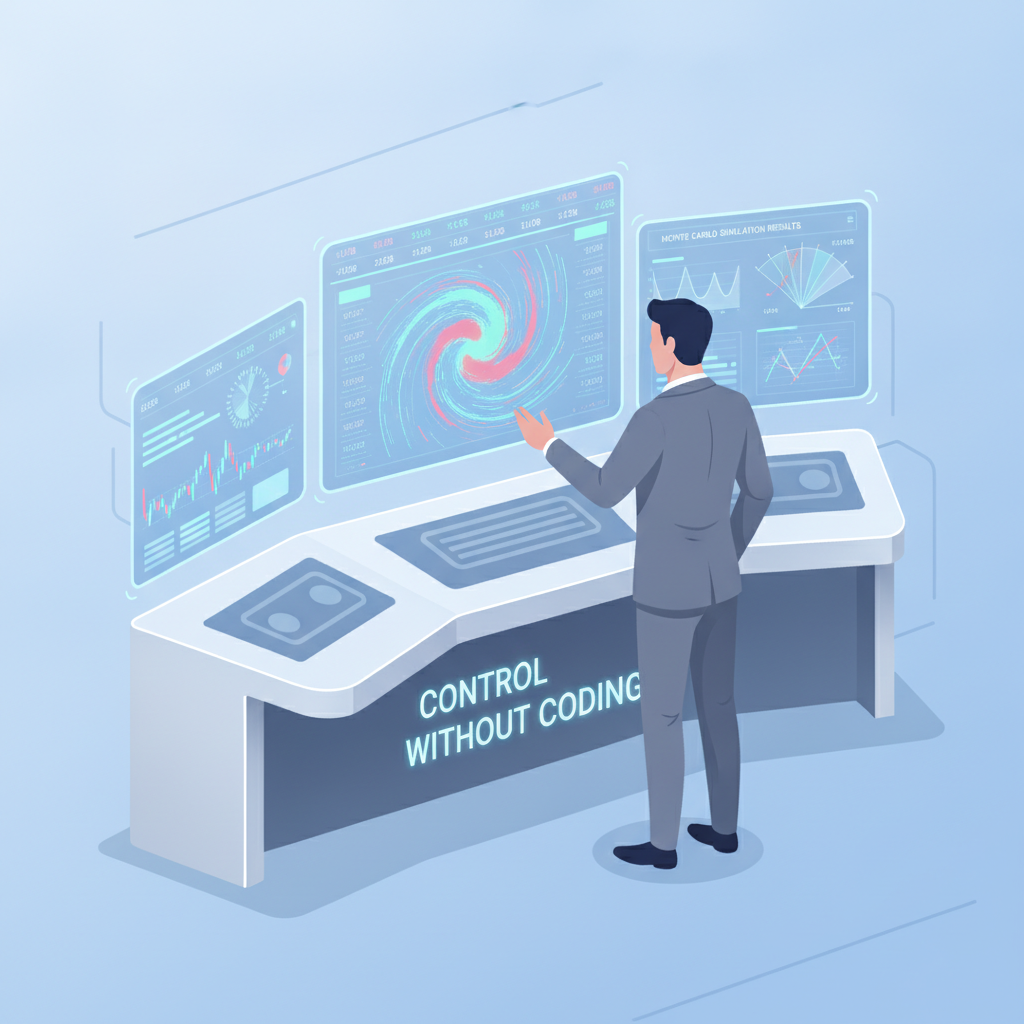
One of the most transformative aspects of AI in backtesting is its ability to bridge the gap between human intuition and algorithmic execution. Many traders have brilliant ideas for entries, exits, and risk management, but lack the technical skills to translate these into code. AI-powered platforms overcome this by enabling natural language input, effectively turning plain English descriptions into complex, executable trading strategies.
92% of traders using specialized AI tools report making faster and more precise decisions, directly attributable to the systematic approach and automated validation offered by these platforms.
These sophisticated AI engines understand how good strategies are built. They can process natural trading language to define intricate order management logic, including specific entry conditions, exit triggers, and trade management rules TradrLab. For instance, a trader can simply explain "buy when the 20-period EMA crosses above the 50-period EMA and RSI is below 30, then sell if profit reaches 2% or loss exceeds 1%" and the AI will construct the underlying logic OpenAlgo. This drastically reduces the development cycle and eliminates coding errors, allowing traders to focus on the strategic elements.
Beyond simple translation, AI provides dynamic, real-time responses and scenario-driven suggestions, offering "feedback that feels like it’s coming from a seasoned quant" TradrLab. It spots weaknesses in a proposed strategy, asks pertinent questions, and explains the true drivers of performance. This iterative feedback loop is crucial for refining thinking and making smarter trading decisions. Even for those familiar with Python, AI assistants can generate the necessary code for backtesting, guiding users through data retrieval, analysis, and performance metric calculation, such as Sharpe Ratio and Standard Deviation YouTube: Backtesting a Trading Strategy in Python With AI Generated Code.
The actionable takeaway is that traders no longer need to compromise between complex strategy ideas and the ability to implement them. AI empowers them to build and refine sophisticated algorithmic strategies solely through natural language and expert guidance, accelerating the journey from concept to validated system.
Beyond Basic Metrics: The Depth of AI-Driven Validation
True strategy robustness goes far beyond a single positive backtest. Many retail backtesting tools provide superficial results that can mislead traders into believing a strategy is viable when it is, in fact, curve-fitted to past data or suffers from lookahead bias. AI-powered backtesting platforms are designed to overcome these critical limitations by offering institutional-grade validation capabilities.
Advanced AI backtesting engines can launch a dozen backtests simultaneously across different time periods, filtering through over 10,000+ stocks at once based on parameters like momentum, RSI, volatility, and cash flow.
One key differentiator is the ability to backtest against vast quantities of historical data. Platforms can validate strategies using "up to 50 years of historical data," ensuring that a strategy's performance isn't just a fluke of a recent bull market For Traders. Furthermore, sophisticated engines conduct "iterative backtesting," allowing for granular adjustments of variables like margin size, instrument choice, and data resolution. This process helps traders "zero in on settings that reduce drawdowns and boost profit potential" For Traders.
Crucially, AI-powered backtesting incorporates advanced techniques to ensure true robustness:
Out-of-Sample Backtesting
This involves testing a strategy on data it has never "seen" before, after it has been optimized on an in-sample dataset. This helps validate whether the strategy's performance is genuinely predictive or merely optimized for past market conditions. Forward testing in simulated environments with out-of-sample data is essential for "reducing the risks of curve-fitting" For Traders.
Monte Carlo Simulation
Instead of a single historical run, Monte Carlo simulations generate thousands of hypothetical market paths based on historical volatility and return distributions. This provides a statistical distribution of potential strategy outcomes, offering a clearer picture of its probability of success and worst-case scenarios, rather than just a single optimistic backtest.
Heatmaps and Variance Explorer
Tools like the "Variance Explorer" run backtests across multiple symbols and timeframes, presenting results in visual heatmaps that "highlight the best conditions for your strategy" For Traders. This helps traders understand where their strategy performs optimally and where it might struggle, ensuring a more adaptive approach.
The actionable takeaway for traders is to seek out platforms that offer these deep validation features. Moving beyond basic return metrics to comprehensive robustness testing—including out-of-sample analysis, Monte Carlo simulations, and multi-asset filtering—is essential for building truly reliable automated strategies that can withstand varying market conditions. This level of rigor is what differentiates professional-grade systematic trading from speculative ventures.
Advanced AI Techniques for Predictive Power and Optimization
The true power of AI in backtesting extends beyond mere automation; it lies in its capacity to leverage sophisticated machine learning models for pattern recognition, prediction, and iterative optimization. These models can analyze "vast amounts of data and identify complex patterns that traditional methods might miss" PyQuant News.
Machine Learning Models for Enhanced Strategy Design:
Random Forests
An ensemble learning method, Random Forests combine multiple decision tree models. Each tree is trained on a random subset of data and features, and their collective predictions (by averaging or majority vote) provide a more robust and accurate output. This helps in identifying key drivers of market movement and filtering out noise Medium: Machine Learning Backtesting.
Neural Networks
Inspired by the human brain, neural networks consist of interconnected nodes that process and transmit information through layers. They excel at identifying complex, non-linear relationships within data, which is critical for forecasting market trends or making trading decisions based on multivariate inputs. These models can uncover hidden correlations that simple technical indicators might overlook Medium: Machine Learning Backtesting.
Gradient Boosting Machines (GBMs)
GBMs are powerful ensemble methods that combine predictions from multiple "weak learners" (typically decision trees) sequentially, with each new model correcting the errors of the previous ones. This iterative refinement allows GBMs to achieve high accuracy in tasks like regression and classification, making them excellent for predicting price movements or classifying market regimes Medium: Machine Learning Backtesting.
Beyond utilizing these models, AI-powered backtesting platforms enable "strategy optimization" by allowing traders to automatically test variations of parameters to find the most profitable or risk-averse settings TradrLab. This goes beyond manual tweaking, using computational power to explore a vast parameter space and identify optimal configurations that maximize returns while minimizing drawdowns.
The actionable insight for traders is to embrace platforms that incorporate these advanced AI and machine learning capabilities. Such tools enable strategies that are not merely reactive to simple indicators but are intelligently adaptive, learn from historical data, and continuously optimize for better performance, pushing the boundaries of what's possible in systematic trading.
How Horizon Addresses This
For serious traders who think systematically but cannot code, Horizon provides the institutional-grade AI trading platform to transform your ideas into automated, disciplined execution. Our platform directly addresses the challenges of traditional backtesting and the complexities of AI strategy development by offering a seamless, no-code environment for robust validation.
Horizon's AI strategy generation empowers you to articulate your trading edge in natural language, automatically translating your concepts into executable algorithms. Our institutional-grade backtesting engine ensures your strategies are genuinely robust, not merely curve-fitted. You can test against extensive historical market data with detailed performance metrics, including Sharpe ratio, maximum drawdown, and out-of-sample backtesting. The platform's advanced features, such as Monte Carlo simulations and heatmaps, provide deep insights into your strategy's resilience across various market conditions and asset classes—be it stocks, forex, crypto, futures, or options.
By leveraging Horizon, traders gain access to the same rigorous analytical tools used by professional quants, without the need for a dedicated coding team. This allows you to refine your thinking, optimize strategy parameters, and ensure that your automated systems are built on a foundation of data-backed confidence before deploying them for live trading.
Conclusion
The era of AI-powered backtesting marks a pivotal moment for traders worldwide. It has shattered the traditional barriers of entry to systematic trading, moving beyond the need for extensive coding expertise to a realm where conceptual innovation and data-driven validation are paramount. By leveraging sophisticated AI, traders can now generate, test, and optimize complex strategies with a level of rigor previously exclusive to institutional players. This means less guesswork, more precision, and the confidence that comes from strategies validated against decades of market data and through advanced simulations. For any trader ready to elevate their approach from subjective interpretation to disciplined, automated execution, exploring the capabilities of AI-powered backtesting is not just an advantage—it's a necessity. Unlock your trading edge and build truly robust systems by exploring how platforms like horizon.trade are redefining the landscape of algorithmic trading.
Sources
TradrLab: Features | AI Trading Strategy Backtesting Tool Features
OpenAlgo (YouTube): Backtest Any Trading Idea Using AI Agentic Skills - No Coding Needed
For Traders: AI Trading Tools That Actually Work (2025 Edition)
YouTube: Backtesting a Trading Strategy in Python With AI Generated Code
NexusTrade: I analyzed 140000 backtests, then built an AI algotrading ...
PyQuant News: Guide to Quantitative Trading Strategies and Backtesting
Medium: Beginner’s Guide to Algorithmic Trading in R (Part 5/6) — Machine Learning Backtesting