Published Jul 04, 2026
Best Brokers for Automated Trading Solutions: A Deep Dive into Essential Features and Performance

The landscape of modern finance is increasingly shaped by automation. Once the exclusive domain of institutional desks, algorithmic trading strategies now account for a staggering 60-73% of US equity trading volume, a significant leap from just 20% in 2005, according to a report by Goat Funded Trader. This seismic shift underscores a critical reality for professional traders: your choice of broker is no longer just about commissions or basic market access. It is about a complex ecosystem of technological capabilities, execution quality, and robust support systems that directly impact the viability and profitability of your automated strategies.
Key Takeaways
Automated trading accounts for 60-73% of US equity volume, highlighting the necessity of brokers optimized for algorithmic execution.
Top brokers like IC Markets and BlackBull Markets offer execution speeds under 75 milliseconds and spreads as low as 0.0 pips on ECN Prime accounts, critical for high-frequency strategies.
Platforms such as MetaTrader 4/5 and cTrader, supported by leading brokers like AvaTrade and Pepperstone, offer client-side and server-side automation options, with cTrader running cBots 24/7 via cTrader Cloud without requiring a continuous PC connection.
Institutional-grade API access from brokers like Interactive Brokers and Tradier provides advanced customization and integration opportunities for sophisticated algorithmic developers.
Broker reputation and reliability, evidenced by high Trustpilot scores (e.g., FP Markets at 4.9 stars from 9,422 reviews), are paramount for ensuring consistent, secure automated trade execution.
The Evolving Landscape of Automated Trading and Broker Demands
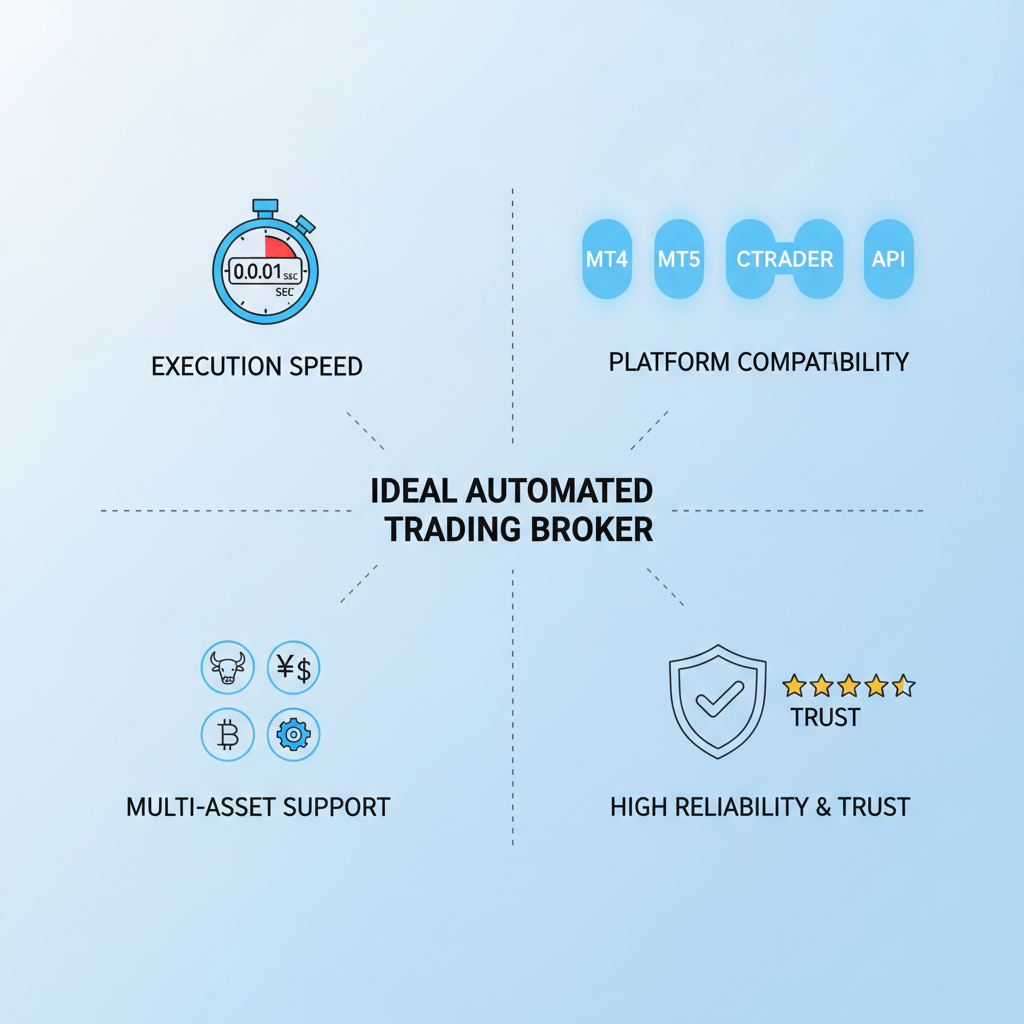
The shift towards automated trading isn't merely a trend; it's a fundamental restructuring of market operations. As algorithms execute trades with precision and speed far beyond human capacity, the demands placed on brokerage infrastructure have intensified. Traders require brokers that can offer not just competitive pricing but also a technological backbone designed for the rigor of constant, automated interaction with the market.
For instance, execution speed is paramount. A study highlighted that BlackBull Markets, a strong contender in automated forex, boasts execution speeds of under 75 milliseconds, combined with competitive spreads starting from 0.8 pips (ECN Standard) and 0.0 pips (ECN Prime) on various instruments (BestBrokers.com). Similarly, IC Markets is lauded for its "ultra-fast execution on MT4/MT5 and cTrader," ensuring minimal slippage for continuous algorithmic operations (DayTrading.com). This micro-second advantage can significantly impact profitability, especially for high-frequency strategies.
Execution speeds under 75 milliseconds and spreads as low as 0.0 pips are becoming standard requirements for professional traders seeking to optimize their automated strategies.
Beyond speed, the quality of fills and the reliability of order routing are non-negotiable. Brokers that consistently deliver "crisp fills and stable performance" in automation tests, such as RoboForex and XM, instill confidence in traders deploying capital through algorithms (DayTrading.com). This reliability extends to how well backtested strategies translate to live execution, a critical factor for systematic traders. AvaTrade, for example, demonstrated that its MT5 backtests "lined up well with live execution," a crucial validation for strategy robustness (DayTrading.com).
The practical insight here is that brokers must evolve from mere intermediaries to robust technology partners. Their infrastructure must support the high-volume, low-latency requirements of algorithmic systems, ensuring that a trader's well-researched edge isn't eroded by poor execution quality or system downtime. Traders should prioritize brokers with a proven track record of seamless automated performance, confirmed through independent testing and user testimonials.
Essential Technical Capabilities for Seamless Automation
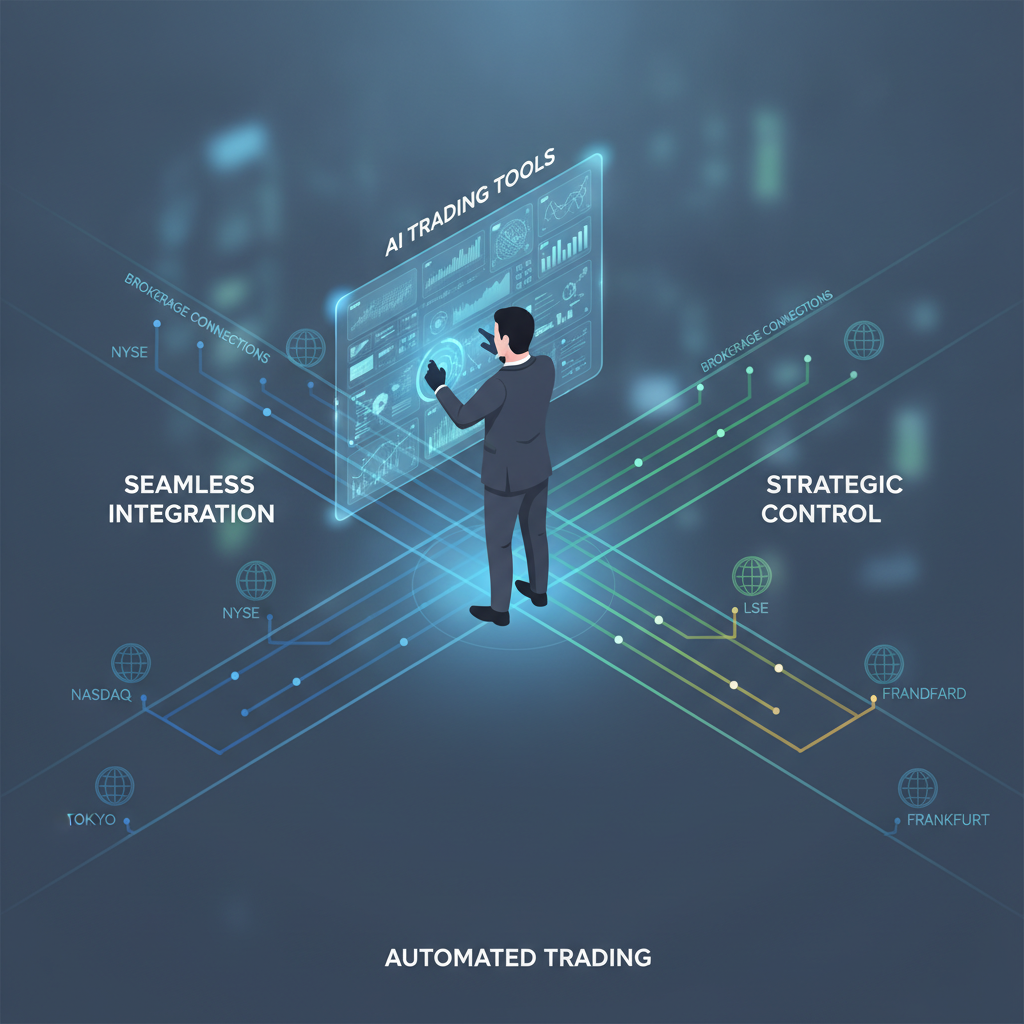
The backbone of any successful automated trading solution lies in the technical capabilities offered by the broker. This includes platform compatibility, advanced API access, robust server infrastructure, and reliable VPS hosting options. Without these, even the most sophisticated strategies can falter.
Platform Compatibility and Execution Environment
MetaTrader 4 (MT4) and MetaTrader 5 (MT5) remain industry standards, with widespread support from brokers globally. Platforms like AvaTrade, RoboForex, XM, IC Markets, and Pepperstone consistently support MT4/MT5, enabling traders to deploy Expert Advisors (EAs) for automated execution across various asset classes like FX, indices, and commodities (DayTrading.com). While MT4/MT5 offer extensive functionality, a key consideration is that "MetaTrader runs your trading algorithms directly on your computer," requiring the terminal to stay on 24/7 or the use of a Virtual Private Server (VPS) (NewTrading.io).
cTrader emerges as a strong alternative, offering server-side execution. With cTrader Automate, bots (cBots) built in C# "run 24/7 via cTrader Cloud, no VPS needed," meaning a trader's PC doesn't have to remain powered on (NewTrading.io). This cloud-based execution enhances reliability and reduces operational overhead, making it an attractive option for traders seeking true set-and-forget automation. IC Markets and Pepperstone are notable brokers providing cTrader integration, further underscoring its relevance for algorithmic traders (DayTrading.com).
cTrader's server-side execution via cTrader Cloud allows automated strategies to run 24/7 without the need for a dedicated VPS or keeping a local PC online, a key advantage over client-side platforms like MetaTrader.
API Access and Custom Strategy Development
For professional traders and developers who require ultimate flexibility, robust Application Programming Interface (API) access is indispensable. Interactive Brokers (IBKR) stands out in this regard, with its Trader Workstation (TWS) offering users the ability to apply "built-in algorithms or custom logic via APIs for order routing and execution" (Goat Funded Trader). This allows for highly customized strategies incorporating specific parameters for timing, volume distribution, and risk controls, supporting multiple programming languages including Java, C++, and Python (Investing.com). TradersPost, for example, specializes in providing "enterprise-grade integrations" with traditional brokers like Interactive Brokers, TradeStation, Alpaca, and NinjaTrader, simplifying the complex API connections for automated signals and orders (TradersPost).
The ability to integrate custom algorithms directly with a broker's execution engine via API empowers traders to implement unique, proprietary strategies that would be impossible with off-the-shelf platforms. This level of customization is crucial for professional traders aiming to develop a distinct market edge.
Backtesting Reliability and Data Accuracy
The efficacy of an automated strategy hinges on the reliability of its backtesting. Brokers and platforms that provide high-fidelity historical data and robust backtesting environments are crucial. While MetaTrader's backtesting reliability is rated around 75% in some assessments, cTrader fares better at 80%, and platforms like QuantConnect achieve up to 95% reliability, according to NewTrading.io. This variation highlights the importance of scrutinizing the backtesting engine's accuracy and the quality of historical data provided. Brokers that ensure "backtests matched live behaviour closely" (e.g., XM) provide a stronger foundation for confidence in strategy deployment (DayTrading.com).
A practical takeaway is to test strategies extensively on broker platforms with transparent backtesting methodologies and to cross-reference results where possible. The quality of a broker's historical data directly impacts the validity of any strategy developed, making it a critical, though often overlooked, technical capability.
Market Access, Asset Diversity, and Cost Efficiency
Beyond the technical mechanics of execution, the breadth of market access, the diversity of tradable assets, and the overall cost structure are pivotal considerations for automated traders. A broker that limits asset classes or imposes high trading costs can severely restrict strategy development and profitability.
Multi-Asset Support and Global Market Access
Professional algorithmic traders often seek opportunities across various financial markets to diversify risk and capitalize on different market dynamics. Brokers offering multi-asset support across stocks, forex, crypto, futures, and options provide a significant advantage. Interactive Brokers, for example, offers access to an "extensive array of global exchanges and sophisticated algorithmic capabilities," including stocks, options, futures, and forex (Goat Funded Trader) (Investing.com).
Each asset class presents unique opportunities for automation:
Stock Markets (Equities): With "massive volume, diverse instruments, and extensive historical data," equities are ideal for strategies like momentum, mean reversion, and pairs trading. Platforms like Interactive Brokers, TradeStation, and MetaTrader connect to major exchanges such as NYSE and NASDAQ (Goat Funded Trader).
Futures Markets: Futures contracts provide leveraged exposure to commodities, indices, and currencies. Platforms like NinjaTrader, TradeStation, and Interactive Brokers support major exchanges like CME, offering tick-level data for precise execution of contracts such as E-mini S&P 500 (Goat Funded Trader).
Forex Markets: The 24/5 nature of forex trading is highly conducive to automation. Brokers like BlackBull Markets and Global Prime offer competitive conditions with execution speeds under 75 milliseconds, making them well-suited for automated forex strategies (BestBrokers.com).
Cryptocurrency Markets: Platforms like Kraken and Coinbase Pro provide advanced trading tools, charts, and API access for automated trading of digital assets, alongside strong security measures (Investing.com).
A broker's ability to seamlessly integrate diverse asset classes into a unified automated trading environment simplifies portfolio management and expands strategic possibilities for professional traders.
Cost Efficiency: Spreads, Commissions, and Platform Fees
The cost structure of a broker can significantly impact the net profitability of high-frequency or high-volume automated strategies. Low spreads and competitive commissions are crucial. For example, Global Prime recorded an average spread of just 0.10 pips on EUR/USD, 7.9 pips on XAU/USD (Gold), and 4.01 pips on the S&P 500 (US500) for index traders, making it a "practical choice for traders deploying algorithmic strategies" (BestBrokers.com).
Beyond trading costs, platform fees also vary widely. While MetaTrader and cTrader are often free because the broker covers the license, other platforms have subscription models (NewTrading.io). TradingView starts at approximately €14.95/month, while more specialized platforms like TrendSpider can cost $89/month (NewTrading.io). QuantConnect is free for backtesting but costs $60/month for live trading (NewTrading.io).
With EUR/USD spreads as low as 0.10 pips and platform costs ranging from free (MetaTrader, cTrader) to $89/month (TrendSpider), traders must meticulously evaluate the total cost of ownership for their automated trading solutions.
The actionable insight here is to conduct a thorough cost analysis. Traders should not only compare spreads and commissions across their preferred asset classes but also factor in any associated platform or VPS fees to determine the true cost of their automated trading operations. Brokers offering transparent, competitive pricing models, particularly for active algorithmic traders, are highly desirable.
Reputation, Trust, and Regulatory Compliance
In the high-stakes world of automated trading, a broker's reputation, adherence to regulatory standards, and overall trustworthiness are as critical as its technical capabilities. Deploying capital via automated systems requires absolute confidence in the broker's integrity, security, and financial stability.
Regulatory Oversight and Fund Security
A top-tier automated trading broker must be regulated by reputable financial authorities in multiple jurisdictions. This provides a layer of protection for client funds and ensures adherence to strict operational standards. Trade Nation, for instance, is "regulated in multiple jurisdictions including the UK and Australia," providing assurance to its clients (DayTrading.com). Similarly, Interactive Brokers and TD Ameritrade (now Schwab) are known for their strong security measures to protect user assets (Investing.com).
The importance of regulatory compliance cannot be overstated. It ensures segregated client accounts, dispute resolution mechanisms, and financial stability checks, all of which are vital for traders entrusting their capital to an automated system. Choosing a broker regulated by respected bodies provides peace of mind, especially when strategies are running unsupervised.
User Feedback and Trustpilot Scores
While regulatory status is foundational, real-world user experience and reputation offer valuable insights. Platforms like Trustpilot provide a aggregated view of customer satisfaction. Examining these scores, we find significant variations among brokers supporting automated trading:
Forex Broker Trustpilot Reviews Rating 1. FP Markets 9,422 4.9 ⭐ 2. Fusion Markets 4,873 4.8 ⭐ 3. AvaTrade 11,076 4.7 ⭐ 4. Global Prime 341 4.7 ⭐ 5. Pepperstone 3,144 4.4 ⭐ 6. XM Group 2,787 2.7 ⭐
Data from BestBrokers.com indicates that brokers like FP Markets, Fusion Markets, AvaTrade, and Global Prime consistently maintain high Trustpilot ratings, often above 4.7 stars, across thousands of reviews. This strong endorsement from a large user base signals reliability, good customer service, and consistent performance – all critical for automated traders who rely on seamless operation and effective support when issues arise.
FP Markets boasts an exceptional 4.9-star rating from over 9,400 Trustpilot reviews, underscoring the importance of strong user reputation alongside regulatory compliance for automated trading brokers.
Conversely, lower scores, such as XM Group's 2.7 stars, warrant caution and further investigation. A broker's reputation directly correlates with the perceived safety and reliability of its automated trading environment. The actionable insight for traders is to not only verify regulatory credentials but also to carefully consider user reviews and ratings as a proxy for operational excellence and customer satisfaction.
How Horizon Addresses This
While selecting the right broker for automated trading is fundamental, the intelligence and robustness of the strategies you deploy are equally crucial. Horizon provides the institutional-grade AI trading platform that complements your chosen broker's execution capabilities by empowering you to develop, validate, and manage your algorithmic strategies with unparalleled precision. With Horizon, you can leverage AI to generate custom trading strategies without coding, addressing the needs of serious traders who think systematically but lack programming expertise. Our platform's advanced backtesting engine, complete with detailed performance metrics, out-of-sample backtesting, and Monte Carlo simulations, ensures your strategy is genuinely robust before you connect to any broker. Once validated, Horizon seamlessly integrates with your broker of choice for automated execution, allowing you to monitor real-time performance through our intuitive analytics dashboard. Furthermore, the Horizon marketplace offers an ecosystem where you can discover community-built strategies, or even sell access to your proven systems, fostering a transparent, reputation-driven trading community. Horizon empowers you to transform your trading edge into automated, disciplined execution, effectively bridging the gap between strategic insight and market action, regardless of your broker's specific platform architecture.
Conclusion
The journey to successful automated trading is multifaceted, requiring a meticulous selection of brokers that align with the sophisticated demands of algorithmic strategies. From ultra-fast execution and diverse market access to transparent fee structures and an unblemished reputation, each criterion plays a pivotal role in optimizing your automated trading performance. The brokers highlighted—including IC Markets, BlackBull Markets, AvaTrade, Interactive Brokers, and those with strong Trustpilot scores like FP Markets—offer compelling features for the discerning algorithmic trader. As the financial markets continue their rapid evolution, pairing a robust broker with an intelligent strategy development and management platform becomes paramount. For serious traders ready to elevate their automated trading, exploring Horizon's AI-powered strategy generation, institutional-grade backtesting, and seamless broker integration capabilities is the next logical step towards disciplined and profitable execution. Visit horizon.trade to learn more and transform your trading ideas into automated reality.