Published Jul 04, 2026
Essential AI Trading Features for Automated Strategies
The landscape of global financial markets is undergoing a profound transformation, driven significantly by artificial intelligence. Once the exclusive domain of institutional quants and high-frequency trading firms, advanced algorithmic strategies are now accessible to a broader cohort of serious traders. This paradigm shift is not merely about automating trades; it's about harnessing the power of AI to identify edges, optimize performance, and execute with precision that human traders simply cannot match. The rapid evolution of AI trading features promises unprecedented levels of efficiency and insight, fundamentally reshaping how strategies are conceived, tested, and deployed.
Key Takeaways
AI-powered systems dramatically enhance trading speed and consistency, allowing for the analysis of vast datasets and the execution of thousands of orders in mere microseconds, a significant advantage over manual processes [The Defiant, Northhaven Analytics].
Robust backtesting, incorporating iterative refinement, out-of-sample validation, and realistic cost simulations, is indispensable for validating AI strategies and ensuring their robustness before live deployment [For Traders, Medium].
Next-generation AI features extend beyond execution, encompassing autonomous strategy generation, sophisticated predictive analytics, and real-time risk recalibration, enabling dynamic adaptation to market changes [Northhaven Analytics].
Comprehensive risk management, enforced by AI, is critical. This includes automated position sizing (e.g., risking 1-3% of equity per trade), loss limits (e.g., 5% daily, 7% weekly), and portfolio exposure constraints to prevent catastrophic losses [Medium].
Leading AI platforms offer broad asset coverage (stocks, forex, crypto, futures, options) and seamless broker integrations, facilitating diversified strategies and automated, low-latency execution [Northhaven Analytics].
The Foundation: Institutional-Grade Backtesting and Strategy Optimization
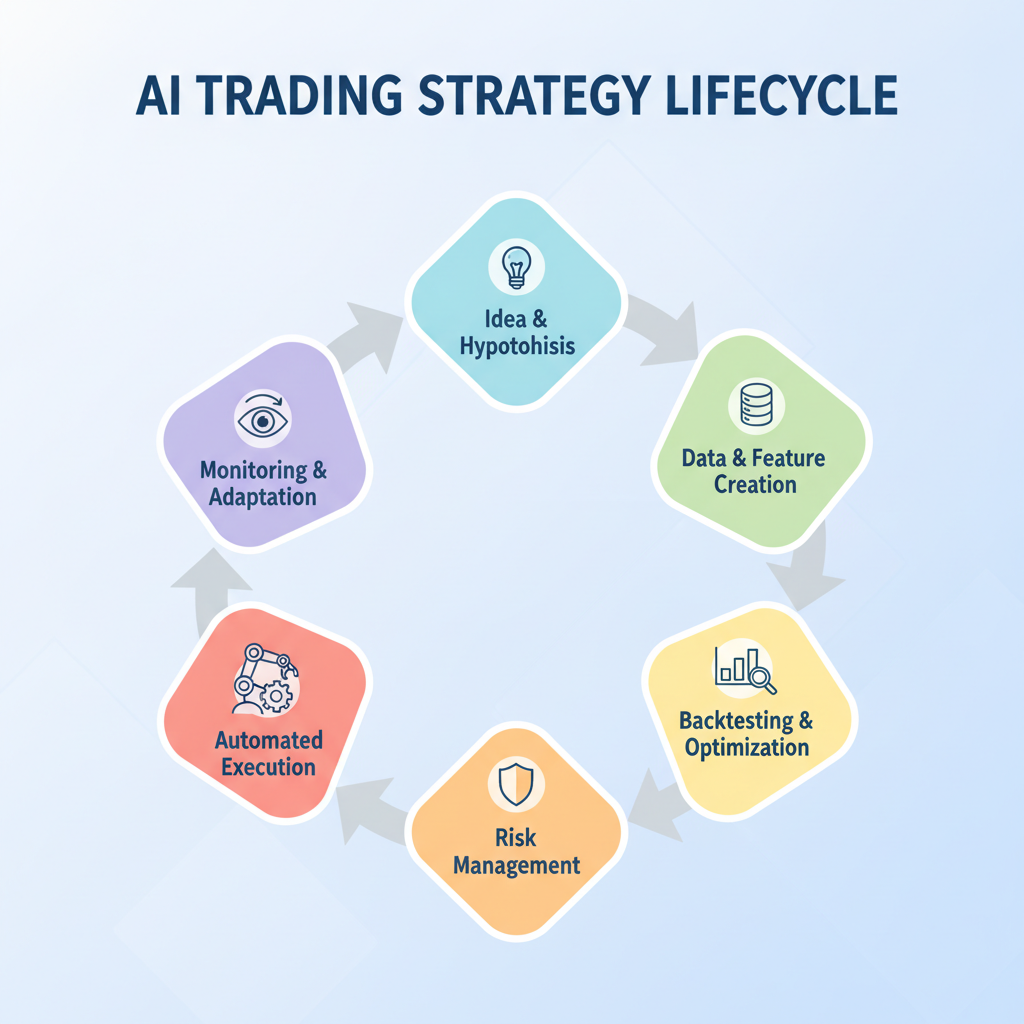
The cornerstone of any successful automated trading strategy, especially one powered by AI, is rigorous backtesting. Without the ability to simulate a strategy's performance against extensive historical market data, traders are essentially operating in the dark. A robust backtesting engine is not merely a 'nice-to-have' but a critical component for validating trading strategies and refining them before risking real capital.
Iterative backtesting allows traders to test strategies on historical data, tweaking key variables like margin size, instrument choice, and data resolution, to refine responsiveness to market trends and volatility. This helps to reduce drawdowns and boost profit potential [For Traders].
Modern AI trading platforms elevate backtesting beyond simple historical simulations. They integrate advanced methodologies to ensure strategy resilience. This includes out-of-sample backtesting, which evaluates performance on data the model has not 'seen' before, and Monte Carlo simulations, which assess robustness under various market scenarios by injecting randomness into historical data. Furthermore, detailed performance metrics, heatmaps, and walk-forward tests are essential for truly understanding a strategy's behavior and identifying potential vulnerabilities. According to a Medium article on AI-based algorithmic trading strategies, robust evaluation includes "backtests with realistic costs, walk-forward tests, and out-of-sample validation" [Medium]. This comprehensive approach helps differentiate strategies that merely fit past data from those with a genuine predictive edge. The goal is not just to see if a strategy made money historically, but to ascertain its statistical significance and adaptability.
The ability to optimize trading strategies is another critical feature. An AI platform should delve into trading history to identify areas for improvement, such as delayed entries, premature exits, or deviations from defined rules. It should then suggest actionable solutions to enhance timing and refine position sizing based on real trading habits [For Traders]. This iterative process, often described as a "Backtest & Iterate" cycle, is crucial for honing strategies to their peak performance, ensuring they are as precise and effective as possible in diverse market conditions.
Practical Insight: For serious traders, prioritizing platforms with multi-faceted, institutional-grade backtesting capabilities—including out-of-sample testing, Monte Carlo simulations, and detailed performance analytics—is paramount. This level of scrutiny builds confidence and reduces the risk of deploying fragile strategies. Explore tools that allow for granular control over variables during backtesting to truly optimize strategy parameters.
Real-time Data Processing and Automated Execution: The Speed Advantage
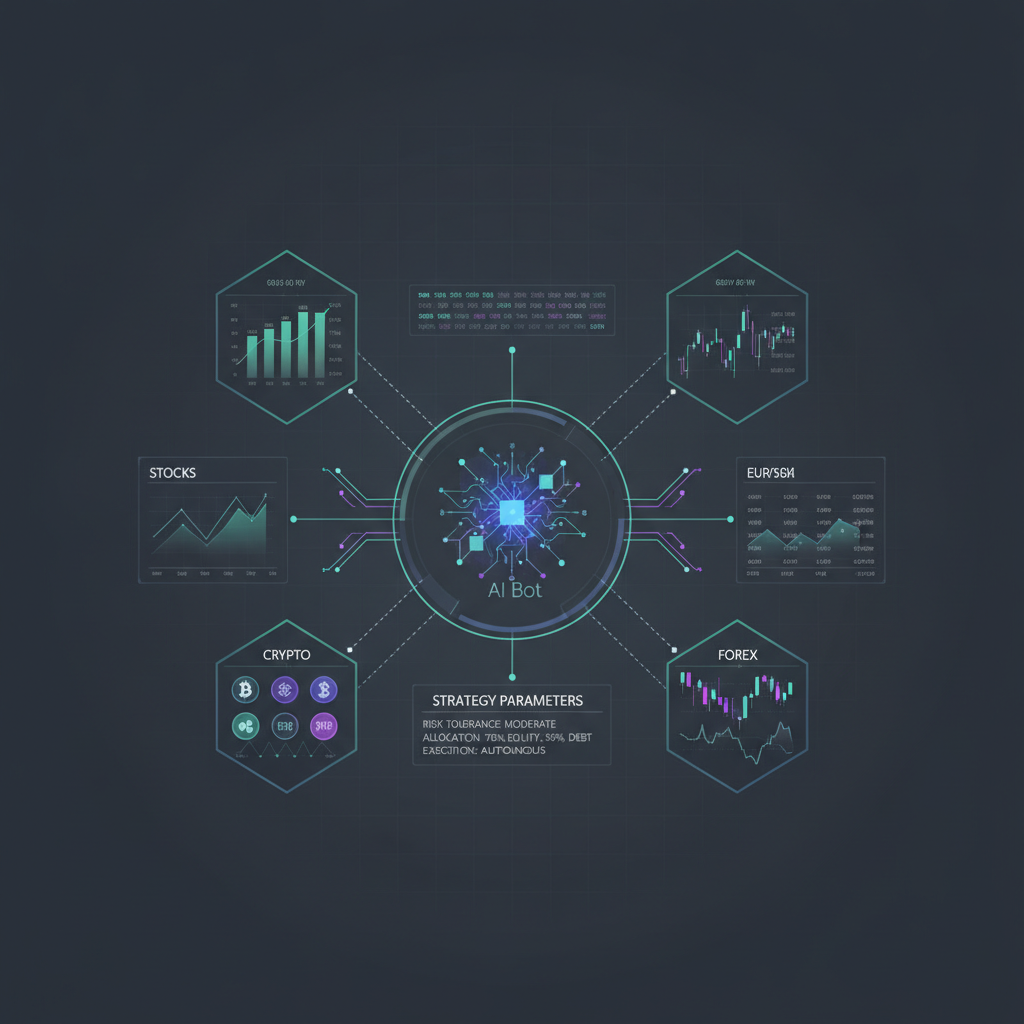
In the world of automated trading, speed is not just an advantage; it is often the determining factor in profitability. AI-powered systems excel in this domain, offering unparalleled capabilities in real-time data processing and automated execution. Manual trading, constrained by human reaction times and processing limits, simply cannot compete with the velocity and volume that AI algorithms handle.
AI-powered systems can scan larger amounts of data and react faster than a person watching a few charts manually. This improves speed and strategy consistency by relying on automated trading strategies, AI signals, risk settings, and data-based execution [The Defiant].
The ability of an AI bot to handle real-time data feeds without latency is non-negotiable. In high-frequency trading (HFT) environments, "milliseconds matter," as execution speed often dictates the capture of tiny price discrepancies [Northhaven Analytics]. AI algorithms are designed to execute thousands of orders in microseconds, optimizing trade execution to minimize slippage and ensure trades are placed at the best possible price without human delay [Northhaven Analytics]. This level of speed and precision is vital not only for HFT but also for any strategy requiring timely responses to market shifts or rapid order placement.
Beyond raw speed, AI brings a critical element of consistency. Unlike human traders susceptible to emotions, fatigue, or cognitive biases, automated systems apply position rules, stop conditions, and strategy limits with unwavering discipline. This consistency is invaluable for beginners seeking a structured approach and for experienced traders aiming for scalable workflows [The Defiant]. The system enforces defined rules consistently, whether in a simulated environment or live trading with actual capital [For Traders].
Practical Insight: Look for AI trading platforms that emphasize low-latency data feeds and direct broker integrations for automated execution. Evaluate their ability to process vast amounts of real-time market information quickly and reliably. The platform's infrastructure should support rapid, consistent, and disciplined execution, minimizing slippage and ensuring your strategies are deployed exactly as intended.
Predictive Analytics and Intelligent Strategy Generation
The evolution of AI in trading has moved beyond merely automating predefined rules. Modern AI-powered features now encompass sophisticated predictive analytics and even autonomous strategy generation, allowing traders to anticipate market movements and adapt dynamically. This represents a significant leap from reactive trading to proactive, data-driven decision-making.
Generative AI and predictive models analyze historical data to forecast future stock price movements. These price forecasting models help traders anticipate trends rather than just reacting to them, allowing for better positioning [Northhaven Analytics].
Key to this advancement are technologies like Large Language Models (LLMs) and advanced machine learning techniques. LLMs can continuously parse a colossal amount of unstructured data, including earnings calls, regulatory filings, central bank communications, and social media at scale. They then extract structured signals directly applicable to execution engines [Northhaven Analytics, QuantInsti]. This capability provides traders with deep market intelligence that would be impossible to process manually, uncovering sentiment shifts and event-driven opportunities.
The frontier of AI trading includes autonomous strategy generation. Next-generation AI agents are not just executing predefined rules; they are designed to generate entirely new trading strategies on the fly, adapting in real-time to regime changes and structural market shifts [Northhaven Analytics]. This means an AI system can evolve and optimize its approach as market conditions change, potentially identifying profitable patterns that human designers might overlook.
For traders without coding expertise, AI has become a powerful enabler. AI-powered chatbots and agentic coding tools (like Claude Code or Google's Antigravity, mentioned in a StockBrokers.com guide) make building sophisticated automated trading projects more accessible. They can assist in developing strategies, automating trades, or analyzing market data, democratizing access to quantitative trading previously reserved for those with strong programming backgrounds [StockBrokers.com, QuantInsti].
Practical Insight: Seek platforms that offer powerful AI-driven strategy generation capabilities, especially those that enable no-code development. This allows you to transform your trading ideas into actionable algorithms without needing to learn complex programming languages. Additionally, evaluate platforms for their integration of predictive analytics and LLM-powered market intelligence to gain a deeper, proactive understanding of market dynamics.
Comprehensive Risk Management and Multi-Asset Support
While AI offers powerful tools for strategy generation and execution, it does not eliminate risk. In fact, the speed and scale of AI trading necessitate equally robust, automated risk management features. A critical component of any advanced AI trading platform is its ability to enforce stringent risk controls and offer broad asset coverage for diversification.
Effective risk management means codifying rules for position sizing, loss limits, and portfolio exposure. For instance, risking 1-3% of account equity per trade, capping daily loss around 5%, and weekly loss around 7% are crucial safeguards to prevent spiral risk [Medium].
AI can dynamically recalibrate risk parameters based on live volatility surfaces, eliminating the lag between market events and portfolio response [Northhaven Analytics]. This autonomous risk management is vital. Features like automated stop-losses, trailing stops, and advanced order types are executed without human emotional influence, ensuring consistent adherence to risk thresholds. The system enforces these rules consistently, whether during simulated testing or live trading [For Traders]. Although AI can enforce checks automatically, human oversight remains essential for monitoring and adapting to unforeseen market conditions or strategy drift [Medium].
Another essential feature is broad asset coverage. Diversification across uncorrelated instruments is a key strategy for managing risk and enhancing portfolio stability. A leading AI trading platform should support a wide range of assets, including stocks, cryptocurrencies, forex, futures, and options [Northhaven Analytics]. This multi-asset capability allows traders to deploy diverse strategies, spreading risk and capturing opportunities across different markets and economic regimes. Whether monitoring more symbols and timeframes than a human could track or applying consistent position rules, AI tools provide critical support [The Defiant].
Practical Insight: Prioritize AI trading platforms that offer comprehensive, customizable risk management tools, allowing you to define and automate position sizing, loss limits, and portfolio exposure. Ensure the platform provides multi-asset support, enabling you to diversify your strategies and reduce concentration risk across various market instruments. The synergy between automated risk enforcement and human review creates a powerful defense against market volatility.
How Horizon Addresses This
Horizon (https://horizon.trade) is engineered to meet the demands of serious, systematic traders who seek institutional-grade AI capabilities without the need for complex coding. Our platform directly addresses the challenges outlined above by providing a comprehensive suite of AI trading features for automated strategies.
AI Strategy Generation (No Coding Required): Transform your trading ideas into sophisticated algorithms in minutes using our intuitive AI interface. This eliminates the steep learning curve of programming, allowing you to focus purely on strategy development.
Institutional-Grade Backtesting Engine: Validate your strategies with unparalleled rigor. Our engine offers detailed performance metrics, out-of-sample backtesting, Monte Carlo simulations, and heatmaps, ensuring your strategies are robust and not merely overfitting historical data.
Automated Execution & Real-time Monitoring: Connect seamlessly with your broker and deploy strategies for live trading with automated, low-latency execution. Monitor performance with real-time analytics, ensuring disciplined trade placement and adherence to your defined parameters.
Multi-Asset Support: Diversify your portfolio and explore opportunities across stocks, forex, crypto, futures, and options, all within a single platform.
Strategy Marketplace: Leverage a community-driven marketplace to explore, buy, or copy proven strategies. You can also sell access to your own strategies, building a reputation based on verifiable performance.
Horizon empowers you to operate at the next level, providing the tools to convert your trading edge into automated, disciplined execution. For an in-depth look at our capabilities, visit horizon.trade
Conclusion
The integration of AI into trading strategies marks a pivotal moment for market participants. The features discussed—from rigorous backtesting and real-time execution to predictive analytics, autonomous strategy generation, and comprehensive risk management—are not just enhancements; they are fundamental shifts in how modern trading is conducted. AI empowers traders to move beyond emotional biases and manual limitations, offering the speed, consistency, and analytical depth required to navigate today's complex financial markets successfully. For serious traders looking to transform their ideas into disciplined, automated execution, embracing these AI-powered features is no longer optional but essential. To explore how Horizon's institutional-grade AI platform can elevate your trading strategies, we encourage you to visit https://horizon.trade and discover a new paradigm of algorithmic trading.