Published Jul 04, 2026
What Brokers Can You Connect With for Automated Trading?

The landscape of financial markets has been irrevocably reshaped by automated trading, transitioning from manual order entry to sophisticated algorithmic execution. For serious traders leveraging these advanced strategies, the choice and integration of a brokerage firm are not merely procedural steps, but rather critical foundational elements that bridge strategic intent with market reality. This evolution demands brokers with robust infrastructure and the precise connectivity required to support high-frequency, data-driven operations.
Key Takeaways
Broker Connectivity is Foundational: Seamless integration with a brokerage is the absolute requirement for deploying automated trading strategies, enabling real-time execution, data flow, and comprehensive market access.
Leading Brokers Offer Robust Integration: Top-tier brokers such as Interactive Brokers stand out for their advanced API support and global market access, with IBKR alone processing over 4 million trades daily for its **5 million clients worldwide** Interactive Brokers LLC.
Diverse Platforms for Diverse Needs: While some brokers excel in broad asset class coverage, others like tastytrade specialize in options Investopedia, and many now offer commission-free stock trading, altering the cost-benefit analysis for automated strategies.
Selection Factors Go Beyond Cost: Crucial considerations for automated traders include execution speed, access to specific asset classes (stocks, forex, crypto, futures, options), international market reach, and the availability of paper trading environments for rigorous strategy validation.
Unified Platforms Simplify Complexity: Direct API integration requires significant technical expertise. Platforms like Horizon abstract these complexities, providing a singular, intuitive interface to connect trading strategies to a range of brokers, thereby democratizing access to institutional-grade automated trading.
The Essential Bridge: Understanding Broker Connectivity in Algorithmic Trading
The effectiveness of any algorithmic trading strategy is intrinsically linked to the reliability and capability of its brokerage connection. A broker serves as the critical conduit, transmitting your automated orders to the market, executing trades, and providing the necessary market data back to your system. Without a robust and well-integrated broker, even the most brilliant algorithm remains a theoretical exercise.
In recent years, the demand for sophisticated broker connectivity has surged. As retail and professional traders alike seek to capitalize on systematic approaches, the ability to programmatically interact with a broker's trading engine has become non-negotiable. This often involves leveraging Application Programming Interfaces (APIs) provided by brokers, which allow external software to send trade commands, receive market data, and manage account information without manual intervention. This technological evolution enables strategies that range from high-frequency trading to long-term portfolio rebalancing, all executed with precision and speed that manual trading simply cannot match.
For traders operating in an increasingly automated world, selecting a broker with strong API support and a proven track record in execution speed is paramount, transforming theoretical edge into actualized profit potential.
The market's shift towards automation has been significant. While specific global figures can vary, the trend is clear: automated systems are responsible for a substantial and growing percentage of trading volume across asset classes. This underlines why understanding and utilizing broker connectivity is no longer just an advantage but a fundamental requirement for anyone serious about systematic trading.
Major Brokers Supporting Automated & Algorithmic Trading
When seeking a broker for automated trading, not all platforms are created equal. The ideal choice depends on your specific needs: asset classes, trading frequency, geographical reach, and technical sophistication. However, several brokers consistently appear at the forefront for their robust features and integration capabilities.
Interactive Brokers: A Powerhouse for Global Automated Trading
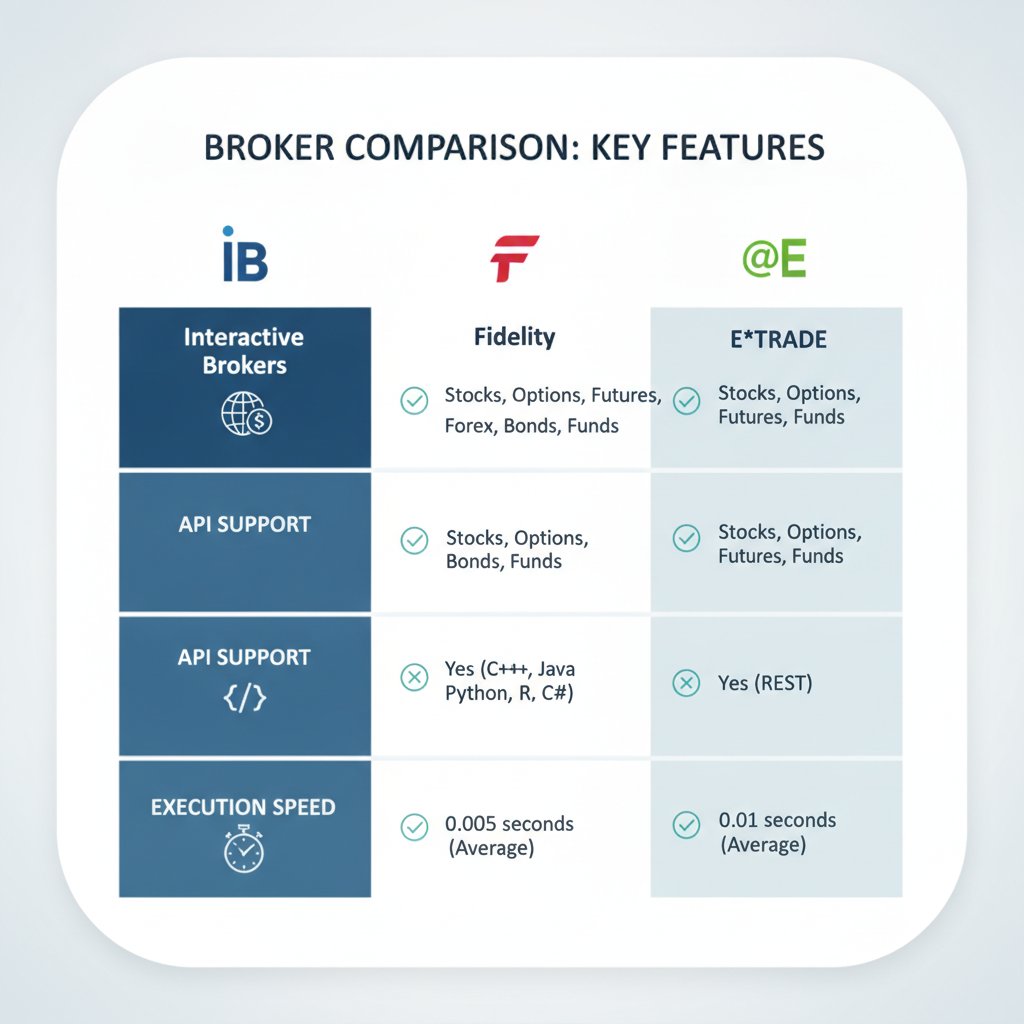
Interactive Brokers (IBKR) frequently stands out as a top choice for advanced and automated traders. Recognized by BrokerChooser as the "highest-rated broker," IBKR offers unparalleled access to global markets across a vast array of asset classes, including stocks, options, futures, forex, bonds, and funds. Its comprehensive API and extensive third-party integrations make it a favored platform for those deploying complex algorithms. Financially, IBKR boasts impressive figures, serving over 5 million clients worldwide, executing more than 4 million trades daily, and managing client assets exceeding $775 billion, with total equity over $21 billion Interactive Brokers LLC. This scale speaks to its reliability and capacity to handle high volumes of automated trades.
Notably, IBKR actively promotes AI integration, allowing clients to connect leading AI platforms to analyze portfolios, research opportunities, and generate trade instructions. This focus on external integration is also evident in its support for platforms like Quantower, which lists Interactive Brokers as a direct connection for stocks, currency, futures, and options. For traders requiring external software like Dash Trader for enhanced functionality, IBKR supports this, though it might incur additional monthly fees Ranking the Best Brokers for International Traders. Its extensive suite of tools, including paper trading and professional-grade reporting, further solidifies its position for serious algorithmic traders.
Fidelity, Charles Schwab, and E*TRADE: Established Giants with Strong Offerings
These established brokers also offer robust services, though their API support for direct algorithmic execution may cater to different types of automated strategies or require specific third-party connectors. According to Investopedia, Fidelity Investments is a top online broker due to its low costs, sophisticated tools, and all-in-one capabilities, earning a 4.8-star rating. NerdWallet similarly praises Fidelity as the "best app for investing" and a trusted legacy broker.
Charles Schwab, with a 4.3-star rating from Investopedia, is recognized for its investor education and mobile app, while NerdWallet highlights it for customer service. For automated traders, their comprehensive research and educational resources can be valuable for strategy development. E*TRADE, another well-regarded platform, has received numerous accolades, including being recognized as the #1 Web Trading Platform for the 14th year in a row in 2026 by Stockbrokers.com, and #1 for Research in Kiplinger's 2025 Best Online Broker Review E*TRADE. E*TRADE also emphasizes strong customer protection, a crucial aspect for automated accounts.
While their direct API offerings might require more custom development compared to IBKR for certain high-frequency strategies, their institutional-grade research, security, and broad market access make them viable options for automated traders focusing on slower-frequency strategies or those using platforms that already integrate with them.
Specialized Brokers and Platforms for Niche Assets and Execution
Beyond the major full-service brokers, several specialized platforms cater to specific asset classes or trading styles, often offering unique connectivity options:
For Options Trading: tastytrade receives a 4.1-star rating from Investopedia, known for its focus on options trading with a $1.00/open contract fee. Its platform is designed for active options traders, which can be beneficial for options-focused algorithms.
For Crypto Trading: While Robinhood was initially noted for crypto trading, many dedicated crypto exchanges now offer more robust API access for automated strategies. Quantower, for instance, lists connections to major crypto exchanges like Binance, ByBit, Kraken, and OKX for crypto and crypto futures trading.
For Futures Trading: Besides Interactive Brokers, specialized futures brokers are crucial. The CME Group provides a directory of brokers that support futures trading, including firms like Advantage Futures and GFF Brokers, many of which can integrate with third-party platforms. Quantower also highlights various futures-focused connections such as AMP, Optimus Futures, Earn2Trade, and Topstep Quantower Trading Platform.
For Forex (Currency) Trading: Brokers like FXCM, FxPro, IC Markets, LMAX, and OANDA are popular choices, often providing dedicated forex APIs for algorithmic strategies.
For Ultra-Fast Day Trading: For strategies demanding the absolute fastest execution and direct market access, brokers like Lightspeed and Ocean One are often cited. These brokers often integrate with specialized trading platforms such as Dash Trader, which facilitates level two data, hotkeys, and rapid order execution Ranking the Best Brokers for International Traders.
The key takeaway is that the "best" broker is highly contextual. A trader focusing on automated options strategies might lean towards tastytrade or IBKR, while a crypto algo trader would prioritize a connected crypto exchange, and a global multi-asset strategist would find IBKR's breadth invaluable. The ability of an automated trading platform to connect to this diverse ecosystem is therefore crucial.
Beyond the Basics: Crucial Factors for Automated Broker Selection
Choosing a broker for automated trading extends beyond just identifying who offers an API. Several critical factors must be rigorously evaluated to ensure your automated strategies can operate effectively and reliably.
Execution Speed and Latency
For many algorithmic strategies, especially those involving scalping or arbitrage, milliseconds can translate into significant profit or loss. Direct access brokers, who route orders straight to exchanges, typically offer superior execution speed compared to commission-free brokers who might employ payment for order flow (PFOF) practices. While commission-free trading has democratized access, a YouTube analysis notes that while these brokers are attractive, "what you're getting in exchange is fast execution" from commission-based, direct access options The BEST Online Trading Brokers. Evaluating a broker's average execution time and slippage is vital for high-frequency algorithms.
Asset Class Support and Market Access
Your strategy's universe of tradable assets dictates your broker choice. If you trade futures, you need a broker with direct access to futures exchanges and appropriate margin capabilities. If your strategy spans stocks, options, and forex, a multi-asset broker like Interactive Brokers becomes essential. Many brokers specialize; for example, tastytrade is well-regarded for options, while dedicated platforms exist for specific cryptocurrencies. Ensuring your broker supports all the instruments your algorithm intends to trade, across all target markets (e.g., international exchanges for global strategies), is a fundamental requirement.
Cost Structure: Commissions, Fees, and Data Costs
While commission-free stock trading is widespread, other costs can significantly impact profitability for automated strategies. These include per-contract options fees (e.g., Fidelity, Interactive Brokers, Charles Schwab charge $0.65 per contract Investopedia), futures commissions, margin interest rates, and crucially, market data fees. For professional-grade data feeds, these costs can accumulate quickly. A thorough cost analysis, considering both execution costs and data subscriptions, is indispensable for an automated trader.
Regulatory Compliance and Security
Protecting capital is paramount. Automated trading means entrusting your capital to a system, making the security and regulatory standing of your broker critical. Look for brokers that are well-regulated (e.g., by FINRA, SIPC in the US), have strong financial backing, and implement robust cybersecurity measures. E*TRADE, for instance, highlights its E*TRADE Customer Protection Guarantee, protecting privacy, assets, and transactions. Interactive Brokers LLC emphasizes its financial strength with "security you can trust," backed by strong capital and automated risk controls, with client assets exceeding $775 billion.
Paper Trading and Backtesting Environments
Before deploying live capital, rigorous testing is essential. Brokers that offer comprehensive paper trading accounts (simulated trading with real-time data) allow traders to validate their algorithms in a risk-free environment. This is complemented by robust backtesting capabilities, often provided by the broker's platform or external systems, to evaluate historical performance. NerdWallet recognizes Webull as "best for paper trading," highlighting its value for new and automated traders alike.
The Technical Challenge of Direct Broker Integration
While many brokers offer APIs, directly integrating an algorithmic strategy with a broker's API presents significant technical challenges. Each broker's API has its own unique specifications, programming languages, data formats, and authentication methods. This means a trader developing a custom algorithm often needs to:
Code custom connectors: Develop specific software modules for each broker's API, handling data requests, order placement, and error management according to their unique documentation.
Manage data normalization: Ensure that market data received from different brokers, which might vary slightly in format or update frequency, is normalized into a consistent structure for the algorithm.
Implement robust error handling: Build extensive error detection and recovery mechanisms to deal with network issues, API rate limits, incorrect order rejections, and other unforeseen events that can disrupt automated trading.
Maintain and update integrations: Broker APIs evolve. Keeping pace with these changes requires ongoing development effort to ensure compatibility and prevent operational disruptions.
For most serious traders who are not full-time quant developers, this level of technical overhead can be a significant barrier to entry for automated trading. It diverts focus from strategy development and market analysis towards complex coding and system maintenance, ultimately hindering their ability to leverage their edge.
How Horizon Addresses This
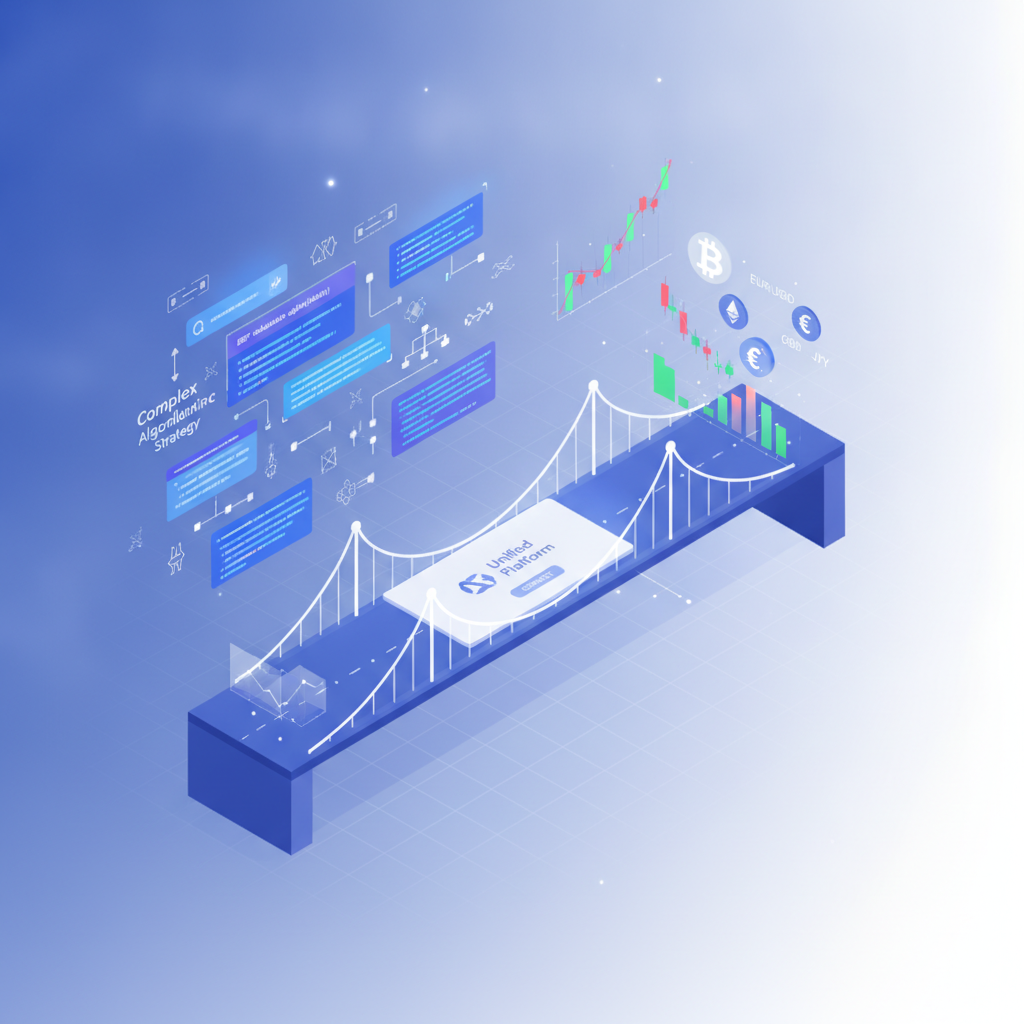
Horizon simplifies the complex world of broker connectivity, transforming a significant technical hurdle into a streamlined operational advantage. For traders who possess a systematic edge but lack the deep coding expertise, Horizon provides a unified, intuitive platform to connect their strategies to a range of leading brokers for automated execution.
Instead of wrestling with disparate broker APIs, Horizon offers pre-built, robust integrations with popular brokers, allowing you to deploy your AI-generated or custom-built strategies with ease. This means you can focus entirely on strategy conceptualization and refinement, leveraging Horizon's AI strategy generation and institutional-grade backtesting engine, rather than the intricacies of API coding. Whether your strategy targets stocks, forex, crypto, futures, or options, Horizon's multi-asset support ensures your algorithms can connect to the right broker for real-time, disciplined execution.
Furthermore, Horizon's platform includes real-time analytics and paper trading, allowing you to monitor and validate your strategies through your chosen broker connection, ensuring they are truly robust before live deployment. By abstracting the technical complexities of broker integration, Horizon empowers serious traders to operate at the next level, turning their ideas into automated, capital-efficient operations.
Conclusion
The ability to connect with the right broker is not merely a convenience but a strategic imperative for any trader looking to succeed in the automated markets. While the landscape offers a diverse array of brokers, from global powerhouses like Interactive Brokers to specialized platforms for specific asset classes, the key lies in understanding their integration capabilities, execution quality, and alignment with your algorithmic needs. The technical demands of direct API integration can be daunting, but the advent of sophisticated platforms like Horizon significantly reduces this barrier. By providing a streamlined pathway to connect your carefully crafted automated strategies to leading brokers, Horizon empowers you to transform your trading edge into disciplined, real-time market execution. Explore how Horizon can elevate your automated trading journey by visiting https://horizon.trade today.