Published Jun 26, 2026
Alpaca Algorithmic Trading: Building and Connecting Your Automated Bot for Systematic Execution

In the dynamic world of financial markets, algorithmic trading has evolved from a niche strategy for institutions to an accessible frontier for individual traders. Automated systems now account for a significant majority of market activity, fundamentally reshaping how capital is deployed and managed. For systematic traders without a dedicated quant team, platforms offering API access like Alpaca present a gateway to programmatic execution.
Key Takeaways
- Algorithmic trading commands between 60% and 73% of US equity trading volume, underscoring its market dominance and the necessity for automated strategies among serious traders.
- Alpaca offers a commission-free API-first brokerage platform, enabling developers to build and connect automated trading bots for stocks, ETFs, and crypto.
- Building an Alpaca bot involves account setup, API key generation (where the secret key is shown only once), strategy definition using indicators like RSI/MACD, and Python coding.
- Rigorous backtesting via Alpaca's paper trading environment and robust deployment to cloud services like AWS EC2 are crucial, though these steps introduce considerable technical complexity and operational overhead.
- Professional traders seeking institutional-grade backtesting, no-code strategy generation, and reliable automated execution without the coding and infrastructure burden can leverage advanced platforms designed for systematic trading.
The Ascent of Automated Trading and Alpaca's Role
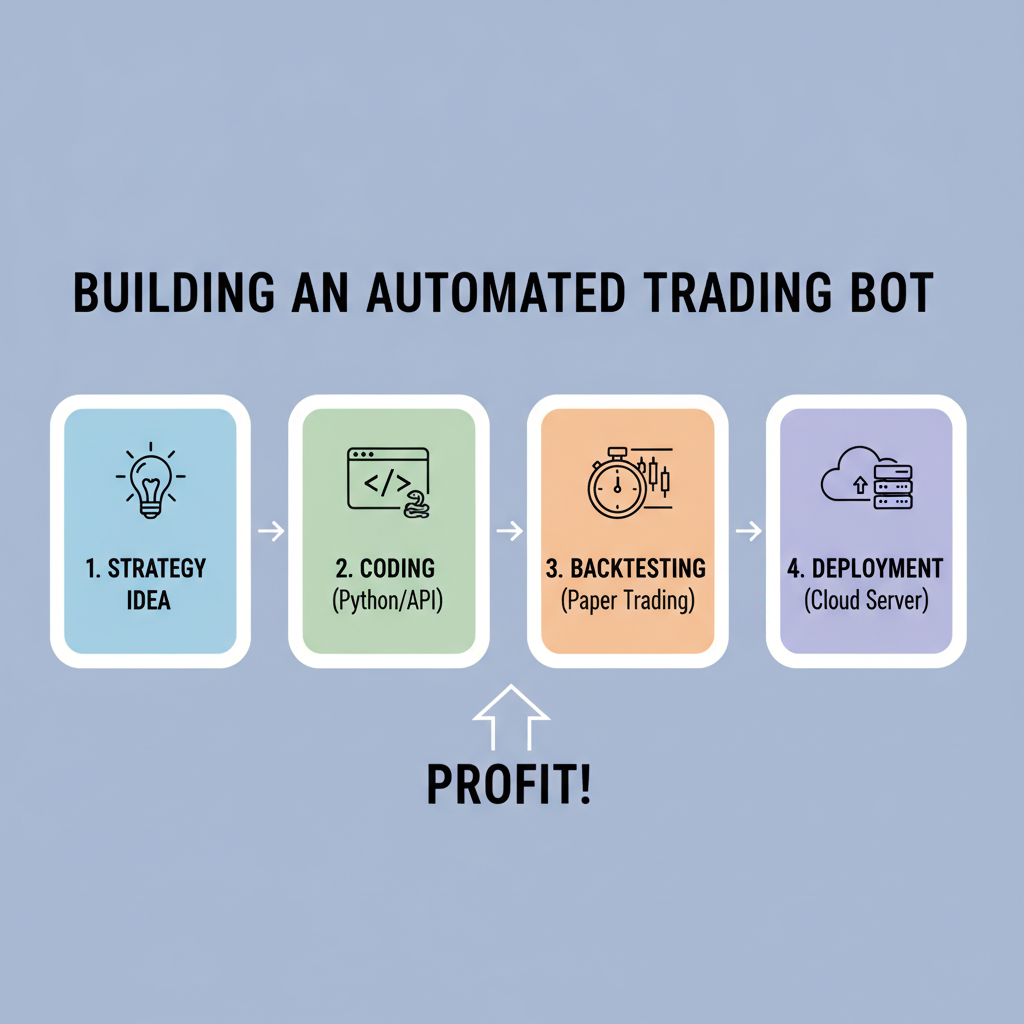
The financial markets have undergone a profound transformation driven by technology, with algorithmic trading emerging as a dominant force. Once the exclusive domain of large financial institutions, automated trading strategies now execute a substantial portion of daily transactions. Recent estimates suggest that algorithmic trading is responsible for 60% to 73% of US equity trading volume, a significant leap from just 20% in 2005 Financial Times. This paradigm shift highlights the imperative for systematic traders to adopt automated methods to remain competitive and execute their edge with precision.
For individuals and small teams looking to enter this automated landscape, platforms that provide API-driven access to brokerage services are essential. Alpaca, a modern brokerage, has positioned itself as an API-first solution, offering commission-free trading for US-listed securities and options through its robust application programming interface Alpaca Markets on YouTube. This accessibility allows developers to programmatically connect to markets, manage portfolios, and execute orders, fundamentally democratizing the ability to run sophisticated trading strategies.
The appeal of Alpaca lies in its focus on developers and algorithmic traders, providing the infrastructure to sync positions, access real-time market data, and execute trades programmatically Portfolio Genius. This environment is conducive to experimenting with new strategies, enabling systematic traders to transform their analytical insights into automated actions. However, while the API opens doors, the responsibility of building, testing, and deploying a reliable trading bot still rests on the trader's shoulders, demanding considerable technical acumen.
Step-by-Step: Connecting to Alpaca's API and Setting Up Your Trading Bot
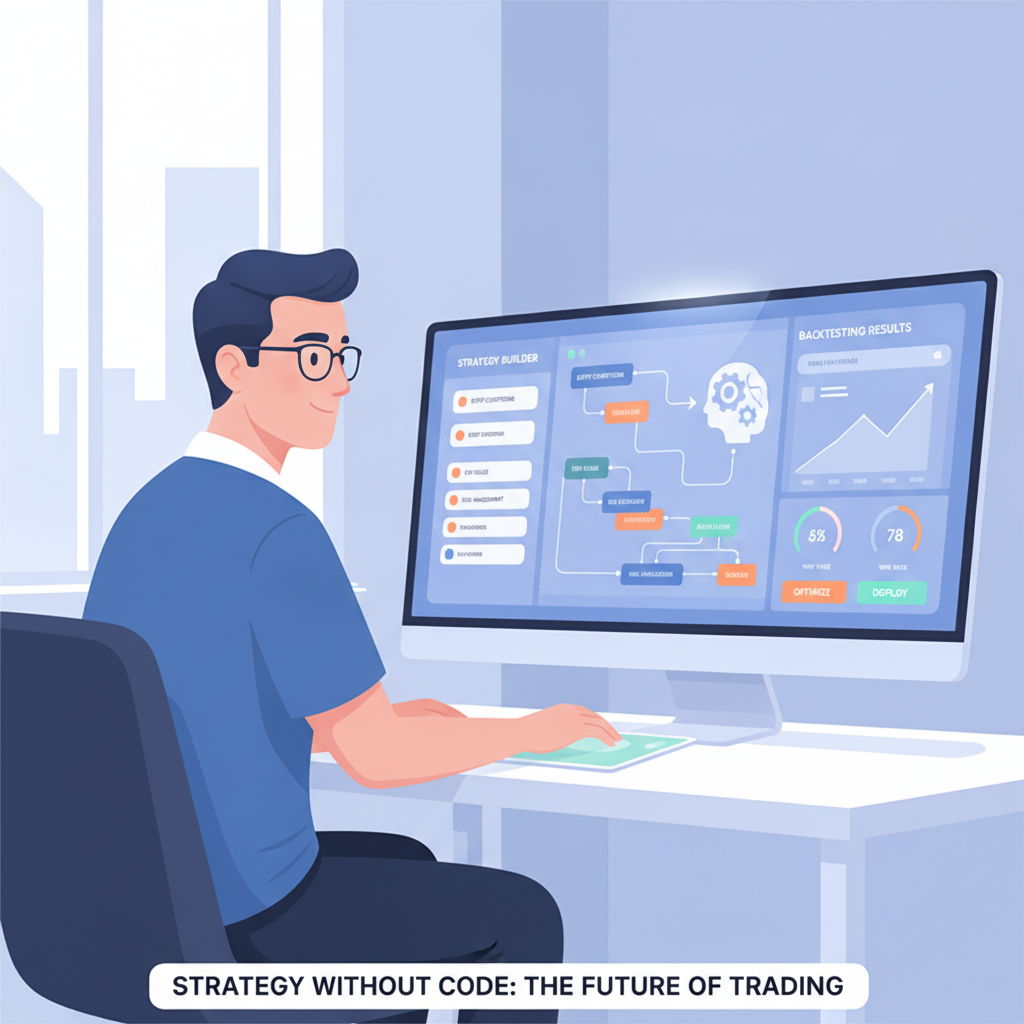
Building an automated trading bot with Alpaca begins with establishing your account and securely connecting to its API. This process involves several critical steps, from initial setup to defining your strategy and implementing it in code.
1. Creating Your Alpaca Account and API Access
The journey starts at alpaca.markets where you'll sign up for a free account. Alpaca provides two distinct environments: paper trading and live trading. For initial development and testing, a paper trading account is immediately available upon signup. This allows you to simulate trades without risking real capital, making it an invaluable tool for refinement. For live trading, additional personal information is required for regulatory compliance, and identity verification typically takes 1 to 3 business days Portfolio Genius.
Once your account is set up, the next crucial step is generating your API keys. These keys are the secure credentials that allow your bot to communicate with Alpaca's servers. You'll generate an API Key ID and a Secret Key. It is vital to understand that Alpaca only displays your Secret Key once during its generation process Portfolio Genius. Losing this key necessitates deleting the existing key pair and generating a new one, emphasizing the importance of immediate, secure storage, often in environment variables (e.g., a .env file) for Python-based bots Matt Macarty on YouTube.
2. Defining Your Trading Strategy
With API access secured, the next phase involves defining the logic of your trading strategy. This is where your market edge or specific ideas are translated into quantifiable rules. Common technical indicators such as the Relative Strength Index (RSI) and Moving Average Convergence Divergence (MACD) are frequently used to establish entry and exit points. For instance, an RSI strategy might involve buying when the RSI drops below 30 (oversold) and selling when it rises above 70 (overbought).
Modern tools, including large language models like ChatGPT, can assist in outlining the full workflow and generating pseudocode or even initial Python scripts for your strategy Alpaca Learn. While AI can accelerate the initial coding phase, human oversight remains critical for refining the logic, ensuring robust error handling, and adapting the strategy to specific market conditions. This hybrid approach allows systematic traders to leverage technology efficiently, even if their primary skill set is not in programming.
3. Implementing the Bot with Python and Alpaca's Trading API
The practical implementation of your strategy typically involves Python, given its extensive libraries for data analysis and algorithmic trading. Libraries like Pandas for data manipulation, NumPy for numerical operations, and specific trading frameworks such as Lumibot can streamline the development process Matt Macarty on YouTube. Connecting to Alpaca's Trading API within your Python script involves using its client libraries to send market data requests and execute orders based on your defined strategy. This includes fetching historical data for backtesting, streaming real-time data for live decision-making, and placing various order types, from simple market orders to more complex OCO (One-Cancels-the-Other) orders if utilizing Alpaca Elite features Alpaca Markets.
The code will typically involve defining functions for fetching data, calculating indicators, checking entry/exit conditions, and executing trades. A simple "Buy and Hold" strategy, for example, would involve calculating the quantity based on real-time cash balance and placing a buy order, then holding the position Matt Macarty on YouTube. The robustness of this code, including its ability to handle API rate limits, network issues, and unexpected market events, is paramount for reliable automated execution.
Backtesting and Deploying Your Alpaca Automated Strategy
Once your algorithmic strategy is coded and connected to Alpaca's API, the next crucial phases involve thorough testing and secure deployment. Without these, even the most brilliant strategy remains a theoretical concept, vulnerable to real-world market volatility and operational failures.
1. Rigorous Backtesting with Paper Trading
Before any capital is risked, your strategy must prove its viability through extensive backtesting. Alpaca's paper trading environment is an indispensable tool for this purpose Alpaca Learn. It replicates live market conditions, allowing your bot to execute trades using dummy money and real-time or historical data. This environment provides a safe sandbox to:
- Validate Logic: Confirm that your entry and exit rules trigger as expected under various market scenarios.
- Evaluate Performance: Assess key metrics like total return, drawdown, win rate, and profit factor without financial exposure.
- Identify Bugs: Catch coding errors or logical flaws that could lead to unintended trades or operational issues in a live environment.
While paper trading offers a realistic testing ground, it's important to acknowledge its limitations. It may not perfectly reflect the nuances of slippage, latency, or order book depth in a live environment, especially during periods of extreme volatility. For truly institutional-grade robustness, traders often need more advanced backtesting capabilities that go beyond simple historical simulation, such as out-of-sample testing, walk-forward optimization, and Monte Carlo simulations.
2. Deploying for Automated Execution
Once your strategy demonstrates promising results in paper trading, the transition to automated execution involves deploying your bot to a reliable environment. For many self-built Alpaca bots, this means leveraging cloud computing platforms like Amazon Web Services (AWS) EC2. The general design goal for a deployed bot is often to run independently, requiring no manual commands once operational Alpaca Learn.
The deployment process typically involves:
- Setting up a Virtual Server: Provisioning an EC2 instance to host your Python script and its dependencies.
- Configuring Environment Variables: Securely loading your Alpaca API keys and other sensitive information.
- Automating Execution: Scheduling your bot to run periodically using tools like cron jobs Alpaca Markets on YouTube. This ensures your bot is active during market hours, or continuously for assets like cryptocurrencies or stocks and ETFs with 24/5 trading capabilities through Alpaca Alpaca Markets.
- Monitoring: Implementing logging and monitoring systems to track bot performance, identify errors, and ensure continuous operation.
While DIY deployment offers flexibility, it comes with significant operational overhead. Maintaining servers, managing security patches, ensuring network reliability, and monitoring performance 24/7 can be a considerable burden for a single trader. This complexity often distracts from the core task of strategy development and refinement, which is where professional traders generate their true edge.
Beyond Basic Automation: The Professional Trader's Imperative for Robustness
While Alpaca's API provides a powerful foundation for building custom trading bots, translating a trading idea into a truly robust, institutional-grade automated system demands more than just coding skills. Professional traders, managing significant capital, face a distinct set of challenges that go beyond basic script execution.
The Coding Barrier and Time Investment
The primary hurdle for many systematic traders is the necessity of coding. Developing, debugging, and maintaining Python scripts, even with AI assistance, requires a dedicated learning curve and continuous effort. This can divert valuable time and cognitive resources away from market analysis and strategy innovation, which are the true differentiators for a trader. For someone with a deep understanding of market dynamics and a clear trading edge, but without a programming background, the "build-it-yourself" approach can become a significant bottleneck.
A Reddit user highlighted the difficulty of API key retrieval, stating, "Yeah, Alpaca's site is a mess honestly," and provided simplified steps, underscoring that even basic setup can be unintuitive for some users Reddit.
Furthermore, the long-term maintenance of a self-built bot—updating dependencies, adapting to API changes, and ensuring uptime—demands constant technical attention. For a professional, this administrative burden can quickly outweigh the benefits of full customization.
Limitations of Basic Backtesting and Robustness Checks
Simple historical backtesting, while essential, often falls short of the rigor required for professional-grade strategy validation. Key limitations include:
- Curve Fitting: Strategies can appear profitable on historical data but fail in live markets if they are over-optimized to past conditions.
- Out-of-Sample Testing: Critically, evaluating a strategy on data it has never seen before is crucial to determine its true predictive power and robustness. Manual implementation of this for multiple strategies can be cumbersome.
- Monte Carlo Simulation: Assessing a strategy's performance under thousands of simulated market paths helps understand its statistical reliability and risk profile, far beyond what simple backtesting provides.
- Stress Testing: How does the strategy perform during extreme market events (e.g., flash crashes, liquidity crises)? This requires specialized simulation capabilities.
- Heatmaps and Sensitivity Analysis: Visualizing how different parameter sets affect performance helps identify stable, robust configurations versus brittle ones.
Building these advanced backtesting features into a custom bot from scratch is a monumental task, often requiring expertise in quantitative finance and statistical modeling that most individual traders do not possess. Without such tools, confidence in a strategy's long-term viability, especially when scaling capital, remains limited.
Operational Reliability and Security
Operating a live trading bot demands unwavering reliability and stringent security. A self-managed server, even in the cloud, requires constant vigilance against outages, cyber threats, and configuration errors. Alpaca’s model, which offers up to 4X intraday & 2X overnight buying power and a 6.25% margin interest rate for certain accounts Alpaca Markets, means serious capital could be at risk if the underlying infrastructure is compromised or unstable. The secure handling of API keys, as highlighted by Alpaca showing the secret key only once, is just one aspect of a broader security challenge.
Professional traders need an environment that provides not just execution, but also comprehensive monitoring, fault tolerance, and audited security measures, allowing them to focus on their trading edge rather than IT administration. This gap between accessible APIs and institutional-grade infrastructure is where dedicated platforms for systematic trading truly shine.
How Horizon Addresses This
For serious traders who think systematically but prefer to focus on strategy rather than code, Horizon offers a powerful alternative to the DIY Alpaca bot approach. While Alpaca provides the essential API for execution, Horizon acts as the institutional-grade layer that transforms your ideas—proven or in progress—into automated, disciplined execution without requiring any programming knowledge. You can generate custom trading strategies using AI, bypassing the Python coding barrier and direct API management. Horizon's platform is engineered for robustness, featuring an institutional-grade backtesting engine that goes far beyond simple historical simulations. It provides critical metrics like return, Sharpe ratio, out-of-sample backtesting, Monte Carlo simulations, and heatmaps to ascertain if your strategy is truly robust. This level of analytical depth is crucial for serious capital deployment. Furthermore, Horizon provides automated execution via seamless broker integrations, allowing you to connect your existing broker and deploy strategies for live trading without the operational burden of managing cloud servers or cron jobs. This unified platform ensures that your edge is translated into automated trading with the reliability and analytical rigor demanded by professional standards.
Conclusion
The era of algorithmic trading has democratized access to automated strategies, with platforms like Alpaca providing essential API-first brokerage services for developers. Building and connecting an automated trading bot with Alpaca offers a direct pathway to programmatic execution, allowing systematic traders to implement strategies from idea to deployment. However, for serious traders seeking institutional-grade robustness, comprehensive backtesting, and reliable automated execution without the complexities of coding and infrastructure management, a dedicated platform becomes indispensable. These platforms bridge the gap between a systematic trading idea and disciplined, automated market participation. We invite you to explore how Horizon empowers professional traders to transform their edge into automated success, providing the tools for advanced strategy development, rigorous testing, and seamless execution. To delve deeper into systematic trading and explore further articles, visit the Horizon blog sitemap.
Sources
- Financial Times: How the rise of algorithmic trading has reshaped Wall Street
- Alpaca Markets Learn: How to Build a Free Trading Bot with ChatGPT and Alpaca
- Portfolio Genius: Connect Alpaca to AI Portfolio Tracker (Free)
- Alpaca Learn: Developer API Trading Tutorials, Code Samples
- Reddit: Created a fun trading bot using Alpaca Trading API
- Alpaca Docs: Welcome
- YouTube: How to Build a Free RSI and MACD Trading Bot with ChatGPT and Alpaca (Alpaca Markets channel)
- YouTube: Build a LIVE Algorithmic Trading Bot with Python, Lumibot and Alpaca: A Step-by-Step Guide (Matt Macarty channel)
- Alpaca Markets: Algorithmic Trading API, Commission-Free