Published Jun 18, 2026
Best AI Trading Software: Crafting Edge with Automated Strategy
The landscape of global financial markets is undergoing a profound transformation, with artificial intelligence increasingly shifting the paradigm from discretionary guesswork to systematic, data-driven execution. While algorithmic trading has been a fixture in institutional circles for decades, the advent of sophisticated AI trading software is democratizing access to powerful analytical and automation capabilities, enabling individual traders to operate with unprecedented precision.
Key Takeaways
AI trading software has evolved beyond simple signal generation, offering sophisticated tools for comprehensive strategy development, robust validation, and automated execution across diverse assets.
Platforms like Trade Ideas (with its "Holly" AI) excel in daily pattern scanning and high-probability trade signal generation, adapting strategies based on real-time market conditions.
The true advantage of AI software lies in its ability to facilitate institutional-grade backtesting, including out-of-sample validation and Monte Carlo simulations, to ascertain strategy robustness before live deployment.
For traders, choosing the "best" AI software hinges on their control preference—ranging from fully managed AI quant trading offered by services like BulkQuant to highly customizable, strategy-centric platforms.
Effective AI integration requires foundational trading knowledge, understanding risk management, and selecting platforms that offer detailed performance metrics to avoid the pitfalls of black-box systems.
The Algorithmic Revolution: Why AI is Indispensable in Modern Trading
The financial markets are increasingly dominated by automated systems, making reliance on manual analysis a growing disadvantage. AI trading software now enables a scale of market analysis and decision-making far beyond human capacity, translating into faster execution and the potential for greater consistency. For instance, platforms are designed to scan thousands of stocks daily, processing vast datasets to identify patterns and generate trade ideas.
AI trading software is no longer a niche tool; it's a foundational component for traders seeking to automate workflows, reduce emotional bias, and navigate market volatility with greater precision.
This shift is driven by the sheer volume and velocity of market data. Human traders are simply overwhelmed by the complexity, leading to cognitive biases and missed opportunities. AI algorithms, conversely, can analyze historical data, real-time feeds, and even unstructured information like news sentiment to identify correlations and predictive patterns that are invisible to the naked eye. This capability is paramount for traders looking to develop a sustainable edge in highly competitive markets.
Actionable Takeaway: Embrace AI trading software to augment your analytical capabilities, enabling you to process more data and identify opportunities at speeds impossible for manual trading.
Beyond Signals: Categorizing AI Trading Software for Strategic Advantage
The term "AI trading software" encompasses a broad spectrum of tools, each designed to address specific aspects of the trading lifecycle. Understanding these categories is crucial for identifying the "best" fit for a trader's individual needs and strategic goals.
AI-Driven Signal Generation and Market Scanning
One of the most common applications of AI in trading is the generation of signals and the automated scanning of markets for specific conditions. Platforms like Trade Ideas, with its "Holly" AI engine, are renowned for scanning the market daily and generating high-probability trade ideas. Holly AI provides suggested entries and exits, adapting its strategy models based on current market conditions. Similarly, Tickeron offers predictive signals for stocks and crypto, and Edgeful focuses on statistical probabilities for futures trading.
These tools significantly reduce the time traders spend manually sifting through charts and news, allowing them to focus on validating and executing the most promising opportunities. However, as some sources indicate, signal-only platforms often "need interpretation" and are "not a bot" in themselves, requiring the user to still make the final trade decision.
Actionable Takeaway: For active traders, prioritize AI software that offers real-time, adaptive signal generation and comprehensive market scanning to streamline opportunity identification.
Quantitative Strategy Development and Backtesting
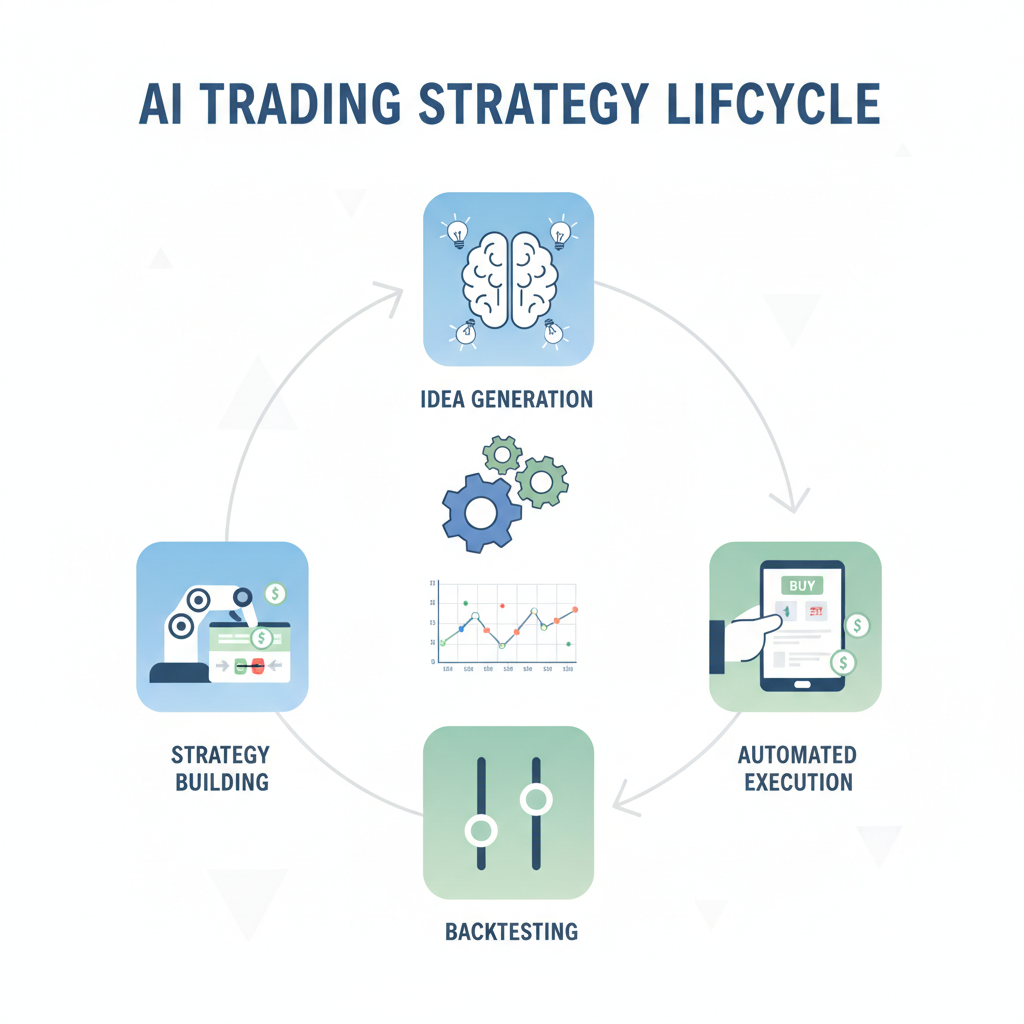
For systematic traders, the "best" AI software provides robust tools for developing, testing, and refining custom trading strategies. This moves beyond simple signal generation to a more proactive approach where traders can translate their unique market insights into automated rules. QuantConnect is a prominent example, serving serious quantitative developers by providing an environment for building and testing complex algorithms, though it typically requires coding expertise.
The efficacy of any AI-generated strategy relies heavily on the quality and comprehensiveness of its backtesting capabilities. A platform must offer strong automation and good backtesting to validate strategy performance against historical data. This includes not just basic historical simulation but also advanced methods like out-of-sample backtesting, Monte Carlo simulations, and detailed performance metrics to ensure a strategy's true robustness under varied market conditions.
Actionable Takeaway: Evaluate AI trading software based on its ability to support custom strategy development and its institutional-grade backtesting engine, providing deep insights into potential strategy robustness.
Automated Execution and Portfolio Management
Once a strategy is developed and validated, the next critical step is automated execution. This is where AI trading software translates directly into disciplined trading by removing emotional biases and ensuring timely order placement. Platforms like 3Commas and StockHero offer solutions for automated execution and portfolio management, particularly in crypto and stocks, respectively. Alpaca, an API-first platform, caters to developers who wish to connect their own AI models directly to live markets, offering flexibility and direct market connectivity.
The level of automation can vary significantly. Some traders prefer a "fully managed AI trading experience," as offered by platforms like BulkQuant, where strategies are executed with minimal manual intervention. Others, who prefer "full control," seek software that allows them to configure indicators, adjust settings, and refine bot behavior.
Actionable Takeaway: Select AI software that aligns with your preferred level of control over automated execution, ensuring seamless integration with your broker and robust portfolio management features.
Evaluating "Best": Key Criteria for AI Trading Software
Determining the "best" AI trading software is subjective and depends entirely on a trader's specific goals, skill level, and risk tolerance. However, several universal criteria can guide this decision:
Ease of Strategy Generation and Customization
For many serious traders, the ability to translate their unique edge or ideas into an automated strategy without extensive coding is paramount. The ideal AI trading software should offer intuitive interfaces for strategy generation, enabling users to combine indicators, apply rules, and define parameters easily. Some platforms, like those leveraging generative AI, can even assist in building and optimizing strategies based on natural language prompts.
This "no-code" or "low-code" approach empowers a broader range of traders—those who think systematically but lack programming skills—to access institutional-grade tools. Customization options should extend to multi-asset support (stocks, forex, crypto, futures, options) to diversify trading opportunities.
Actionable Takeaway: Prioritize platforms that offer no-code AI strategy generation and comprehensive customization, allowing you to easily transform your trading ideas into executable algorithms.
Robustness of Backtesting and Performance Analytics
As highlighted, the integrity of an AI trading strategy is proven through its backtesting capabilities. Beware of platforms that offer superficial backtesting. A truly "best" platform provides a detailed suite of performance metrics, including:
Return and Sharpe Ratio: Standard measures of profitability and risk-adjusted returns.
Out-of-Sample Backtesting: Critical for validating a strategy against data it hasn't "seen," preventing overfitting.
Monte Carlo Simulation: Assesses strategy robustness by simulating various market scenarios.
Heatmaps and Drawdown Analysis: Visualize performance and risk exposure across different market conditions.
A recent review of AI trading bots noted that StockHero users reported win rates of 85% to 90%, demonstrating the potential of well-validated strategies. However, such claims must always be supported by verifiable, robust backtesting data.
Actionable Takeaway: Demand comprehensive, institutional-grade backtesting capabilities, including out-of-sample and Monte Carlo simulations, to ensure your strategies are genuinely robust.
Community, Support, and Transparency
The "best" AI trading software often fosters a vibrant community and offers transparent access to knowledge and support. Platforms that provide a marketplace for community-built strategies, like StockHero's strategy marketplace, allow traders to share, learn, and even monetize their successful algorithms. This ecosystem can be invaluable for continuous learning and adaptation.
Transparency extends to understanding how AI models work (to a reasonable extent) and clear communication about risks. As one Redditor in an algotaading discussion cautioned, beginners must "learn foundational trading first" and gain a solid understanding of "terminology, strategies, and risk management" before relying solely on AI. Unsubstantiated claims or opaque "black-box" systems should be approached with extreme caution.
Actionable Takeaway: Prioritize AI trading software that offers a supportive community, transparent performance reporting, and educational resources to deepen your understanding of AI's role in your trading.
How Horizon Addresses This
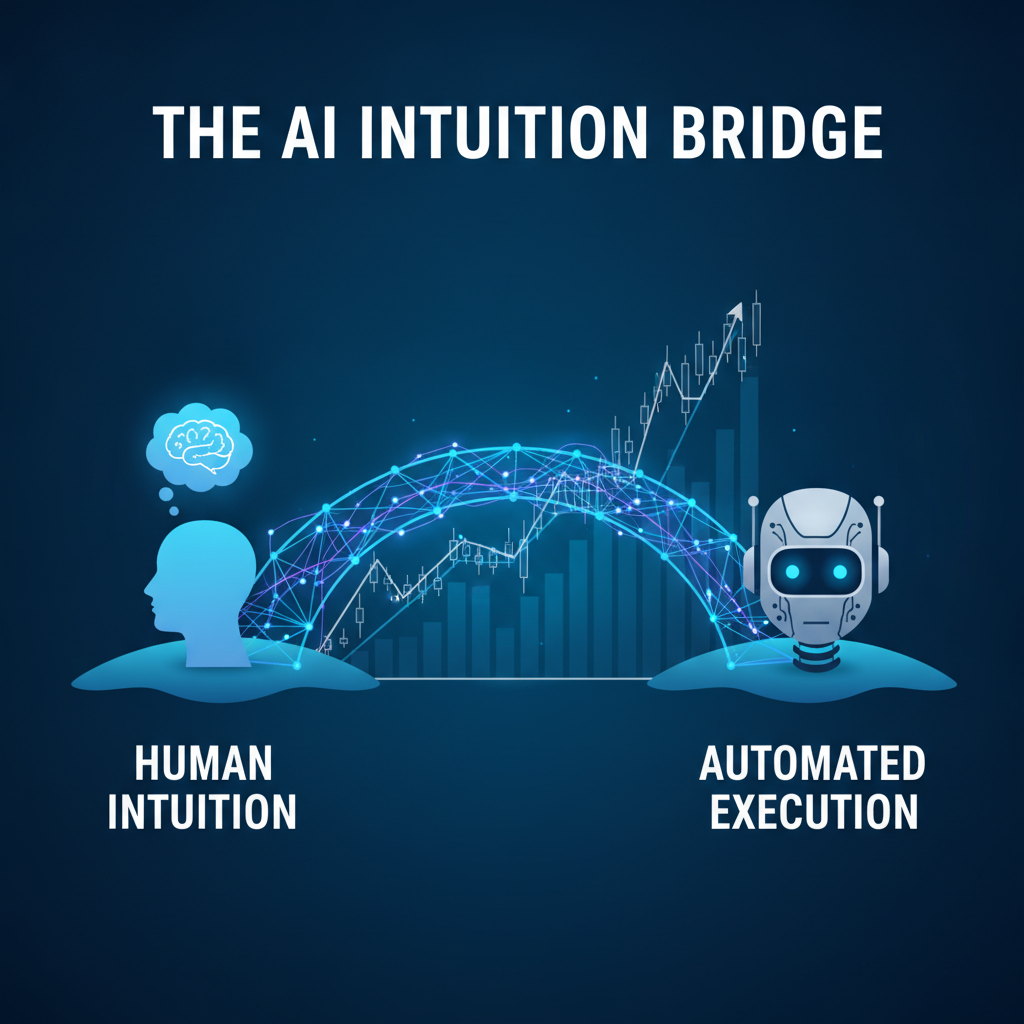
For serious traders who think systematically but lack coding expertise, the journey from an intuitive trading idea to a robust, automated strategy can be daunting. Many AI trading platforms offer either basic signal generation or complex, code-heavy environments. Horizon bridges this gap by providing an institutional-grade AI trading platform that transforms your edge or any ideas—proven or in progress—into automated, disciplined execution.
Horizon allows traders to generate custom trading strategies using AI with no coding required, directly addressing the pain point of technical barriers. Our platform provides an institutional-grade backtesting engine, complete with critical metrics like return, Sharpe ratio, out-of-sample backtesting, Monte Carlo simulation, and heatmaps, ensuring your strategy's true robustness. This enables you to validate your ideas with confidence, unlike retail apps that often lack comprehensive validation tools. Furthermore, with Horizon, you can connect your broker and deploy strategies for live trading, accessing a marketplace of community-built strategies or selling access to your own, all while monitoring performance with real-time analytics. Horizon is built for the professional in the middle: intelligent, capitalized, and ready to operate at the next level, offering multi-asset support across stocks, forex, crypto, futures, and options.
Conclusion
The "best" AI trading software is not a one-size-fits-all solution but rather a powerful toolkit that empowers systematic traders to execute their vision with precision and discipline. By leveraging AI for strategy generation, robust backtesting, and automated execution, traders can transcend manual limitations, reduce emotional biases, and pursue a more consistent edge in the markets. The key is to select a platform that aligns with your trading philosophy, offers transparent, institutional-grade validation capabilities, and provides the necessary tools to transform your ideas into actionable, automated strategies. Explore how platforms like Horizon are designed to empower traders to operate at this next level, providing the infrastructure to turn sophisticated analytical insights into tangible trading results.