Published Jun 18, 2026
Best Backtesting Software: Validating Strategies for the Modern Trader

In today's capital markets, the human element in trading is increasingly augmented, and often replaced, by automated systems. Algorithmic trading strategies now account for an estimated 60-73% of US equity volume, a significant leap from just 20% in 2005 Source. This seismic shift underscores a critical reality: systematic trading, powered by rigorous data analysis, is no longer a niche but the new frontier for serious traders. Central to this evolution is backtesting – the indispensable process of evaluating a trading strategy's viability by applying it to historical market data. Without robust backtesting software, a systematic approach is merely guesswork, leaving traders vulnerable to costly, unvalidated decisions.
Key Takeaways
Automated backtesting enables systematic traders to validate strategies instantly against historical data, with platforms like NinjaTrader and MetaTrader 5 offering capable free tiers TradeZella.
Manual backtesting, as offered by TradeZella and Forex Tester, focuses on replicating real-time decision-making, best suited for discretionary traders looking to refine their execution psychology TradeZella.
Institutional-grade backtesting demands advanced features like accurate tick data, walk-forward analysis, and Monte Carlo simulations to expose strategy weaknesses before live deployment Goat Funded Trader.
No-code strategy builders, exemplified by platforms like NakedMarkets and Horizon, are democratizing algorithmic trading by allowing traders without programming skills to generate and test complex strategies Trading Heroes.
Choosing the right backtesting software involves matching its features—from data quality and customization to ease of use and broker integration—with a trader’s specific skill set, market, and systematic needs.
The Indispensable Role of Backtesting in Modern Trading
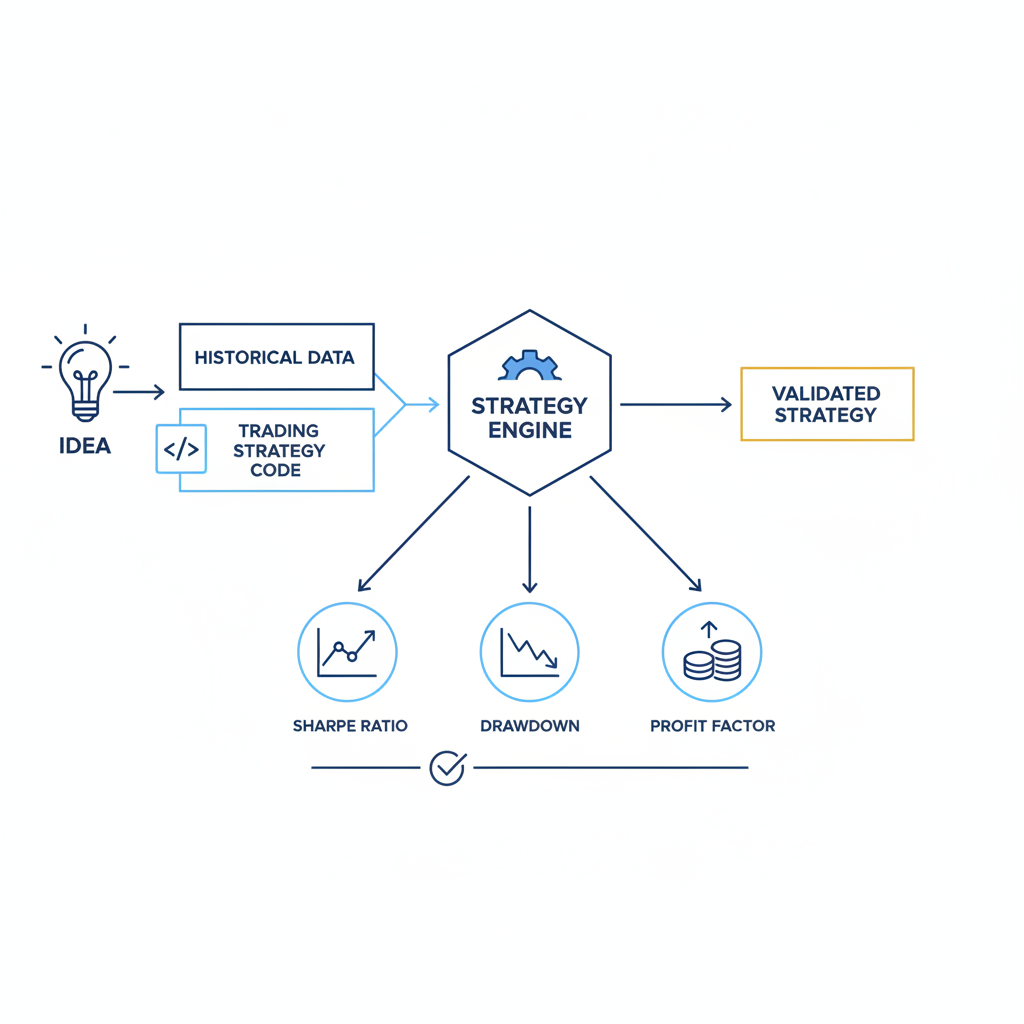
The transition towards algorithmic trading has made backtesting not just an option, but a fundamental requirement for anyone seeking a repeatable edge in the markets. A strategy, no matter how intuitively brilliant, remains speculative until proven effective against historical conditions. This rigorous validation process helps identify potential pitfalls, optimize parameters, and build confidence before risking real capital.
A recent study highlights that traders often spend "months perfecting rules in the best backtesting software and strategy simulators," only to face challenges in execution due to overlooked details or funding logistics Goat Funded Trader. This emphasizes that effective backtesting goes beyond just simulating trades; it requires a comprehensive approach that considers real-world constraints like slippage, latency, and varying market conditions. The objective is not just to find a strategy that historically profited, but one that is robust enough to perform under future, unseen market dynamics.
"Have you ever coded a trading idea only to see it fail in live markets because you tested on the wrong time frame or ignored slippage? The Best Trading Simulator that combines accurate tick data, paper trading, and order replay with solid performance metrics can expose weak spots before you commit real capital."
Ultimately, backtesting serves as the scientific method for traders. It allows for hypothesis testing, iterative refinement, and data-driven decision-making, moving trading from an art of intuition to a disciplined, quantitative endeavor. Without this critical step, even the most promising trading ideas risk becoming expensive lessons.
Navigating Backtesting Methodologies: From Manual Replay to Automated Algos
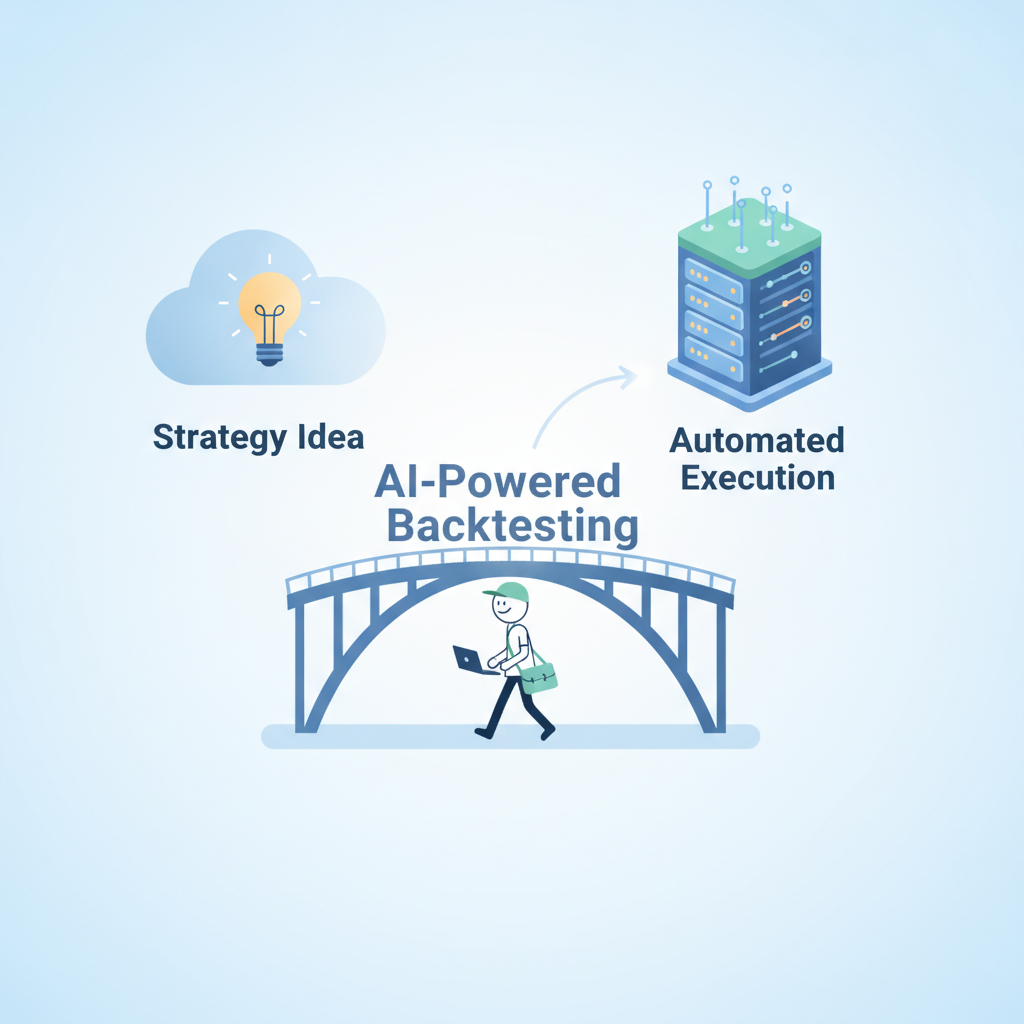
The landscape of backtesting software offers a spectrum of approaches, catering to different trading styles and technical proficiencies. Broadly, these can be categorized into manual and automated backtesting, each with distinct advantages and use cases.
Manual Backtesting: Refining Discretionary Decision-Making. Manual backtesting involves replaying historical charts bar by bar, allowing traders to make decisions as the market unfolds without foresight. This method is particularly beneficial for discretionary traders who rely on pattern recognition, market context, and subjective judgment. Platforms like TradeZella and Forex Tester excel in this area, simulating the real-time experience of making trading decisions. TradeZella, for instance, offers a "Mentor Mode" for sharing sessions and receiving targeted feedback, underscoring its utility for skill development TradeZella. While time-intensive, manual backtesting is invaluable for honing entry/exit points, risk management, and overall trading psychology.
Automated Backtesting: Powering Systematic Strategies. For systematic traders, automated backtesting is the cornerstone. This method involves coding precise trading rules and running them across vast datasets of historical market data in seconds. Platforms such as TradingView, NinjaTrader, QuantConnect, AmiBroker, and MetaTrader 5 are popular choices, providing rapid analysis and performance metrics. NinjaTrader, for example, offers a "full Strategy Analyzer available at no cost for as long as you want," making it accessible for futures traders TradeZella. MetaTrader 5's Strategy Tester supports multi-currency testing and genetic optimization, catering to forex traders TradeZella.
A growing trend is the emergence of "no-code" or "pseudo-coding" platforms that bridge this gap, allowing traders to build automated strategies without deep programming knowledge. NakedMarkets, for instance, provides a drag-and-drop "Rule Manager" for easily creating automated or semi-automated strategies Trading Heroes. This innovation empowers more traders to adopt systematic approaches, validating their ideas efficiently.
Many experienced traders often combine both approaches: using automated backtesting to validate the logical soundness and historical performance of their rules, then employing manual replay to practice the execution of those rules under realistic conditions, thereby strengthening both the strategy and their trading discipline.
Institutional-Grade Backtesting: Key Features for Robust Strategy Validation
For traders serious about a systematic edge, basic backtesting is insufficient. Institutional-grade backtesting software offers a suite of advanced features designed to stress-test strategies against complex market realities and avoid "curve-fitting" – where a strategy performs well on historical data but fails in live trading. These features are critical for building truly robust and adaptive algorithms.
1. High-Quality Data and Realistic Simulation: The foundation of robust backtesting is accurate, granular historical data. This includes tick data, order book data, and historical news events. Beyond data, the simulation engine must account for real-world phenomena such as slippage, transaction costs (commissions, spreads), market impact, and partial fills. Many retail platforms simplify these, leading to overly optimistic results. Goat Funded Trader emphasizes the need for a simulator that combines "accurate tick data, paper trading, and order replay with solid performance metrics."
2. Advanced Performance Metrics and Visualization: Beyond simple profit/loss, institutional-grade backtesting provides a comprehensive array of metrics: Sharpe Ratio, Sortino Ratio, Calmar Ratio, maximum drawdown, profit factor, win rate, average win/loss, and detailed equity curves. Visualizations like heatmaps and trade-by-trade analysis offer deeper insights into strategy behavior under various market conditions. TradeStation, an established platform, provides "detailed reports to help you analyze your performance" Trading Heroes.
3. Out-of-Sample Testing and Walk-Forward Analysis: To combat curve-fitting, effective platforms support splitting historical data into "in-sample" (for optimization) and "out-of-sample" (for validation) periods. Walk-forward analysis takes this further, iteratively optimizing a strategy on a rolling window of historical data and then testing it on the immediately subsequent "out-of-sample" period. This simulates how a strategy would be optimized and traded in real-time, offering a much more realistic assessment of its future performance.
4. Monte Carlo Simulations: Market returns are probabilistic, not deterministic. Monte Carlo simulations re-run a strategy thousands of times, introducing randomness in trade sequences, entry/exit prices, or other parameters based on historical distributions. This generates a range of possible outcomes, providing a more realistic understanding of a strategy's risk profile, expected returns, and probability of ruin. It helps answer questions like, "What's the worst-case drawdown 95% of the time?"
5. Multi-Asset and Portfolio Backtesting: Modern traders often manage diversified portfolios across different asset classes—stocks, forex, crypto, futures, options. An advanced backtesting engine must support simultaneous testing across multiple assets, allowing for the development and validation of portfolio-level strategies, including correlation analysis, diversification benefits, and cross-market arbitrage opportunities. MetaTrader 5, for example, offers multi-currency testing, which is a step in this direction TradeZella.
Platforms like QuantConnect, a cloud-based environment, are geared towards quants, supporting Python and C# for advanced backtesting and access to institutional-quality data NewTrading.io. Similarly, MultiCharts is noted for "advanced execution modeling and institutional-grade testing" NewTrading.io. These features collectively ensure that a backtested strategy is not just historically profitable, but genuinely robust and adaptable for live trading.
A Comparative Look at Leading Backtesting Platforms
The market for backtesting software is diverse, with solutions ranging from free, beginner-friendly tools to highly sophisticated platforms for experienced quants and institutions. Understanding the strengths of each helps in selecting the right tool for one's specific trading needs.
For Beginners and Discretionary Traders:
NakedMarkets: Offers a user-friendly interface for both manual backtesting and drag-and-drop strategy building without code Trading Heroes.
Forex Tester / Traders Casa: Excellent for manual chart replay, allowing discretionary traders to practice and refine their decision-making process with realistic conditions TradeZella, Traders Casa.
TradingView: Popular for its charting capabilities and relatively simple Pine Script for automated backtesting, though its advanced backtesting features are more limited compared to dedicated platforms Goat Funded Trader.
For Experienced Systematic Traders and Developers:
NinjaTrader: Highly regarded for futures trading, offering robust historical backtesting and real-time execution capabilities. Its Strategy Analyzer is free TradeZella.
MetaTrader 5: Widely used by forex and CFD traders, with a built-in strategy tester that supports multi-currency and genetic optimization. Its Strategy Tester is free TradeZella.
TradeStation: An older but continually evolving platform, known for its EasyLanguage pseudo-coding and extensive educational resources Trading Heroes.
AmiBroker: A powerful platform allowing custom strategy coding in various languages, preferred by experienced traders for its flexibility and advanced analysis Trading Heroes.
Backtrader (Python): An open-source, powerful Python-based framework offering full control for traders who prefer to code their own solutions NewTrading.io. Similarly, ZipLine is the Python library powering Quantopian.
For Quants and Institutions:
QuantConnect: A cloud-based, event-driven backtesting platform supporting Python and C#, with access to institutional-quality data. It offers a free tier with compute limitations TradeZella, QuantStart.
MultiCharts: Provides advanced execution modeling and institutional-grade testing, suitable for complex strategies and large data volumes NewTrading.io.
Deltix, QuantHouse, Marketcetera: These are high-end, often enterprise-level solutions designed for quant funds, proprietary trading houses, and family offices, typically with substantial licensing costs and infrastructure requirements QuantStart.
Each platform has its niche, but for serious traders seeking to transform their ideas into automated, disciplined execution without requiring a quant team or extensive coding, a gap remains. This gap is precisely what platforms like Horizon aim to address, combining accessibility with institutional rigor.
How Horizon Addresses This
Horizon (horizon.trade) is built for the professional trader who thinks systematically but may not have the coding expertise or the capital for an institutional quant team. We bridge the gap between complex algorithmic trading and user accessibility by integrating powerful, enterprise-grade backtesting with an intuitive, no-code strategy generation interface.
While many platforms require coding in Python, C#, or proprietary languages, Horizon allows traders to generate custom trading strategies using AI with no coding required. This significantly lowers the barrier to entry for systematic trading. Our platform then deploys an institutional-grade backtesting engine that goes beyond basic simulations. Traders can backtest strategies against historical market data with detailed performance metrics, including return, Sharpe ratio, out-of-sample backtesting, and Monte Carlo simulations. This robust validation process ensures your strategy is truly resilient against future market conditions, not just historically optimized.
Horizon also provides features like heatmaps to visualize strategy performance under various market conditions and supports multi-asset trading (stocks, forex, crypto, futures, options), making it suitable for diversified portfolios. Unlike retail apps that often provide oversimplified metrics, Horizon equips traders with the tools to critically assess strategy robustness, akin to what a professional quant would use. This enables systematic traders to confidently transition their validated strategies from paper trading to live automated execution via broker integrations, all while monitoring performance with real-time analytics. Explore how Horizon can transform your trading ideas into disciplined, automated execution by visiting horizon.trade.
Conclusion
The journey from a trading idea to a consistently profitable automated strategy is paved with rigorous backtesting. As algorithmic trading continues to dominate global markets, the sophistication and depth of backtesting software become paramount. Choosing the best backtesting software isn't about finding a single "best" tool, but rather identifying the platform that aligns with your trading philosophy, technical capabilities, and desire for robust, data-driven validation. For serious traders ready to elevate their systematic approach without the steep learning curve of programming, platforms like Horizon (horizon.trade) represent the next evolution. By democratizing institutional-grade tools and robust validation methodologies, Horizon empowers traders to transform their edges into automated, disciplined execution, ensuring their strategies are built on a foundation of proven performance. Visit horizon.trade to discover how AI-powered backtesting can fortify your trading strategies and propel you to the next level of market operation.