Published Jun 18, 2026
Create Trading Strategies with AI: Systemizing Your Edge for Automated Performance
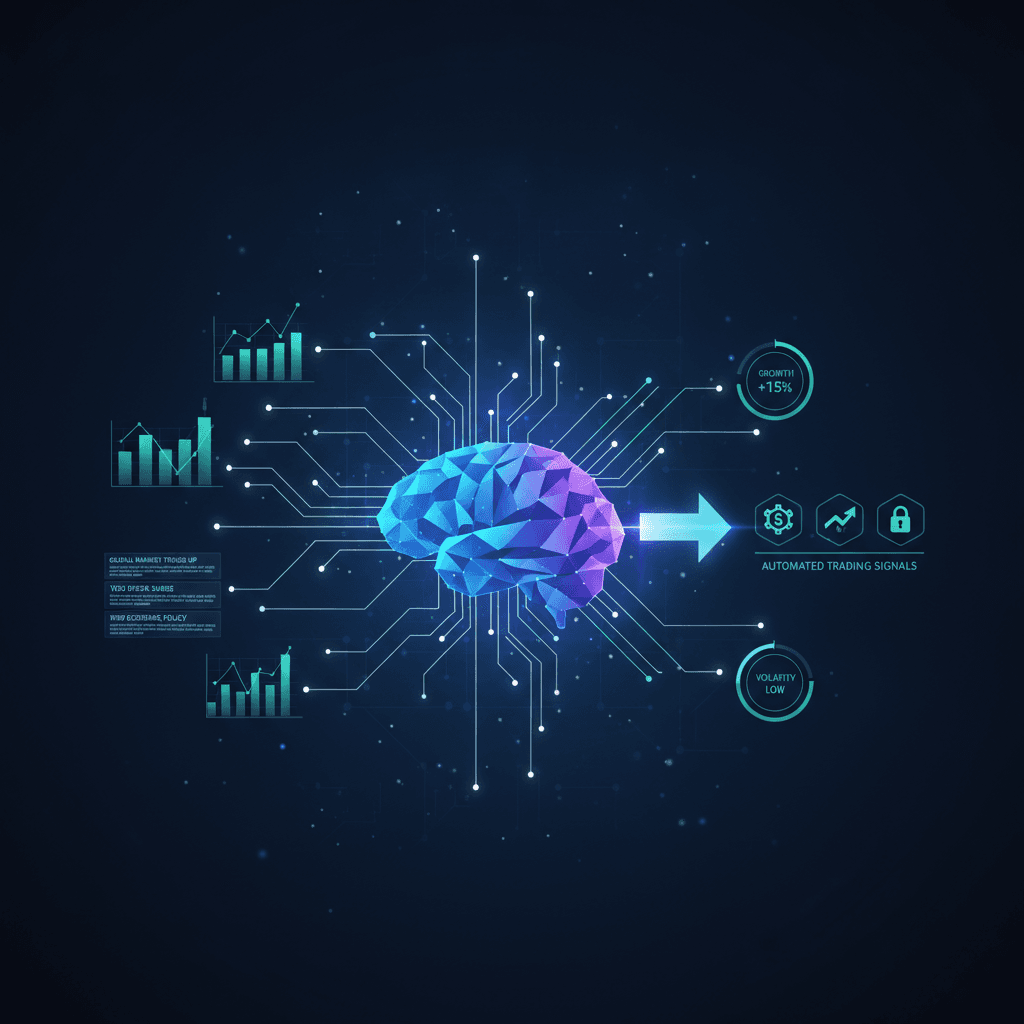
While the allure of discretionary trading often promises quick wins, the reality of financial markets increasingly favors systematic, AI-driven approaches. AI trading strategies can read markets faster, spot intricate patterns at scale, and convert vast datasets into clear, actionable trading signals with a speed and consistency unachievable by human traders alone. This shift is not merely about automation; it's about transforming subjective ideas into objective, rule-based systems that demonstrably outperform emotional decision-making.
Key Takeaways
AI trading strategies leverage machine learning to predict market behavior, identify patterns, and automate decisions, processing diverse data types from historical prices to sentiment scores.
Systematic approaches powered by AI mitigate emotional biases and human error, offering a disciplined alternative to discretionary trading by translating concepts into objective rule-based systems.
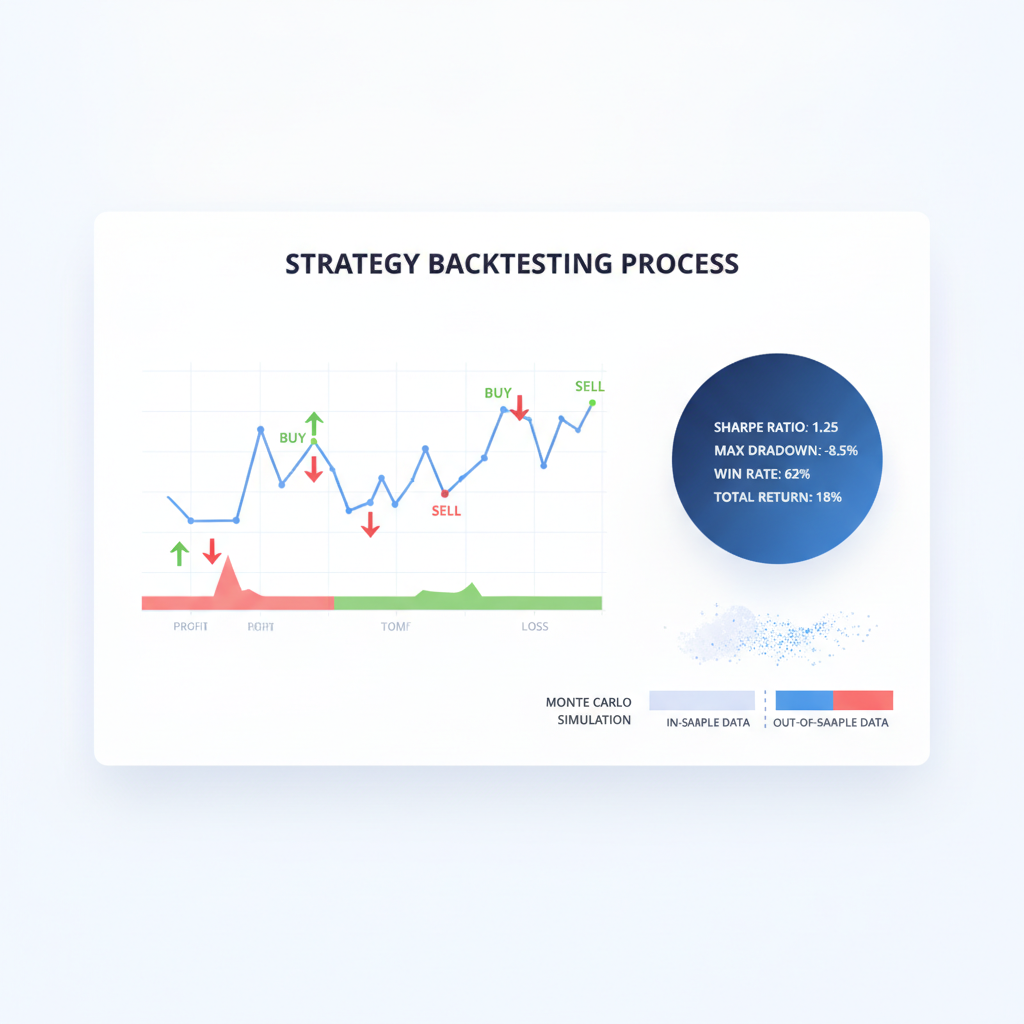
Robust AI strategies require meticulous data preparation, careful model selection (supervised, unsupervised, reinforcement learning), and rigorous validation using out-of-sample data, walk-forward analysis, and Monte Carlo simulations to prevent overfitting.
AI-driven execution models analyze high-frequency data to minimize transaction costs and adapt order placement in real-time, integrating seamlessly across the entire trading lifecycle from data processing to live execution.
No-code and low-code AI tools are democratizing access to institutional-grade strategy creation, enabling traders to develop, backtest, and deploy sophisticated algorithms without extensive programming knowledge.
The Inevitable Shift to Systematic Trading: Why Emotions Cost You Money
The human element in trading, while capable of intuition and creativity, is inherently vulnerable to psychological biases such as fear, greed, and confirmation bias. These emotional pitfalls often lead to suboptimal decision-making, inconsistent performance, and a failure to adhere to a predefined trading plan. In contrast, systematic trading strategies operate on a strict set of rules, executed without emotion or hesitation, ensuring discipline and consistency across all market conditions. Artificial intelligence serves as the ultimate tool for overcoming these human limitations. By transforming a trader's insights or hypotheses into precise, rule-based systems, AI allows for trading decisions to be made purely on data and pre-defined logic. This approach not only removes the psychological burden but also enables the processing of vast amounts of information and the identification of patterns at speeds impossible for human analysis. The evolution of AI in trading reflects a fundamental shift from static rules to adaptive, data-driven decision systems, highlighting a professional imperative for serious traders to embrace this technology. The practical insight here is clear: to elevate your trading performance and achieve sustainable profitability, adopting systematic, AI-powered methodologies is no longer optional but essential.
"AI driven trading strategies can read markets faster, spot patterns at scale, and turn data into clear trading signals. Sooner or later, you have to learn them."
AI as an Idea Engine: From Concept to Rule-Based Strategy
The most significant hurdle for many intelligent traders is translating a conceptual trading edge into a tangible, executable strategy. Historically, this required extensive coding knowledge or reliance on a team of quantitative developers. However, modern AI platforms are democratizing this process, enabling traders to generate custom trading strategies with AI, often requiring no coding at all. This capability fundamentally changes how ideas are brought to life in financial markets. AI acts as an intelligent assistant, converting a trader's qualitative ideas – such as "buy when momentum is strong and volatility is low" – into precise, rule-based algorithms. This involves leveraging various machine learning models that predict market behavior, identify intricate patterns, and automate decision-making. For example, Natural Language Processing (NLP) can transform unstructured text data, like news headlines or earnings call transcripts, into quantifiable sentiment scores that can then be integrated into trading rules. This allows for a blend of technical, fundamental, and even alternative data to form comprehensive, hybrid strategies that reduce single-source failure and generalize better across market regimes. The actionable takeaway for traders is to focus on clearly defining their trading edge and risk parameters; AI tools can then facilitate the conversion of these insights into robust, automated strategies.
Building Robust AI Trading Strategies: Data, Models, and Validation
Developing an effective AI trading strategy goes far beyond merely generating rules; it demands meticulous data preparation, intelligent model selection, and rigorous validation to ensure real-world robustness. Without a strong foundation in these areas, even the most promising AI-generated ideas can fall short in live trading environments. The bedrock of any AI strategy is data. Accurate AI models require a diverse range of inputs, including historical price data, fundamental economic indicators, alternative datasets (such as satellite imagery or web traffic), and sentiment data. Once data is processed and features are engineered, traders can employ various machine learning models:
Supervised Learning: Models trained on labeled data to predict future direction or returns.
Unsupervised Learning: Used to cluster market regimes, identify anomalies, or reduce dimensionality in complex datasets.
Reinforcement Learning: Enables models to adjust entries, exits, and position sizing dynamically based on rewards from market interactions.
However, a critical challenge in AI strategy development is preventing overfitting, where a model performs exceptionally well on historical data but fails in new market conditions. To mitigate this, it's essential to stick to simpler models and avoid excessive parameters For Traders. Furthermore, validating strategies with fresh, out-of-sample data is crucial. Tools like walk-forward analysis and Monte Carlo simulations provide comprehensive testing of how a strategy holds up under different conditions, helping to confirm its stability and viability. The actionable insight for traders is to prioritize generalization and robustness over maximum historical optimization, ensuring the strategy's viability in dynamic live markets.
Automating Execution and Adapting to Markets
The journey of an AI trading strategy doesn't conclude with its creation and backtesting; it extends into automated execution and continuous, real-time adaptation. The ultimate goal of systematic trading is to deploy strategies for live trading with automated execution, ensuring that market opportunities are captured consistently and without human intervention. AI plays a pivotal role in this final stage by optimizing order execution. AI-driven execution models analyze high-frequency market data to minimize transaction costs, reduce market impact, and adapt order placement in real-time to evolving liquidity conditions Quantinsti. Reinforcement learning is particularly well-suited for this, allowing decisions to respond instantly to market microstructure changes Quantinsti. Beyond execution, the continuous monitoring of strategy performance is paramount. AI models are not static; market conditions change, and strategies can degrade over time due to "model drift." Therefore, regularly assessing AI models and making real-time adjustments as market conditions shift is key to boosting accuracy, efficiency, and overall trading results. This ongoing refinement ensures that the AI strategy remains aligned with its goals and can effectively adapt to new trends. The practical insight is to implement robust monitoring and adaptive mechanisms, recognizing that even the best strategies require continuous oversight in live markets.
How Horizon Addresses This
Horizon Trade is purpose-built for the serious trader seeking to transform their ideas into automated, disciplined execution without the need for extensive coding. Our platform directly addresses the challenges of creating, validating, and deploying AI-powered trading strategies. With Horizon, you can leverage AI to generate custom trading strategies from your market insights, translating your edge into precise, rule-based systems. Our institutional-grade backtesting engine allows you to rigorously test these strategies against historical market data, providing detailed performance metrics, out-of-sample backtesting, Monte Carlo simulations, and heatmaps to ascertain true robustness. This powerful validation framework helps traders avoid common pitfalls like overfitting and ensures their strategies are prepared for live market conditions. Once validated, you can seamlessly connect your broker and deploy strategies for live trading with automated execution, while real-time analytics provide comprehensive performance monitoring. For those looking for inspiration or validation, Horizon also offers a marketplace of community-built strategies, allowing users to buy, copy, customize, or even sell access to their proven strategies, fostering a transparent environment where performance and reputation are paramount.
Conclusion
The landscape of global trade is undeniably shaped by artificial intelligence, offering serious traders an unprecedented opportunity to systemize their edge and achieve disciplined, automated execution. By transforming subjective trading ideas into objective, rule-based strategies, AI mitigates the inherent biases of human emotion, paving the way for consistent and robust performance. From data-driven strategy generation and institutional-grade backtesting to automated execution and real-time monitoring, AI integrates across the entire trading lifecycle, empowering traders to operate at a professional level. As markets continue to evolve in complexity and speed, embracing AI is not merely an advantage but a necessity for sustainable success. Explore how Horizon Trade can empower you to unlock the full potential of your trading ideas, transforming them into automated, high-performing strategies for today's dynamic financial markets.