
All Articles

Published Jun 18, 2026Tutorials

How to Build a Trading Strategy Without Coding: The No-Code Algorithmic Revolution

How to Build a Trading Strategy Without Coding: The No-Code Algorithmic Revolution

Once the exclusive domain of institutional quants and high-frequency trading firms, algorithmic trading has undergone a profound transformation, becoming increasingly accessible to individual traders and systematic investors. This shift is not merely technological; it represents a democratization of sophisticated trading capabilities. For instance, algorithmic trading is now responsible for approximately 70-80% of all trades in financial markets, a significant evolution from its initial niche application, underscoring the imperative for serious traders to adopt systematic approaches.

Key Takeaways

  • No-code platforms have democratized algorithmic trading, making sophisticated automation accessible to traders without programming skills, addressing a market worth billions.

  • Successful no-code strategy development hinges on clearly defining rules, including precise entry/exit conditions and robust risk management parameters, often leveraging pre-built modules and visual interfaces.

  • Rigorous backtesting against historical data and paper trading are crucial validation steps, with platforms offering institutional-grade metrics like Sharpe ratio and Monte Carlo simulations.

  • Strategies require continuous monitoring and adaptive optimization post-deployment, as market conditions constantly evolve, impacting performance.

  • Platforms like Horizon streamline the entire no-code algorithmic trading lifecycle, from AI-powered strategy generation and advanced backtesting to automated execution and a marketplace for strategy sharing.

The Democratization of Algorithmic Trading: Why No-Code Matters

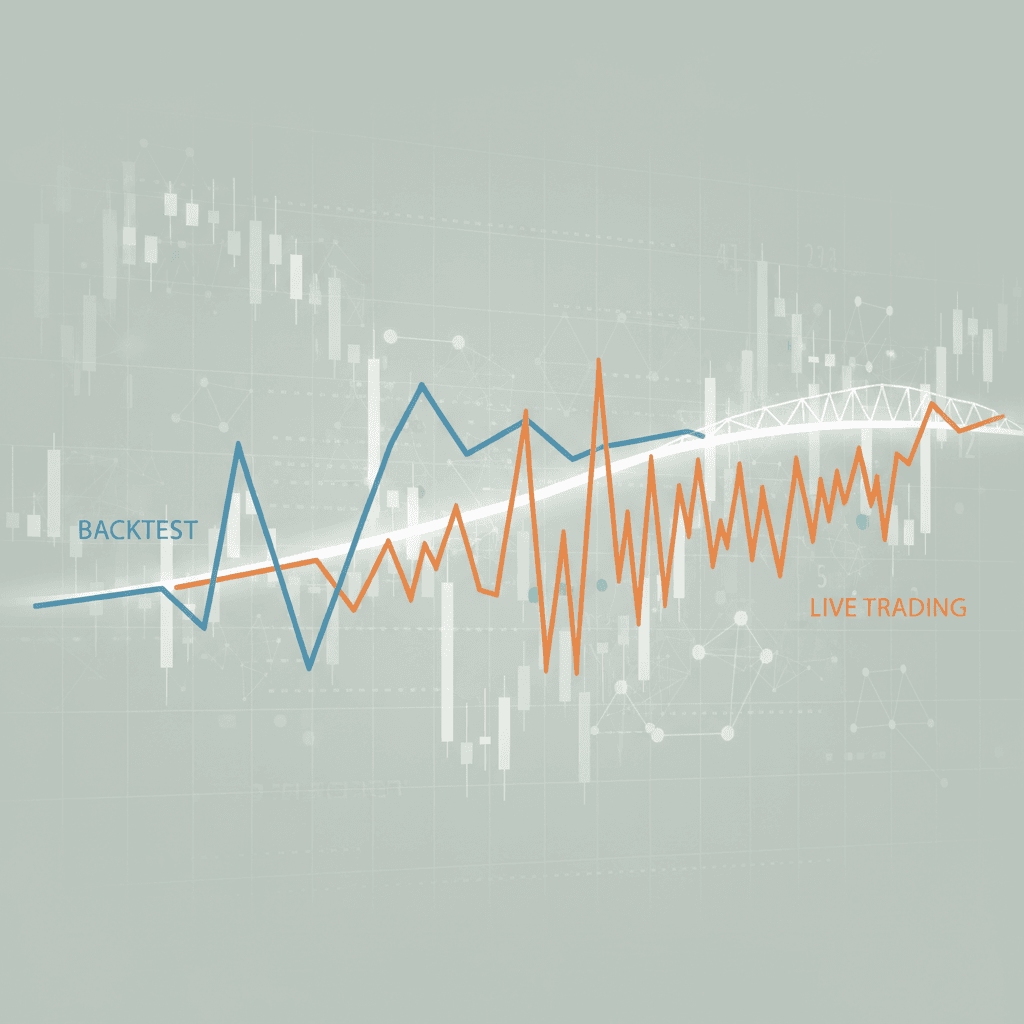
Blog illustration

The landscape of financial markets has been irrevocably altered by algorithmic trading, fundamentally changing how transactions occur and how edges are pursued. What began as a tool for institutional investors, demanding deep programming expertise in languages like Python or C++, has evolved into a powerful suite of no-code platforms. This evolution caters to a vast segment of serious traders who possess profound market insight and systematic thinking but lack the technical coding skills to translate their strategies into automated algorithms. The shift signifies a crucial step in leveling the playing field, enabling more participants to leverage the benefits of automated execution.

The adoption of algorithmic trading by retail and semi-professional traders is driven by several compelling advantages over manual trading:

  • Elimination of Emotional Bias: Human emotions such as fear and greed are notorious for derailing trading plans. Automated systems execute trades based purely on predefined rules, ensuring disciplined adherence to a strategy even during volatile market conditions.

  • Increased Speed and Efficiency: Algorithms can process vast amounts of data and execute trades in milliseconds, far exceeding human capabilities. This speed is critical for capturing fleeting opportunities and minimizing slippage, particularly in fast-moving markets.

  • Backtesting and Optimization: Before going live, a no-code strategy can be tested against years of historical data to evaluate its potential performance. This iterative process allows traders to refine rules, identify optimal parameters, and understand a strategy's robustness under various market conditions. This research phase is estimated to reduce potential losses significantly by identifying flaws early.

  • 24/7 Market Monitoring: Unlike human traders, algorithms can operate continuously across global markets, capitalizing on opportunities around the clock without physical limitations.

The demand for accessible algorithmic trading solutions is evident in the market's growth. The global algorithmic trading market size was valued at USD 13.9 billion in 2022 and is projected to grow at a compound annual growth rate (CAGR) of 10.9% from 2023 to 2030, indicating a strong trend towards automation and sophisticated tools like no-code platforms. This expansion is largely fueled by an increasing desire among individual and professional traders to remove the coding barrier.

No-code platforms bridge this gap by offering intuitive, visual interfaces that translate complex trading ideas into executable logic. Instead of writing lines of code, traders can use drag-and-drop elements, dropdown menus, and predefined modules to construct their strategies. This empowers a new generation of quantitative traders, allowing them to focus on market analysis and strategy design rather than programming syntax. NinjaTrader's Strategy Builder, for instance, highlights how a point-and-click workflow can generate a strategy framework without a single line of code, turning any trading idea into a fully automated futures strategy.

Comparison of Trading Approaches

Feature Manual Trading No-Code Algorithmic Trading Code-Based Algorithmic Trading Entry Barrier (Coding Skill) Low (Market knowledge required) Very Low (No coding needed) High (Proficiency in Python, C++, etc.) Speed of Execution Slow (Human reaction time) Fast (Automated, milliseconds) Very Fast (Optimized code, microseconds) Emotional Bias High (Prone to fear/greed) None (Rule-based execution) None (Rule-based execution) Backtesting Capabilities Limited (Manual historical review) Extensive (Automated with detailed metrics) Extensive (Highly customizable, complex models) Cost/Complexity Low (Platform fees) Moderate (Platform subscription) High (Development, infrastructure, maintenance) Flexibility/Customization High (Adaptable to discretion) Moderate (Limited by platform modules) Very High (Full control over logic)

The actionable takeaway here is that professional traders who are held back by coding barriers no longer face a significant disadvantage. The right no-code platform can provide the infrastructure to build, test, and deploy sophisticated trading strategies, enabling them to operate with institutional-grade precision.

Deconstructing a No-Code Strategy: From Concept to Conditions

Blog illustration

The foundation of any successful automated trading strategy, whether coded or no-code, lies in a clear and quantifiable trading concept. Without this conceptual clarity, even the most advanced platforms cannot yield consistent results. As noted by Switch Markets, "If your strategy cannot be stated in a set of rules, you can’t automate it with a trading bot." The process begins by articulating a trading idea in simple, rule-based terms, outlining specific triggers for entering and exiting trades, along with defined risk parameters.

Step 1: Defining Your Trading Concept and Objectives

Before touching any platform, traders must precisely define their strategy in plain language. This involves specifying:

  • The Core Idea: What market phenomenon are you trying to exploit? Is it mean reversion, trend following, breakout detection, or something else?

  • Asset Class: Which instruments will you trade? Stocks, forex, cryptocurrencies, futures, or options? No-code platforms often support multi-asset strategies, allowing for diversification.

  • Timeframe: Will your strategy operate on daily, hourly, or minute charts? This influences the indicators and parameters used.

  • Goals and Risk Tolerance: What is the target return? What is the maximum acceptable drawdown? These factors guide the entire strategy design.

For example, a concept might be: "Buy EUR/USD when the 50-period Exponential Moving Average (EMA) crosses above the 200-period EMA on the 1-hour chart, and the Relative Strength Index (RSI) is below 30. Exit when the 50-period EMA crosses below the 200-period EMA, or a 1.5% stop-loss is hit." This clarity provides the blueprint for the no-code builder.

Step 2: Setting Up Entry Conditions

Entry conditions are the specific rules that trigger a buy or sell signal. No-code platforms provide a rich library of pre-built modules for common technical indicators and price actions. Tradetron's condition builder exemplifies this by offering modules for:

  • Technical Indicators: Moving Averages (SMA, EMA), RSI, MACD, Bollinger Bands, Stochastic Oscillator. Traders can configure parameters like period length (e.g., 14-period RSI, 20-period Bollinger Bands).

  • Price Action Patterns: Breakouts above resistance, support level bounces, candlestick patterns.

  • Volume Analysis: Volume spikes, accumulation/distribution patterns, often integrated as supplementary conditions.

  • Time-Based Conditions: Trading only during specific market hours, days of the week, or avoiding high-impact news events.

These conditions are typically selected from dropdown menus or dragged onto a visual canvas, then logically combined using "AND," "OR," and "NOT" operators to form complex entry rules. QuantVPS highlights a strategy from Larry Connors: enter when the 2-period RSI drops below 10 and the price is above the 200-period SMA, demonstrating how specific indicator values are combined.

Step 3: Defining Exit Rules and Risk Management

Profitable trading relies as much on when to exit a trade as when to enter. No-code platforms allow for multiple, sophisticated exit conditions:

  • Profit Targets: Defined as a percentage gain (e.g., 3% profit target) or an absolute monetary value.

  • Stop-Loss Levels: Crucial for capital preservation. These can be fixed percentages (e.g., 1% stop-loss), absolute values, or dynamic trailing stops that adjust as the price moves favorably.

  • Technical Signal Reversals: An exit can be triggered by the inverse of an entry signal (e.g., the 50-period EMA crossing below the 200-period EMA for a long trade).

  • Time-Based Exits: Closing a trade after a specific holding period, regardless of profit or loss, to prevent prolonged exposure.

Risk management is paramount and must be integrated from the outset. This includes defining position sizes, maximum loss limits per trade, and overall portfolio risk. Share India emphasizes setting these parameters (like entry/exit signals, stop-loss, and targets) within the custom strategy builder. The actionable insight is that a well-defined trading concept, coupled with precisely configured entry and exit conditions and strict risk controls, forms the bedrock of a robust no-code algorithmic strategy, minimizing discretionary error.

The Architecture of Automation: Building Robust Rules Without Code

The power of no-code platforms lies in their ability to translate a trader's logical rules into automated execution without the complexities of programming syntax. This is achieved through a visual architecture that abstracts coding, allowing users to focus purely on the strategic components. The core of this architecture often involves sophisticated visual builders, pre-built modules, and support for complex multi-asset and multi-timeframe strategies.

Visual Builders and Drag-and-Drop Logic

At the heart of no-code strategy creation are visual interfaces that replace traditional coding environments. Platforms like NinjaTrader's Strategy Builder and AlgoBuilder utilize a "point-and-click" or "drag-and-drop" workflow. Users select indicators, price values, and logical operators (e.g., "greater than," "crosses above") from a menu and assemble them into a clear sequence of rules. For example, to build a simple moving average crossover strategy, a trader might drag a "Moving Average" block onto a canvas, configure its period to 50, then add another with a period of 200, and finally connect them with a "Crosses Above" or "Crosses Below" logical operator.

This visual representation makes the strategy's logic transparent and easy to understand, even for complex multi-condition scenarios. Behind the scenes, the platform automatically generates the underlying code, such as NinjaScript or MetaTrader 5 code, ensuring compatibility with execution environments. This enables traders to concentrate on the strategic essence rather than debugging syntax errors, significantly accelerating the development process. The visual clarity also aids in quickly identifying and rectifying logical flaws during the strategy design phase.

Leveraging Pre-built Modules and Advanced Features

Most no-code platforms come equipped with a rich library of pre-built modules for various functionalities, streamlining the development process. These modules cover a wide range of trading components:

  • Indicator Combinations: Pre-packaged blocks that combine multiple indicators (e.g., "RSI overbought/oversold with MACD crossover").

  • Pattern Recognition: Modules for identifying common chart patterns or candlestick formations without manual configuration.

  • Risk Management Templates: Standardized stop-loss and take-profit mechanisms, trailing stops, or time-based exits that can be easily configured.

Furthermore, advanced no-code platforms support increasingly sophisticated strategies:

  • Multi-Asset Strategies: The ability to create strategies that monitor and trade across different asset classes simultaneously (e.g., stocks, forex, commodities). This diversification can help manage risk and capture opportunities in various markets.

  • Multi-Timeframe Analysis: Combining signals from different timeframes (e.g., using a daily trend filter while executing trades on a 15-minute chart) to create more robust and nuanced strategies. Tradetron, for instance, supports strategies that operate across multiple assets or combine signals from different timeframes.

  • Strategy Combinations and Portfolio-Level Algorithms: For expert users, some platforms allow combining multiple individual strategies into a single portfolio-level algorithm. This enables implementing correlation controls and risk balancing across diverse approaches, offering a comprehensive solution for managing complex trading portfolios.

The practical implication is that traders can quickly iterate on complex ideas. By leveraging these pre-built and advanced features, they can construct highly diversified and robust strategies that would traditionally require extensive coding and development time. The architectural strength of these platforms empowers systematic traders to implement sophisticated logic with unprecedented ease, driving greater precision and potential profitability.

Rigorous Validation: Backtesting, Optimization, and Paper Trading

Building a strategy, no matter how intuitively sound, is only the first step. The true test of its viability lies in rigorous validation through backtesting, optimization, and paper trading. This crucial phase transforms a hypothesis into a data-driven potential edge, mitigating the substantial risks associated with deploying untested algorithms in live markets. Neglecting this step often leads to significant capital loss, as market conditions are dynamic and past performance is never a guarantee of future results.

Comprehensive Backtesting with Historical Data

Backtesting involves running your strategy against extensive historical market data to simulate how it would have performed. Most no-code platforms include built-in, institutional-grade backtesting engines that provide detailed performance metrics. QuantVPS emphasizes backtesting against historical data to understand how a strategy would perform under different market conditions.

Key metrics generated during backtesting include:

  • Total Return/Net Profit: The overall profit or loss generated over the backtesting period, often presented as a percentage.

  • Sharpe Ratio: A measure of risk-adjusted return, indicating how much excess return you receive for the volatility taken. A higher Sharpe ratio (e.g., above 1.0) generally signifies a better risk-adjusted performance.

  • Maximum Drawdown: The largest peak-to-trough decline in the strategy's equity curve, crucial for understanding potential capital risk. Traders often define an acceptable maximum drawdown, for example, 15-20%.

  • Win Rate: The percentage of winning trades compared to total trades.

  • Profit Factor: The ratio of gross profits to gross losses, indicating the profitability of the strategy. A profit factor above 1.0 suggests a profitable system.

  • Out-of-Sample Backtesting: A critical technique where the strategy is optimized on one segment of historical data (in-sample) and then tested on a completely different, unseen segment (out-of-sample). This helps to identify curve-fitting, where a strategy performs exceptionally well on past data but fails in new market conditions.

  • Monte Carlo Simulation: An advanced technique that runs thousands of simulations, randomly altering trade order or parameters within statistical bounds, to assess the robustness and probability distribution of potential outcomes. This provides a more realistic expectation of future performance than a single backtest.

The goal is not just to see positive returns but to understand the strategy's behavior across various market cycles (bull, bear, sideways markets). A strategy that performs well in a strong bull market might fail catastrophically in a bear market, highlighting the need for testing across diverse conditions.

Optimization and Refinement

Backtesting often reveals areas for improvement. Optimization involves systematically adjusting strategy parameters (e.g., indicator periods, stop-loss percentages, entry thresholds) to find the most robust settings that maximize desired outcomes while minimizing risk. This process can be iterative, using heatmaps or parameter sweeps offered by platforms to visualize performance across different settings. Share India advises to adjust parameters like trade size, risk management rules, and market conditions during optimization.

However, excessive optimization can lead to "curve-fitting," where a strategy is so finely tuned to past data that it loses its predictive power in the future. The emphasis should be on finding parameters that perform consistently well across a range of values, rather than hitting a single "perfect" point.

The Indispensable Role of Paper Trading

After backtesting and optimization, the next critical step before live deployment is paper trading (also known as simulated trading or demo trading). Paper trading allows the strategy to run in real-time, in real market conditions, but with virtual capital. This offers several benefits:

  • Real-World Conditions: It accounts for real-time market dynamics like liquidity, slippage, and spread, which might not be perfectly modeled in historical backtests.

  • Confidence Building: Observing consistent performance in a live, albeit virtual, environment builds confidence in the strategy's logic.

  • Final Refinement: It provides an opportunity to fine-tune entry/exit logic, risk management, and execution parameters based on live observations without risking actual capital.

QuantVPS strongly recommends paper trading to fine-tune parameters and observe performance across various market scenarios without risking real money. This stage allows traders to confirm that their strategy is not just theoretically profitable but also practically viable. The actionable takeaway for serious traders is that a multi-stage validation process—comprising thorough backtesting, judicious optimization, and realistic paper trading—is non-negotiable for building confidence and minimizing risk before committing real capital to an automated strategy.

From Simulation to Live Markets: Deployment and Adaptive Monitoring

The journey from a conceptual trading idea to a fully automated, live algorithmic strategy culminates in deployment and continuous, adaptive monitoring. This phase is not merely about pressing a "go live" button; it requires careful integration with brokerage accounts, vigilant oversight of performance, and an understanding that even the best strategies need to evolve with ever-changing market conditions. Automated trading is not a "set it and forget it" approach; it demands ongoing attention to remain effective.

Connecting Brokers and Automated Execution

Once a strategy has been rigorously backtested, optimized, and validated through paper trading, the next step is to connect it to a live brokerage account for automated execution. No-code platforms facilitate this through secure API integrations with a wide range of brokers, supporting multi-asset trading across stocks, forex, crypto, futures, and options. The process typically involves:

  • Broker Integration: Selecting your preferred broker from a list of supported partners and securely linking your account via API keys. This establishes the communication channel for sending and receiving trade orders.

  • Parameter Confirmation: Double-checking all live trading parameters, including position sizing, risk limits, and maximum daily drawdowns, to ensure they align with your live trading capital and risk tolerance.

  • Live Deployment: Activating the strategy for real-time execution. The platform will then automatically monitor market conditions, identify entry/exit signals based on your predefined rules, and send orders to your broker without manual intervention.

Automated execution ensures that trades are placed instantly when conditions are met, eliminating delays and human error that can lead to slippage or missed opportunities. It also enforces the discipline of the strategy, preventing emotional decisions from interfering with the trading plan.

Continuous Monitoring and Real-time Analytics

Deploying a strategy does not mean the work is done. Markets are dynamic, influenced by economic data, geopolitical events, and shifts in sentiment. Therefore, continuous monitoring of your strategy's performance is paramount. No-code platforms provide real-time analytics dashboards that display key performance indicators (KPIs) as the strategy operates in live markets. These KPIs typically include:

  • Real-time P&L: Live tracking of profits and losses.

  • Active Trades: Overview of current open positions.

  • Performance Metrics: Updated win rate, average profit/loss per trade, and real-time drawdown, allowing comparison against backtested results.

  • Trade Logs: Detailed records of every trade placed, including entry/exit points, prices, and reasons for execution.

QuantVPS emphasizes that automated trading isn’t a “set it and forget it” approach, highlighting the need to regularly review key performance metrics to identify areas for improvement. This proactive monitoring allows traders to detect any deviation from expected performance early on, indicating potential issues or a change in market dynamics that the strategy is not adequately addressing.

Adaptive Optimization and Strategy Evolution

Markets evolve, and so too must trading strategies. A strategy that performed exceptionally well last year might struggle under new market regimes. This necessitates adaptive optimization:

  • Performance Review: Regularly (e.g., weekly or monthly) comparing live performance against backtested expectations. Significant discrepancies warrant investigation.

  • Parameter Adjustment: Based on live performance data, making small, iterative adjustments to strategy parameters (e.g., tightening stop-losses, adjusting indicator thresholds) to adapt to current market conditions.

  • Rule Refinement: In more extreme cases, fundamental shifts in market structure might require a re-evaluation of the core trading rules or even the development of entirely new strategies.

For instance, a trend-following strategy that thrived in a strong trending market might incur significant drawdowns in a prolonged sideways market. Recognizing such a shift through monitoring and adapting the strategy, perhaps by introducing mean-reversion elements or adjusting the timeframe, is crucial. This iterative process of monitoring, analyzing, and adapting ensures the longevity and effectiveness of an automated trading system. The actionable takeaway for professional traders is that successful algorithmic trading extends beyond initial deployment; it is a continuous cycle of real-time monitoring, data-driven analysis, and strategic adaptation to maintain an edge in ever-changing financial markets.

How Horizon Addresses This

Horizon Trade is meticulously engineered for the serious trader who thinks systematically but lacks a coding background, providing an institutional-grade platform to transform any trading idea into automated, disciplined execution. Unlike retail apps that often gamify trading or complex institutional terminals requiring a dedicated quant team, Horizon serves the professional in the middle—intelligent, capitalized, and ready to elevate their trading.

Horizon directly addresses the challenges of building and deploying trading strategies without coding through its comprehensive suite of features:

  • AI-Powered Strategy Generation (No Coding Required): Horizon's cutting-edge AI allows traders to articulate their trading ideas in plain English. The platform's AI then generates custom trading strategies, eliminating the coding barrier entirely. This dramatically accelerates the strategy development process, enabling traders to focus on their market insights rather than programming complexities.

  • Institutional-Grade Backtesting Engine: After generating a strategy, traders can backtest it against vast historical market data with Horizon's robust engine. The platform provides detailed performance metrics, including return, Sharpe ratio, maximum drawdown, and profit factor. Crucially, Horizon offers advanced validation techniques like out-of-sample backtesting, Monte Carlo simulations, and heatmaps to reveal if a strategy is truly robust or merely curve-fitted to past data. This ensures traders have a clear, data-driven understanding of their strategy's true potential.

  • Multi-Asset Support and Advanced Logic: Horizon supports a wide array of asset classes, including stocks, forex, crypto, futures, and options, facilitating diversified strategy development. Its intuitive interface allows for complex multi-asset and multi-timeframe strategies, incorporating sophisticated entry/exit conditions and robust risk management rules without writing a single line of code.

  • Automated Execution and Real-time Monitoring: Seamlessly connect your brokerage account to Horizon and deploy strategies for live trading with automated execution. The platform provides real-time analytics to monitor strategy performance, ensuring continuous oversight and timely adjustments as market conditions evolve. Horizon also supports paper trading, allowing for risk-free validation in live market conditions before committing real capital.

  • Strategy Marketplace and Community: Horizon cultivates a vibrant community where traders can access a marketplace of community-built strategies to buy, copy, and customize. For successful strategy developers, Horizon offers the unique opportunity to sell access to their strategies, building real reputation and showcasing verified performance. This fosters collaboration and provides additional avenues for profit and learning.

Horizon empowers serious traders to move beyond manual execution and embrace systematic, automated trading with confidence, discipline, and institutional-grade tools, all without the need for coding. Explore the future of trading automation and unlock your full potential by visiting Horizon Trade today.

Frequently Asked Questions (FAQs)

Q: What is algorithmic trading without coding?

A: Algorithmic trading without coding refers to the process of creating and deploying automated trading strategies using visual interfaces, drag-and-drop tools, or natural language prompts, rather than writing traditional programming code. Platforms designed for this purpose allow traders to define entry/exit rules, risk management parameters, and other logic through user-friendly graphical interfaces, making advanced trading automation accessible to a broader audience.

Q: Is no-code algorithmic trading effective?

A: Yes, no-code algorithmic trading can be highly effective. It allows traders to enforce discipline, eliminate emotional biases, execute trades at high speeds, and rigorously backtest strategies against historical data. The effectiveness largely depends on the clarity and robustness of the underlying trading idea, the quality of the no-code platform's backtesting and optimization capabilities, and the trader's ability to adapt the strategy to evolving market conditions. Many professional traders successfully use these platforms to automate their strategies.

Q: Do I need prior trading experience to use no-code platforms?

A: While no-code platforms remove the programming barrier, a fundamental understanding of trading concepts, market dynamics, technical analysis, and risk management is still essential. A strong trading idea, clear rules, and an understanding of how markets operate are prerequisites for building a successful automated strategy, regardless of whether coding is involved. Platforms like Horizon assist with AI generation, but the strategic insight still comes from the trader.

Q: How do no-code platforms ensure the robustness of a strategy?

A: No-code platforms typically offer institutional-grade backtesting engines that allow strategies to be tested against extensive historical data. They provide advanced metrics such as Sharpe ratio, maximum drawdown, and profit factor. Many also include advanced validation techniques like out-of-sample backtesting and Monte Carlo simulations to help identify if a strategy is merely curve-fitted to past data or genuinely robust across various market conditions. Paper trading further ensures real-world viability before live deployment.

Q: Can I use no-code strategies for different asset classes?

A: Most advanced no-code algorithmic trading platforms, including Horizon, offer multi-asset support. This means you can build and deploy strategies across various financial instruments such as stocks, forex, cryptocurrencies, futures, and options. This capability allows traders to diversify their strategies and capitalize on opportunities across different markets without needing separate platforms or coding expertise for each asset class.

Conclusion

The advent of no-code algorithmic trading platforms has fundamentally reshaped the financial landscape, making sophisticated automation accessible to a vast cohort of serious traders who possess systematic thinking but lack programming expertise. This paradigm shift empowers individuals to transcend manual limitations, execute trades with unparalleled speed and discipline, and rigorously validate their strategies against historical data. As algorithmic trading continues its ascent, accounting for a dominant share of market activity, embracing these accessible tools is no longer an option but a strategic imperative for sustained success.

For professional traders seeking to transform their market insights into automated, disciplined execution, platforms like Horizon Trade represent the pinnacle of this revolution. By providing AI-powered strategy generation, institutional-grade backtesting, multi-asset support, and a vibrant community marketplace, Horizon empowers traders to elevate their operations to the next level, without ever writing a line of code. Unlock your full trading potential and step into the future of automated trading by exploring Horizon today. For more insights into advanced trading methodologies, explore our comprehensive articles via the sitemap.

Horizon

Type a sentence trade the market

Stay in touch

© 2026 Horizon Trade. All rights reserved.

Trading and investing involve significant risk. Many participants lose money through trading and investment activities. Nothing on this site or within the Horizon platform should ever be interpreted as financial advice. Any decision to buy, sell, hold or trade securities, cryptoassets, commodities or any other financial instruments carries risk and should be made with the guidance of licensed financial professionals. Past results never guarantee future performance.

Climb the list.
Invite others.