Infrastructure booms have a history of making fortunes and destroying them.
Railways transformed transport. Fibre-optic networks transformed communications. Semiconductors powered the modern technology economy. Yet the companies financing those advances did not all deliver the same outcome for shareholders.
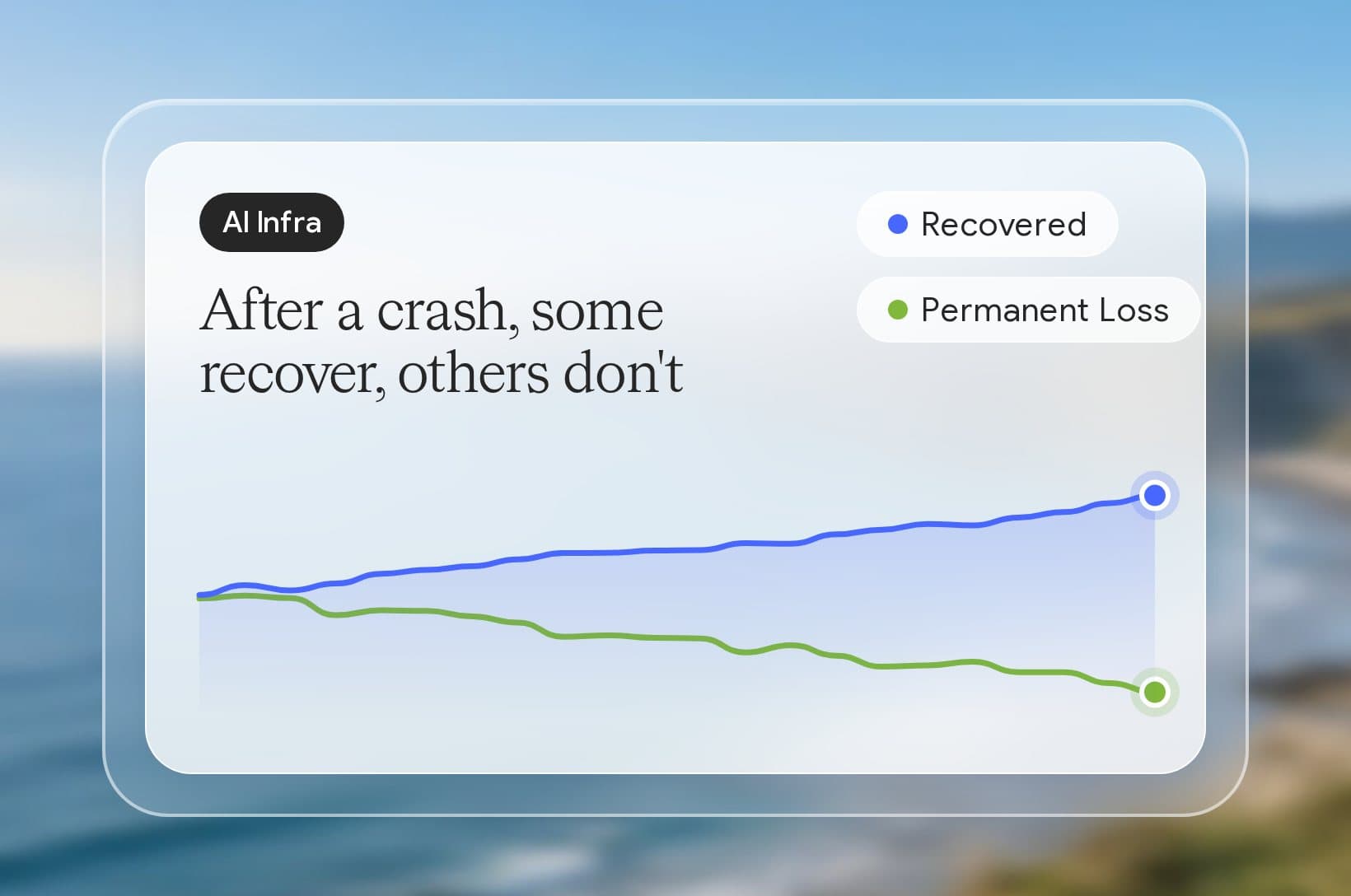
Some stocks suffered enormous drawdowns before recovering within months. Others collapsed and never regained their former value.
With AI infrastructure spending accelerating and parts of the sector under pressure, the historical distinction matters again. Horizon compared major infrastructure busts and semiconductor corrections to examine what separated recoveries from permanent losses.
Semiconductor crashes have often recovered
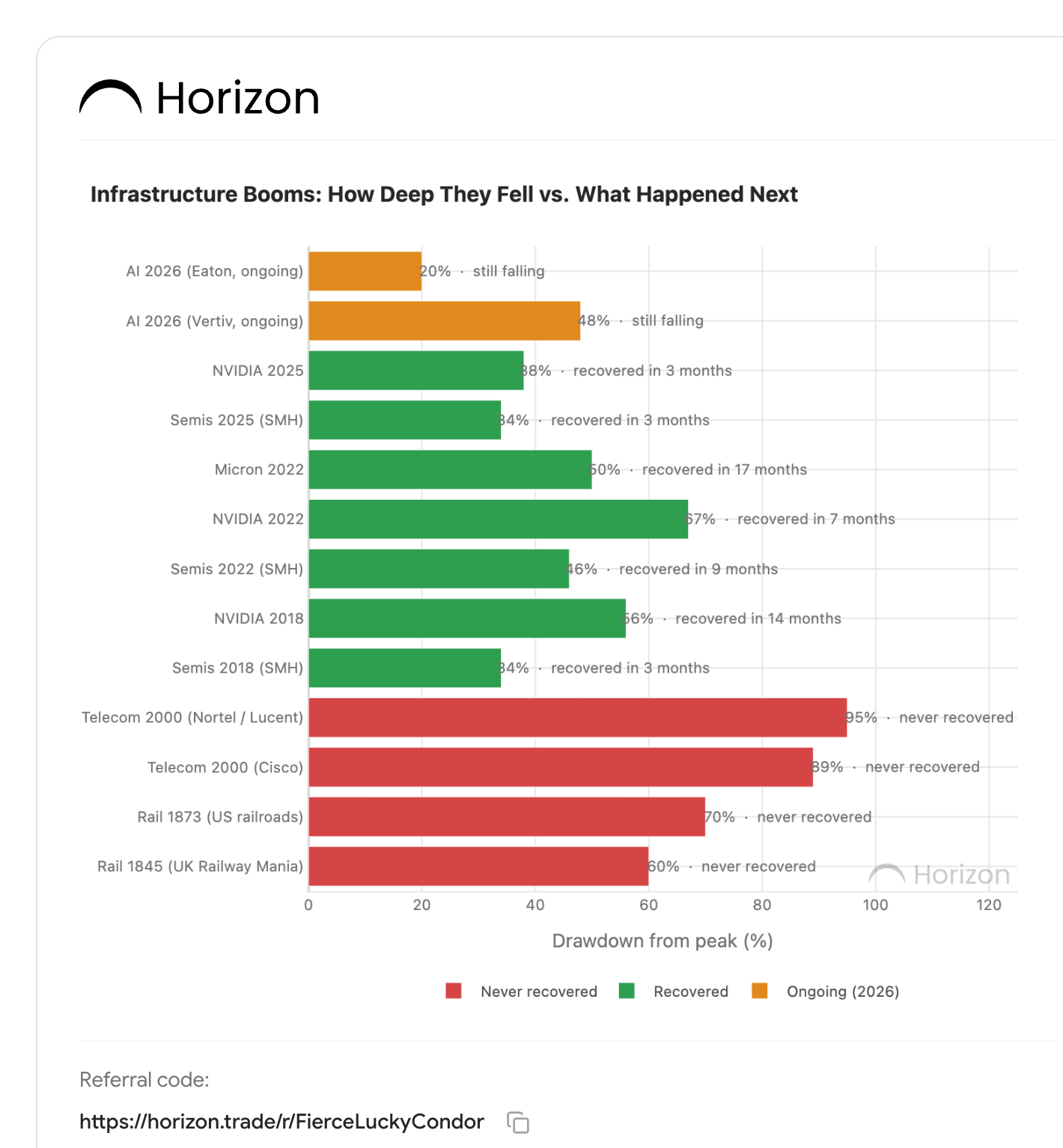
Nvidia fell around 56% during its 2018 downturn and recovered its prior peak roughly 14 months after the trough.
In 2022, Nvidia declined approximately 67% and recovered in seven months. Micron fell around 50% and took roughly 17 months to recover.
The broader semiconductor sector showed a similar pattern. The VanEck Semiconductor ETF (SMH) declined around 46% in 2022 and recovered its former peak in approximately nine months.
During the 2025 selloff, Nvidia declined around 38% and SMH around 34%. Horizon's comparison shows both recovering within approximately three months.
These examples demonstrate how sharp declines in semiconductor shares can coexist with an intact longer-term demand cycle. They do not establish that every future drawdown will recover.
Infrastructure booms do not always end the same way
The telecom investment boom around 2000 provides a different outcome.
The industry built enormous amounts of fibre-optic capacity in anticipation of internet demand. The infrastructure itself was useful, but the investment and financing assumptions were often unsustainable.
Nortel ultimately went bankrupt. Lucent's original equity holders suffered severe losses. Cisco declined approximately 89% from its dot-com peak and took more than two decades to regain that level.
Railway booms in nineteenth-century Britain and the United States offer a similar distinction. Rail networks became essential infrastructure, while many individual companies and investors failed.
The long-term success of a technology does not guarantee a return for the investors who finance its buildout.
AI infrastructure is now facing its own test
The latest AI infrastructure correction raises the same question seen in earlier investment cycles: will demand and cash generation ultimately justify the capital being spent?
Today, major technology companies are still committing substantial capital to AI computing, data centres, power and cooling. The critical question is whether future demand and revenue can support that spending.
The financing matters too. An investment boom supported by durable cash generation is different from one increasingly dependent on debt and optimistic utilisation assumptions.
What to watch next
Three indicators matter more than the drawdown alone.
Customer spending. Are hyperscalers maintaining their capital expenditure plans, or starting to reduce orders?
Funding. Is AI infrastructure investment being financed sustainably through operating cash flow, or is reliance on external borrowing increasing?
Capacity. Are new data centres and computing systems being used profitably, or is supply growing faster than demand?
A falling share price may reflect valuation compression, weakening business fundamentals or both. The distinction matters.
The takeaway
Historical semiconductor corrections show that even 50% to 70% declines can recover when demand remains intact.
Telecom and railway history show the other side: useful infrastructure can still produce permanent losses for shareholders.
The AI buildout is real, but that alone does not make every infrastructure stock attractive after a selloff.
The important question is not simply how far these stocks have fallen. It is whether the cash flows supporting the investment cycle will ultimately justify the capital being spent.
Methodology: Drawdowns are measured from peak to trough. Recovery periods measure the time taken to regain the previous peak. Historical figures are approximate and are not forecasts.
Share this post: