
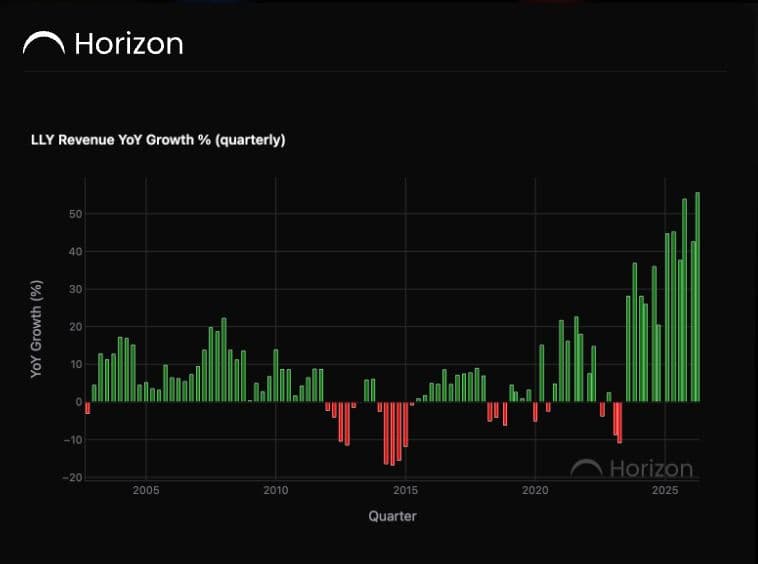
Eli Lilly earnings have become increasingly important to the wider healthcare market.
The company sits at the centre of one of the strongest growth stories in large-cap pharmaceuticals, driven by demand across diabetes and obesity treatments.
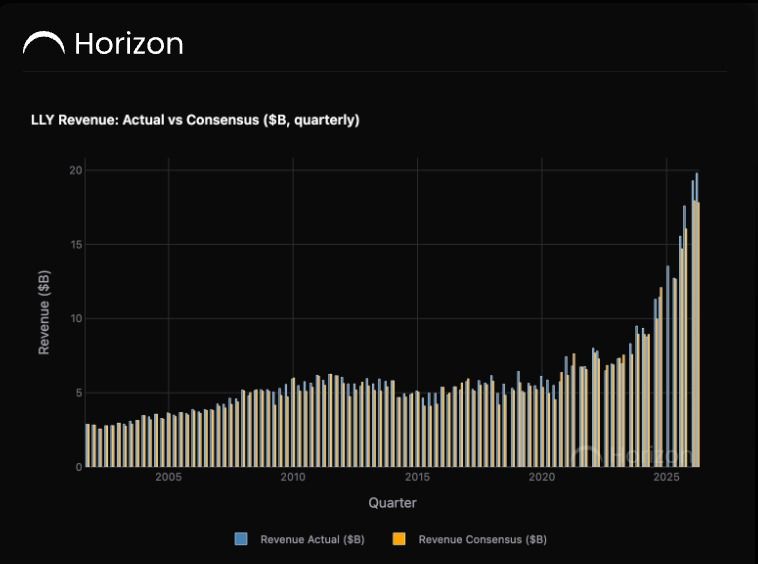
The original research focused on a simple question: how often has Lilly delivered against the expectations already embedded in consensus?
Earnings are about expectations, not just growth
A company can grow rapidly and still disappoint investors.
The stock reacts to the gap between what happened and what the market expected to happen.
That makes consensus estimates the correct benchmark for analysing earnings reactions.
Revenue growth, EPS growth and guidance all matter.
What matters most on the day is the surprise relative to expectations.
Lilly carries unusually high expectations
Fast-growing companies face a different earnings setup from slower businesses.
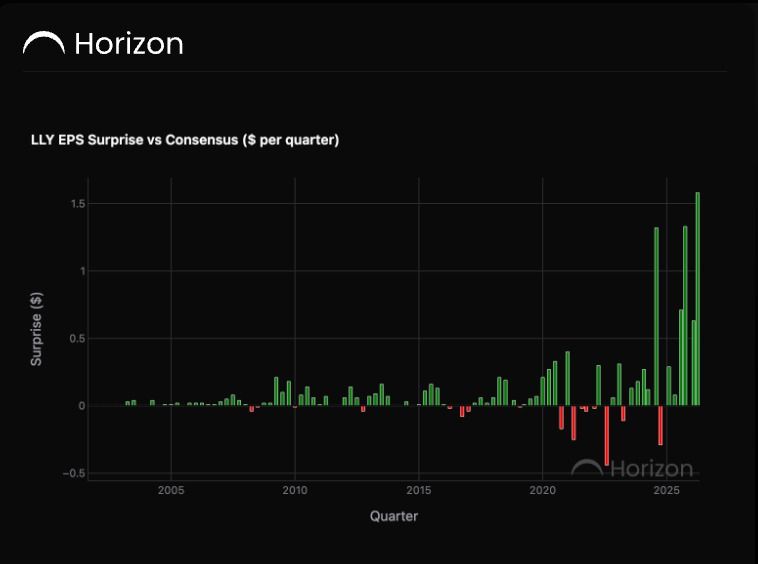
When investors already expect exceptional growth, simply reporting strong numbers may not be enough.
The company may need to beat consensus materially or raise the forward outlook to create a positive surprise.
That is especially relevant for Lilly because a significant part of the valuation depends on continued execution in its highest-growth franchises.
Guidance can matter more than the quarter
For a company in a major product cycle, one quarter is only part of the story.
Investors care about supply, manufacturing capacity, prescription growth, pricing and the pace of future demand.
That means forward guidance can dominate the immediate stock reaction even when the reported quarter beats expectations.
What to take from the historical comparison
The useful framework is to separate three things:
the reported result, the consensus expectation, and the stock's reaction.
A beat is not automatically bullish.
A miss is not automatically bearish.
The size of the surprise and what it implies for the next several quarters matter far more.
The takeaway
Eli Lilly earnings should be viewed as an expectations test.
The company can report exceptional growth and still disappoint if the market expected more.
The historical consensus-versus-actual comparison is useful because it shows how high the bar has become.
For a stock priced around a powerful growth narrative, execution is only half the job.
Surprising the market is the other half.
Share this post: