
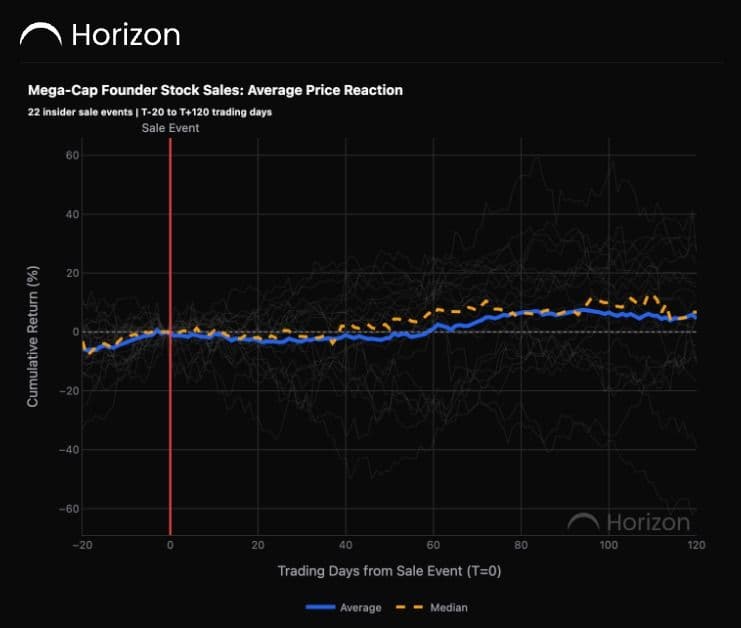
Jeff Bezos sold roughly $4 billion of Amazon stock.
Large founder sales always attract attention because the headline sounds important.
If the person who built the company is selling billions of dollars of shares, investors naturally ask whether that says something about the stock.
The answer is usually less dramatic than the headline.
Founders sell for many reasons
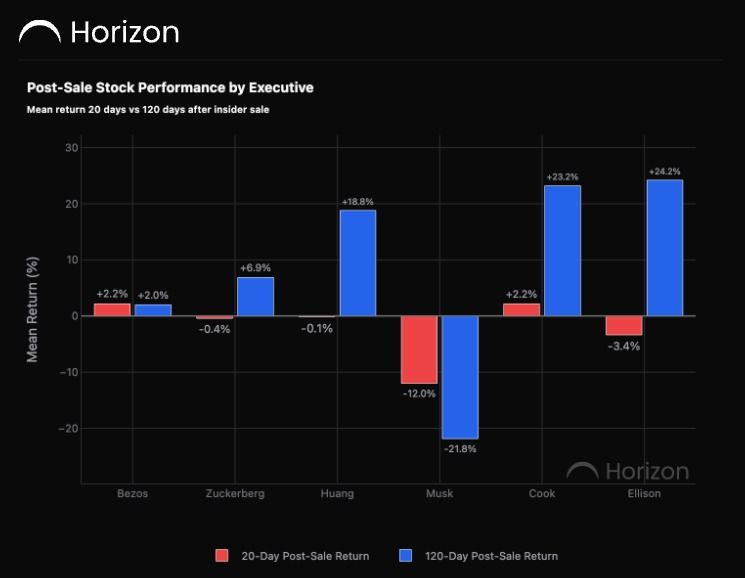
Insider buying is relatively easy to interpret.
An executive is choosing to deploy personal cash into the company.
Selling is different.
Founders sell to diversify, pay taxes, fund philanthropy, finance other investments or simply reduce an extremely concentrated position.
That makes the signal much noisier.
The size of the sale can be misleading
A multibillion-dollar sale sounds enormous in isolation.
For a founder who owns tens or hundreds of billions of dollars of stock, it can still represent a small fraction of the overall holding.
The percentage of the position being sold matters more than the absolute headline value.
So does whether the sale was pre-planned.
Market impact and information signal are different
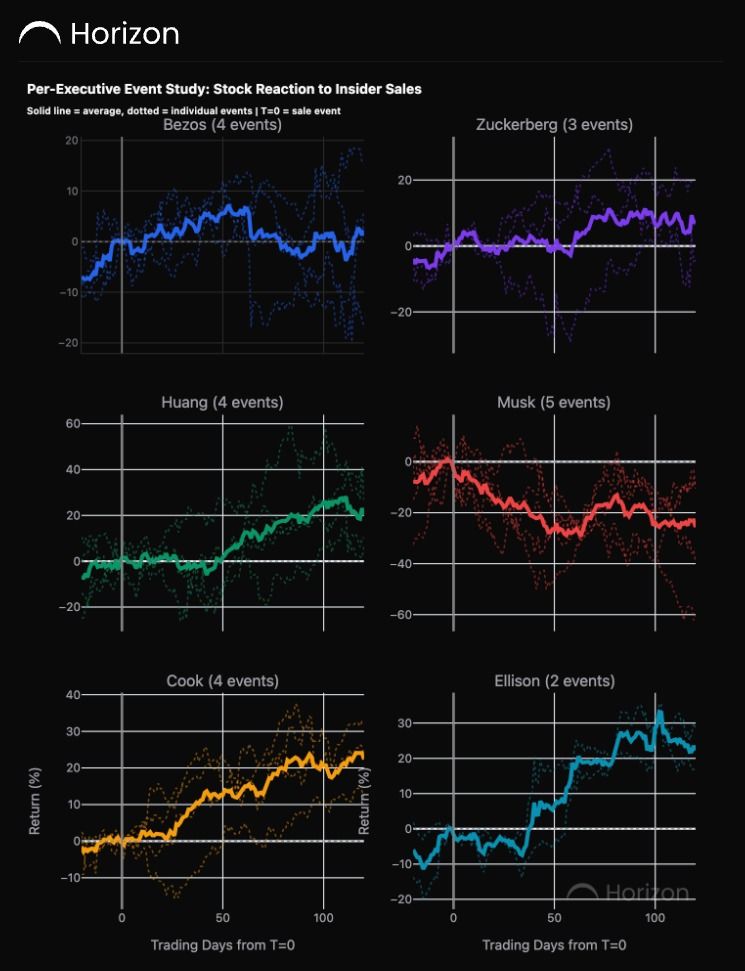
A large sale can create temporary supply in the stock.
That is a market-mechanics issue.
It does not automatically mean the seller has a negative view on the company.
For highly liquid mega-cap stocks such as Amazon, the market can often absorb substantial insider selling without changing the long-term investment case.
Why founder sales still matter
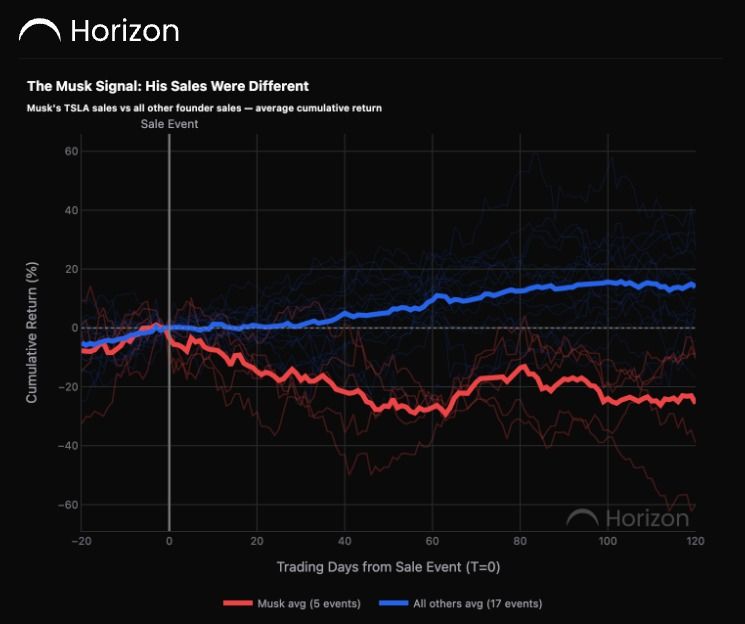
The sales are worth tracking when they become unusual relative to the insider's normal behaviour.
A sudden large disposal outside an established selling programme can carry more information.
Repeated sales are also more relevant if the founder is materially reducing the percentage of the company they own.
Context determines whether the transaction is meaningful.
The takeaway
A large Bezos stock sale is attention-grabbing.
It is not automatically bearish for Amazon.
Founder selling is a much noisier signal than insider buying because there are many legitimate reasons to reduce a concentrated position.
The important questions are how much of the holding was sold, whether the sale was planned, and whether the behaviour changed from the founder's normal pattern.
Share this post: