
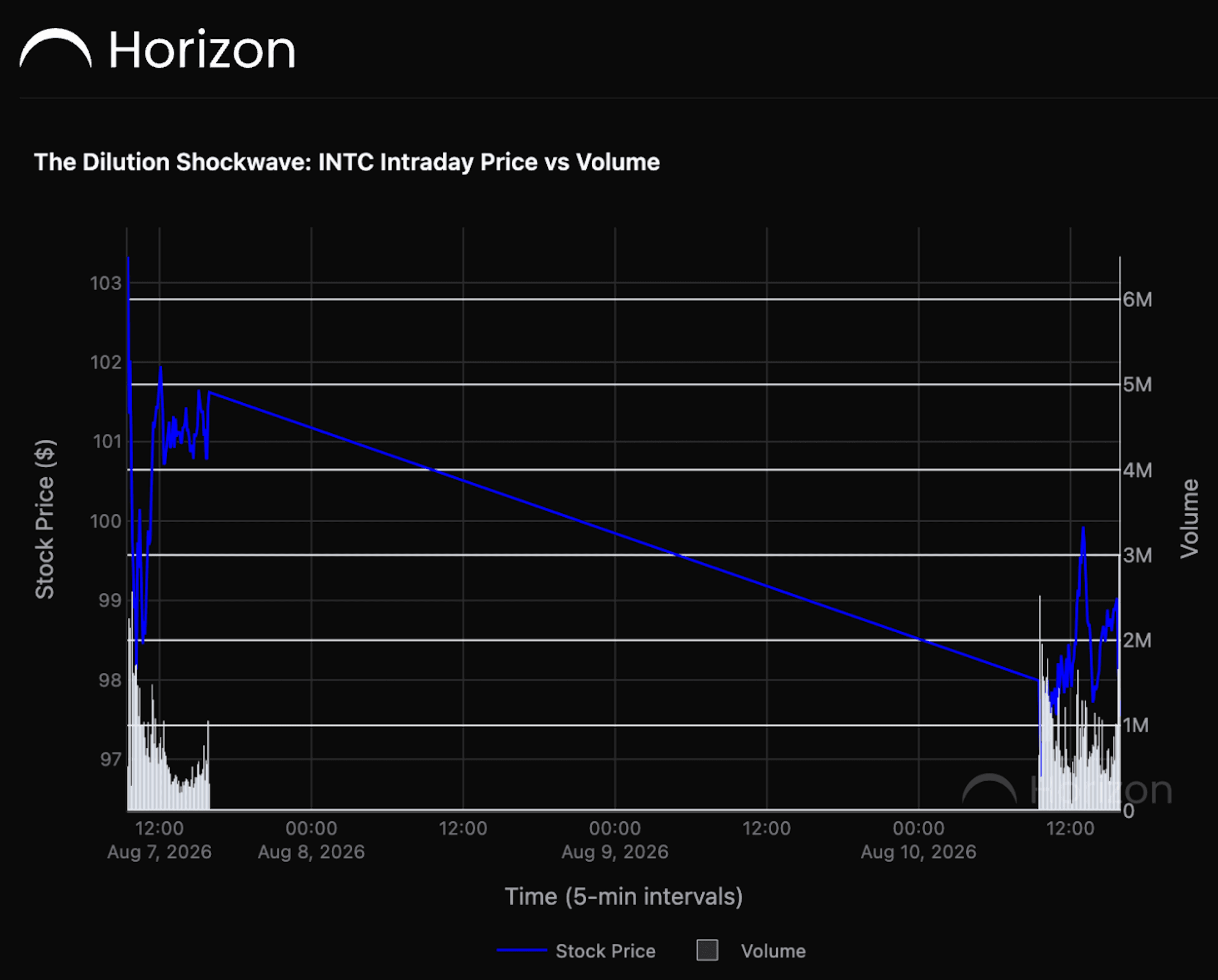
Intel announced a $15 billion underwritten common-stock offering, with an additional $2.25 billion underwriter option.
The market reaction was immediate.
Shares fell roughly 5% pre-market as investors priced in dilution.
The more interesting question is why Intel chose equity at all.
Intel needs enormous amounts of capital
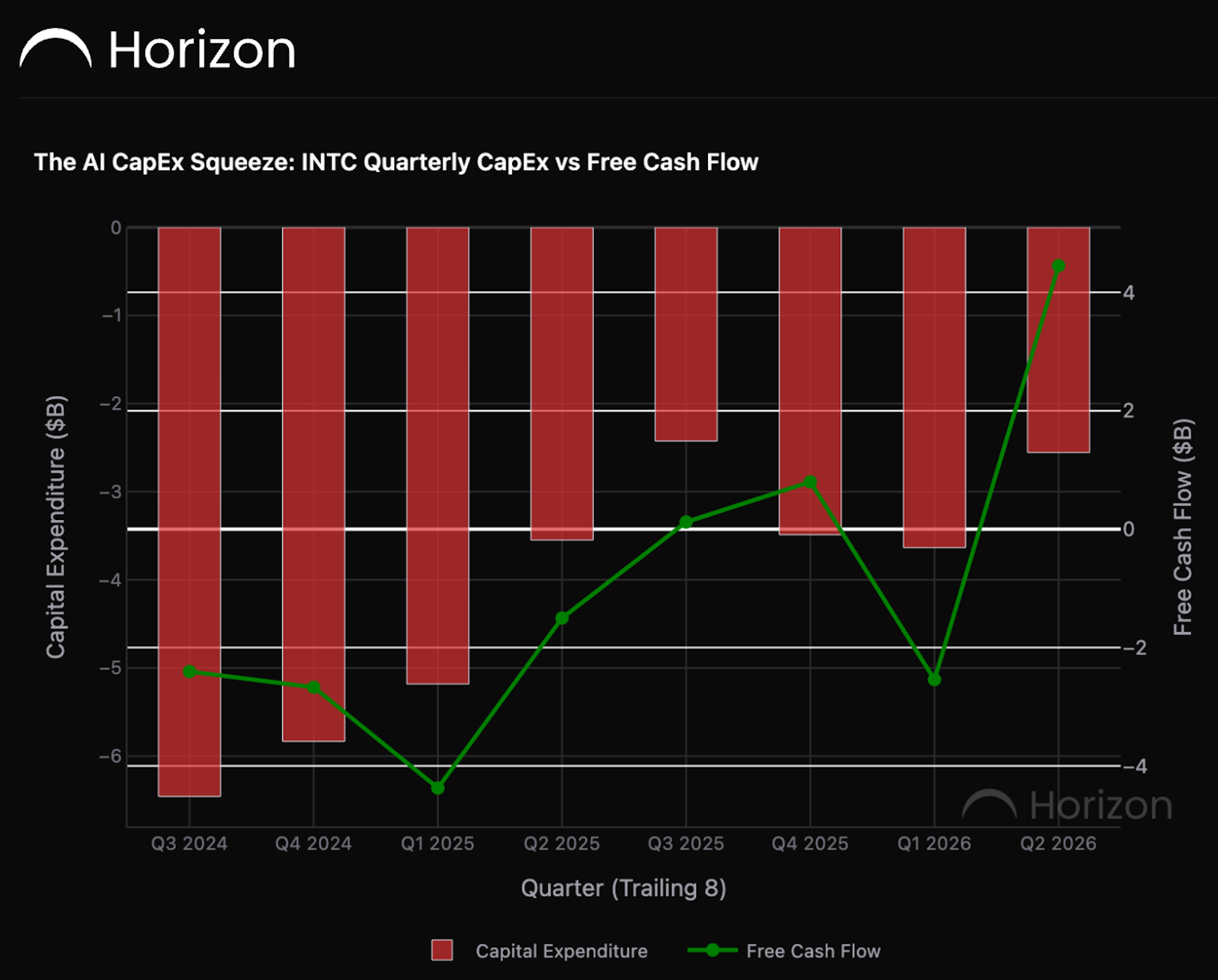
The company is trying to build out foundry capacity while competing in one of the most capital-intensive parts of the semiconductor industry.
That requires tens of billions of dollars in spending.
Intel's operating cash flow alone is not enough to fund the full investment programme without pressure elsewhere on the balance sheet.
Issuing equity therefore gives the company another source of capital without adding the same interest burden as debt.
The cost is dilution
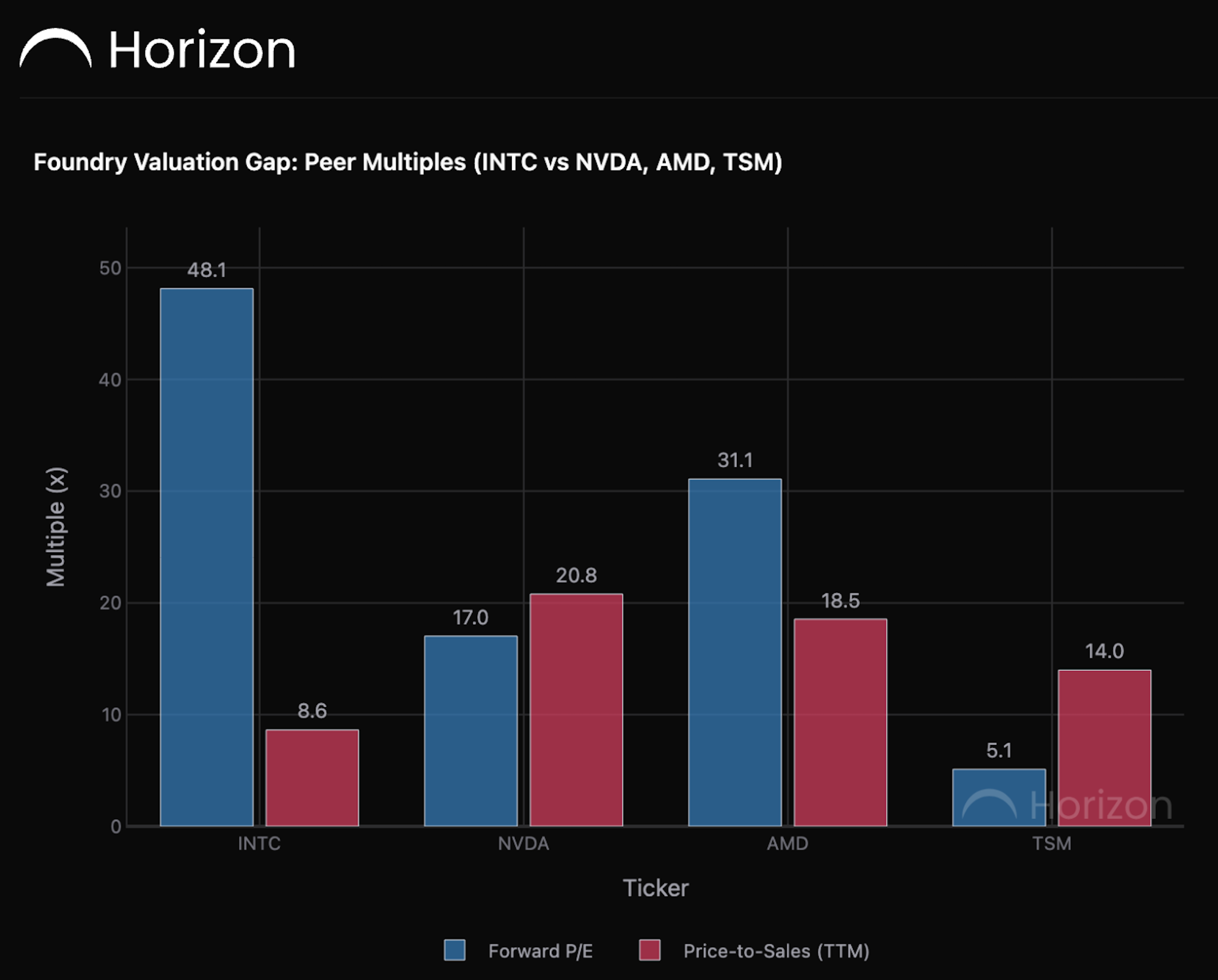
The offering represents roughly 150 million new shares, or around 3% dilution based on the original research.
That is why the first market reaction was negative.
Existing shareholders now own a slightly smaller percentage of the company.
The trade-off is that Intel receives fresh capital to fund the foundry strategy.
Why the timing matters
Intel is raising equity after a major rally in its shares.
That changes the economics.
Issuing stock at a much higher valuation raises more capital for every percentage point of dilution.
From a corporate-finance perspective, selling expensive equity can be more attractive than issuing costly long-term debt.
The market still has to decide whether management is deploying that capital productively.
The foundry model raises the stakes
Intel's strategy depends on winning external customers, executing on process technology and improving the economics of its manufacturing base.
Those are difficult targets.
Heavy capex can create enormous upside if utilisation and customer demand arrive.
It can also destroy returns if capacity comes online late or underused.
That is why the capital raise is not just a dilution event.
It is a funding decision tied directly to the credibility of the foundry turnaround.
The takeaway
Intel's $15 billion equity raise is a clear trade-off.
Shareholders absorb dilution today so the company can fund a capital-heavy strategy without leaning as heavily on expensive debt.
The success of the decision will not be determined by the offering itself.
It will be determined by whether Intel can turn that capital into a competitive foundry business.
Share this post: