
Oracle is heading into earnings after a strong five-day rally while still trading below its 52-week high.
That creates an interesting setup.
The stock has momentum, but it is also recovering from a meaningful drawdown rather than breaking out from a fresh high.
We looked back at Oracle's earnings history to see how similar setups behaved.
Strong momentum into earnings has been rare
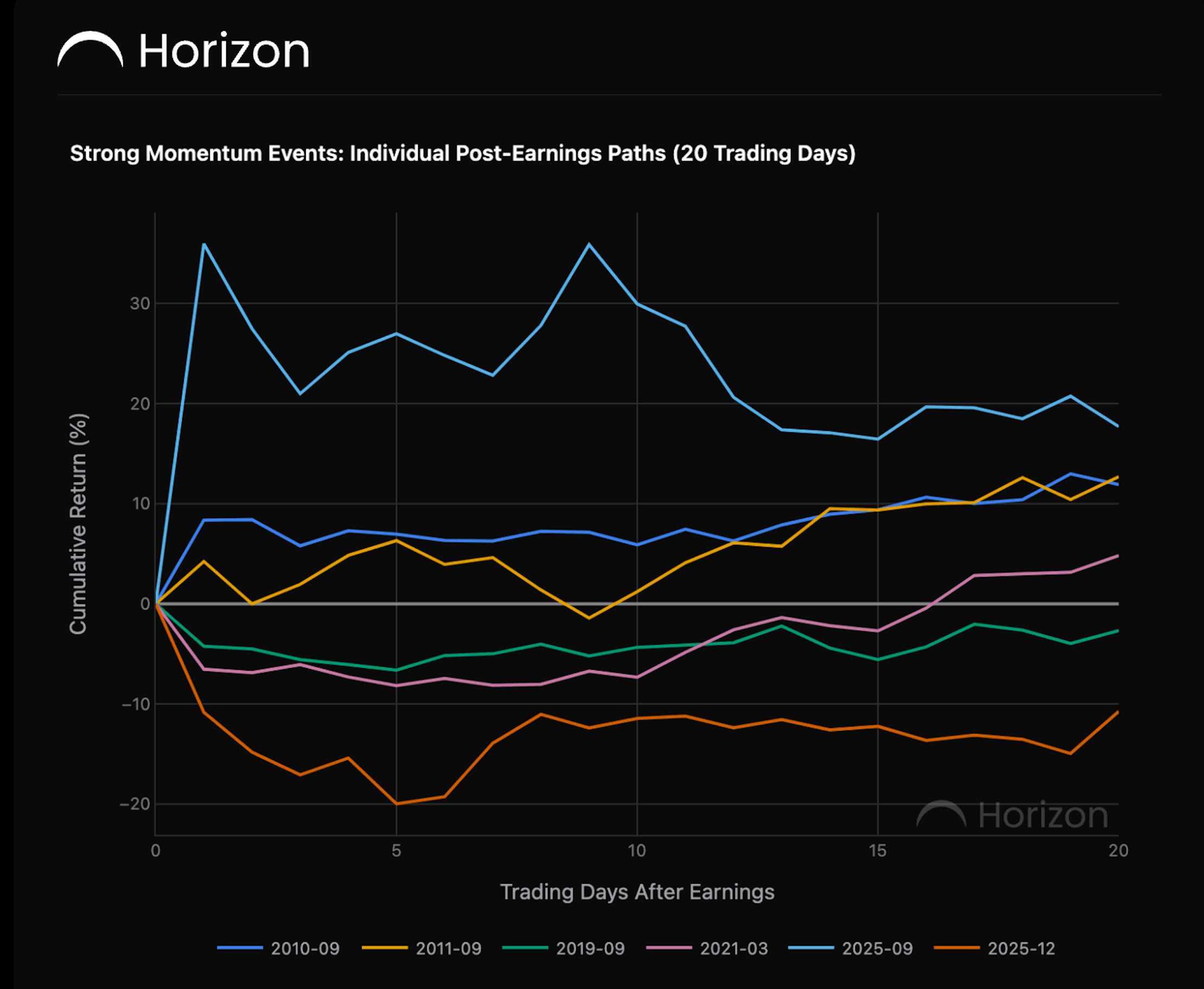
Across 66 Oracle earnings events since 2010, only six came after a five-day rally of at least 5%.
That is a small sample, but it gives us a useful reference point.
The immediate earnings reaction was basically a coin flip.
Only 50% of those events finished positive on the earnings reaction day, and the average return was slightly negative.
So the pre-earnings momentum did not translate into a reliable same-day edge.
The pattern improved after the print
The more interesting result appeared over the following weeks.
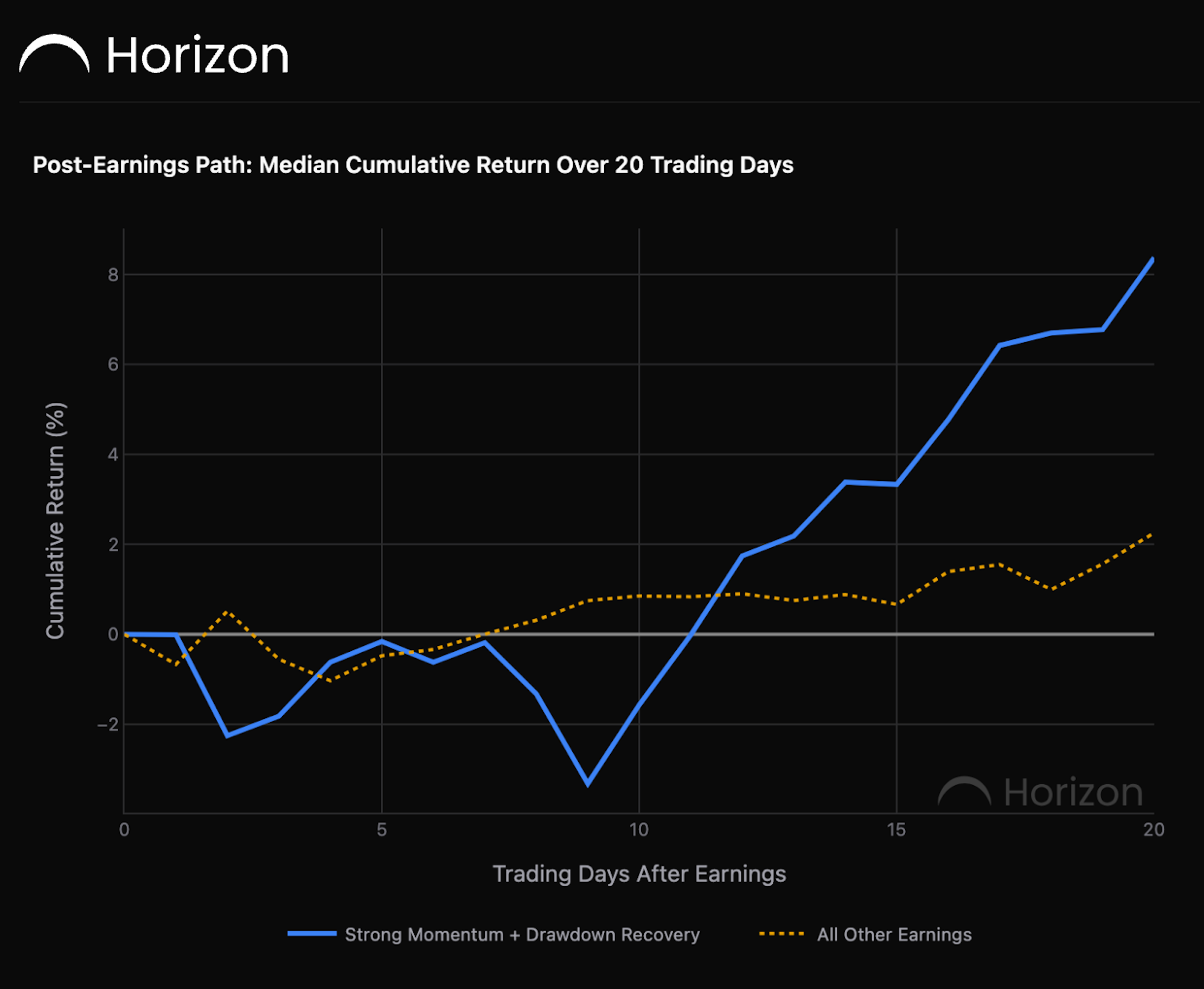
The strong-momentum group averaged +5.62% over the next 20 trading days.
All other Oracle earnings events averaged +1.55% over the same horizon.
The positive hit rate for the strong-momentum group was 66.7%.
That is a very different pattern from the immediate reaction.
Drawdown recovery changes the context
The closest historical setups to today combined three features:
strong short-term momentum, recovery from a drawdown, and a stock still below its 52-week high.
Those cases tended to show initial weakness before a much stronger median path over the following weeks.
That matters because Oracle is not entering earnings from an obviously overextended breakout.
It is still working back toward prior highs.
Why the post-earnings window may matter more
Earnings-day moves are noisy.
A stock can beat, miss, guide higher, guide lower, or simply react to positioning that was already in place before the report.
The one-day outcome often says as much about expectations as it does about the fundamentals.
The two-to-four-week path gives the market more time to process the new information.
In Oracle's historical strong-momentum cases, that is where the better signal appeared.
The takeaway
Oracle's current setup has historically been more interesting as a post-earnings continuation pattern than as an earnings-day bet.
The immediate reaction remains high variance.
The stronger historical result showed up over the following 20 trading days, where strong-momentum setups averaged +5.62%.
For this event, the first move may matter less than what the stock does in the weeks after the print.
Share this post: