Situational Awareness went from a new hedge fund to Goldman Sachs' highest-fee hedge-fund prime brokerage client in roughly two years.
The speed of that rise is what makes the story remarkable.
Launched in 2024 by former OpenAI researcher Leopold Aschenbrenner, the fund built a highly leveraged portfolio around the AI trade. By early 2026, returns had exceeded 400%, helping the fund grow rapidly and become a major Wall Street client.
For Goldman Sachs, that growth turned into a significant financing relationship.
More than $200 million for Goldman
Goldman Sachs has reportedly earned more than $200 million in fees in 2026 from lending to Situational Awareness.
That made the fund Goldman's highest-fee hedge-fund client in its prime brokerage business, according to reporting citing people familiar with the matter.
For a fund launched only in 2024, reaching that position alongside some of the world's largest and longest-established hedge funds is unusual.
But the same leverage that helped amplify the fund's rise also became central to what happened next.
The reversal
In July, a broad selloff in AI and semiconductor stocks hit Situational Awareness's concentrated positions.
The fund's portfolio value fell 67% in July alone.
As losses mounted and leveraged positions came under pressure, Situational Awareness was forced to unwind most of its public-equity portfolio. Most of the book was sold to Citadel.
Despite the scale of the decline, the fund was still up 80% for 2026 at the end of July because its gains earlier in the year had been so large.
The fund subsequently removed leverage from the portfolio.
Wall Street takes notice
The episode did not stop with the fund.
The SEC later sent subpoenas to Wall Street banks that worked with Situational Awareness, seeking information about the fund's trading activity and use of leverage. Goldman Sachs, JPMorgan, Citigroup and Bank of America were among its lenders.
JPMorgan subsequently ended its lending relationship with the fund, while Goldman remained an active broker.
The regulatory inquiries do not themselves imply wrongdoing by the fund or its lenders.
The takeaway
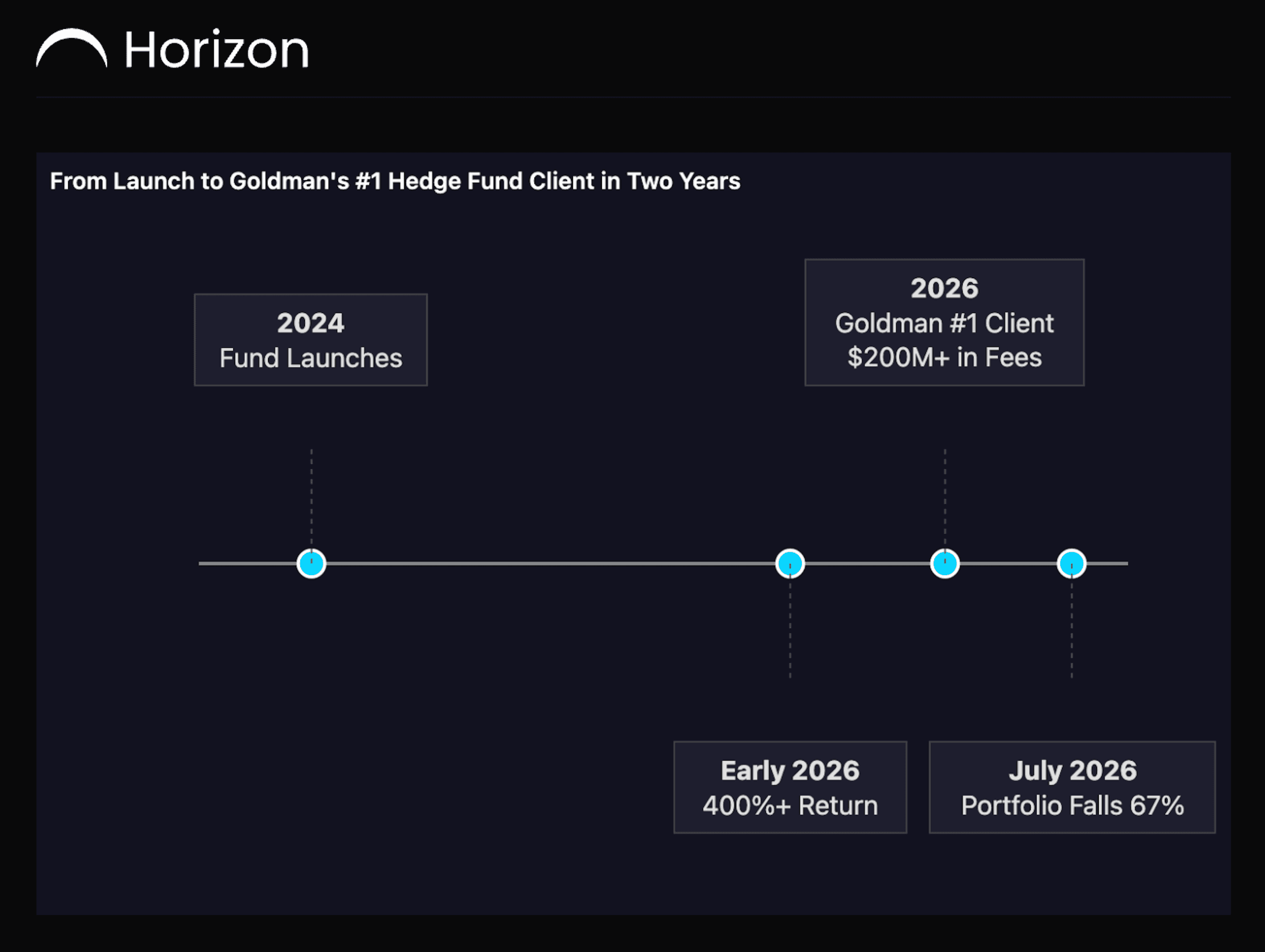
The entire sequence happened remarkably quickly.
2024: Situational Awareness launches.
Early 2026: Returns exceed 400%.
2026: Goldman earns more than $200 million from the relationship, making Situational Awareness its highest-fee hedge-fund prime brokerage client.
July 2026: The portfolio falls 67% in a single month.
It is a striking example of how quickly leverage can transform both sides of a trade.
For Situational Awareness, it helped turn a young fund into one of Wall Street's most important hedge-fund clients.
For Goldman, that same expansion generated more than $200 million in fees before the trade suffered a dramatic reversal.
Share this post: