
The landscape of global finance is undergoing a profound transformation, driven significantly by the adoption of artificial intelligence. Once the exclusive domain of quantitative hedge funds and elite institutions, AI-powered trading is now becoming accessible to a broader cohort of serious, systematic traders. This shift is not merely about automation; it's about harnessing sophisticated computational power to identify nuanced market inefficiencies, validate strategies with unprecedented rigor, and execute trades with unwavering discipline.
Notably, 80% of financial institutions worldwide have either adopted or are actively exploring AI-powered trading systems, a substantial increase from 65% in 2022. This widespread adoption has led to an average reduction of 30% in transaction costs, primarily due to enhanced automation and optimization capabilities. Source: market.us
For systematic traders who seek an edge without the burden of complex coding, navigating the myriad of AI platforms available can be challenging. This report provides an in-depth analysis of what constitutes a superior AI trading platform, dissecting essential features and examining how leading solutions cater to the needs of the intelligent, capitalized individual ready to operate at the next level.
Key Takeaways
- The AI trading platform market is experiencing rapid growth, with a projected CAGR of 20.7%, underscoring its pivotal role in modern finance.
- Advanced AI platforms enable systematic traders to generate strategies without coding, offering accessibility to institutional-grade tools previously reserved for quants.
- Robust, institutional-grade backtesting, including out-of-sample analysis, Monte Carlo simulations, and heatmaps, is critical to validate strategy robustness and prevent overfitting.
- Platforms like TrendSpider and Kavout demonstrate how AI can achieve 95% accuracy in pattern recognition and analyze over 9,000 U.S. stocks daily, respectively, providing data-driven insights.
- The integration of real-time data and multi-asset support is fundamental for systematic traders seeking to deploy diverse strategies across various markets with automated execution.
The AI Revolution in Systematic Trading: A New Paradigm
The integration of AI into trading is not a futuristic concept; it is the present reality that is redefining market participation. Systematic traders, by their very nature, thrive on data-driven decisions and predefined rules. AI augments this approach by offering unparalleled capabilities in data processing, pattern identification, and predictive analytics, far exceeding human capacity.
The market for AI trading platforms is not just growing; it's exploding. Projections indicate a compound annual growth rate (CAGR) of 20.7%, signaling a massive shift in how trading decisions are made. This expansion is driven by the increasing demand for efficient, automated trading solutions that can process vast quantities of market data, identify complex relationships, and execute trades at speeds impossible for humans. The appeal extends beyond traditional institutions; independent systematic traders are increasingly adopting these tools to level the playing field. Source: market.us
This technological leap has tangible benefits. Studies show that 92% of traders utilizing specialized AI tools report making faster and more precise decisions. Furthermore, AI-powered technical analysis can reduce manual chart review time by as much as 70%, allowing traders to focus on strategy development and refinement rather than laborious data interpretation. The implications for efficiency and potential profitability for systematic traders are profound, transforming subjective analysis into objective, quantifiable insights. Source: For Traders
For systematic traders, the actionable takeaway is clear: embracing AI is no longer an option but a strategic imperative. It provides the tools necessary to uncover hidden market dynamics, minimize emotional bias, and operate with the precision required to consistently execute a defined edge.
Essential Features for Systematic AI Trading Platforms

A truly effective AI trading platform for systematic traders must offer more than just basic automation. It must provide a comprehensive suite of tools that support the entire lifecycle of strategy development, validation, and deployment. These core capabilities differentiate leading platforms from rudimentary ones.
AI-Powered Strategy Generation: From Idea to Algorithm
For systematic traders who possess deep market insight but lack programming expertise, the ability to translate conceptual strategies into executable algorithms without writing a single line of code is revolutionary. Platforms that excel in AI strategy generation empower users to define parameters, indicators, and rules through intuitive interfaces, allowing the AI to construct the underlying logic. This democratizes algorithmic trading, moving it beyond the realm of quants and making it accessible to a broader pool of intellectual capital.
One notable example is the emphasis on pattern recognition and forecasting. Tickeron, for instance, leverages AI to scan markets in real-time for chart patterns and trade setups, offering trade signals across crypto, stocks, and options. Similarly, TrendSpider automates the identification and drawing of trendlines, detects over 150 candlestick patterns, and recognizes dozens of classic chart patterns with an impressive 95% accuracy, significantly reducing human error and manual analysis time. These capabilities are crucial for systematic traders whose strategies often hinge on repeatable patterns. Source: Koinly, Source: For Traders
The practical insight for systematic traders is to seek platforms that provide robust, AI-driven strategy builders capable of transforming their ideas into actionable algorithms, bypassing the traditional coding barrier.
Institutional-Grade Backtesting & Robustness
The foundation of any systematic trading strategy is its statistical edge, and this edge must be rigorously proven before real capital is committed. Superficial backtesting, which merely tests a strategy against historical data without proper statistical validation, is a common pitfall that can lead to catastrophic results in live markets. Truly robust platforms offer institutional-grade backtesting that goes far beyond simple performance metrics.
Key components of institutional-grade backtesting include:
- Out-of-Sample Backtesting: Testing a strategy on data not used during its development or optimization phase to gauge its true predictive power and avoid overfitting.
- Monte Carlo Simulation: Running hundreds or thousands of simulations with randomized variations in market conditions to understand the probabilistic range of outcomes and assess a strategy's resilience under diverse scenarios.
- Heatmaps and Sensitivity Analysis: Visualizing how strategy performance changes across a range of input parameters, allowing traders to identify optimal settings and understand the robustness of their chosen parameters.
- Detailed Performance Metrics: Beyond raw returns, metrics like Sharpe Ratio, Sortino Ratio, maximum drawdown, and recovery factor are essential for a comprehensive risk-adjusted performance assessment.
Platforms designed for serious traders, such as MetaStock, a professional-grade desktop charting and technical analysis software, have emphasized comprehensive system development and backtesting for over 30 years, offering an industry-leading library of over 275 technical indicators. This depth allows for intricate strategy testing and forecasting. Source: Pragmatic Coders
The actionable takeaway is to demand platforms that offer multi-faceted, rigorous backtesting tools, as these are indispensable for validating genuine edge and building confidence in automated strategies.
Multi-Asset & Real-Time Data Capabilities
Diversification across asset classes and the ability to react to market shifts in real-time are paramount for systematic traders. A superior AI trading platform should offer comprehensive support for various asset classes, including stocks, forex, cryptocurrencies, futures, and options, all within a unified interface. This enables traders to build diversified portfolios of strategies and adapt to evolving market opportunities.
Real-time data feeds are equally critical for timely decision-making and execution. Platforms like MetaStock R/T integrate with professional-grade data feeds such as Refinitiv XENITH, ensuring that day traders have access to current market information. Trade Ideas, a long-established provider since 2003, offers real-time market scanning with dozens of pre-configured channels, though it focuses exclusively on U.S. equities and ETFs. Kavout provides its AI Stock Picker, which analyzes over 9,000 U.S. stocks daily, along with crypto and ETF screening capabilities, demonstrating multi-asset AI utility. Source: Pragmatic Coders, Source: StockBrokers.com, Source: market.us
Furthermore, innovative features like multi-timeframe analysis, seen in platforms like TrendSpider, allow users to overlay indicators and trendlines from various timeframes (e.g., weekly, daily, hourly) onto a single chart, revealing deeper market context vital for systematic strategy design. Source: Pragmatic Coders
For systematic traders, the actionable insight is to prioritize platforms that offer extensive multi-asset support coupled with reliable, real-time data integration, ensuring their strategies can be applied broadly and react instantly to market conditions.
A Comparative Look at Leading AI Trading Solutions
Many platforms integrate AI to some degree, but their focus and capabilities vary significantly. For the systematic trader, understanding these distinctions is key to selecting the most appropriate tool.
Kavout: AI-Powered Quantitative Insights
Kavout stands out with its sophisticated AI engine, "Kai," designed to score and rank investment opportunities. Its strength lies in providing quant-style screening and modeling for equities, crypto, and ETFs. Kavout's focus on institutional and systematic investors makes it particularly useful for those seeking data-driven insights to generate an edge. The platform's AI Stock Picker analyzes an extensive universe of over 9,000 U.S. stocks daily, assisting investors in identifying potential opportunities with precision. While powerful for insights, detailed strategy backtesting and direct automated execution might require additional integrations. Source: Koinly, Source: market.us
Tickeron: Pattern Recognition and AI Signals
Tickeron emphasizes AI pattern recognition and forecasting, making it highly attractive for technical systematic traders. It provides real-time market scanning for chart patterns and trade setups across crypto, stocks, and options. The platform also offers virtual trading for strategy testing and a community for AI-generated portfolios. While strong on signal generation and pattern identification, its depth in institutional-grade backtesting metrics and multi-market real-time execution across diverse asset classes might require closer scrutiny for highly complex systematic approaches. Source: Koinly
Trade Ideas: Real-time Scanning and Automation
Trade Ideas, established since 2003, is built for active, systematic day traders. It features the powerful HOLLY AI system and the "OddsMaker," a point-to-click backtesting tool that allows traders to test ideas without programming. Its strength lies in real-time market scanning and the ability to automate scanned strategies through Brokerage Plus with brokers like Interactive Brokers and E*Trade. However, Trade Ideas primarily focuses on U.S. equities and ETFs, limiting its utility for traders engaged in forex, futures, or broader crypto markets. Its interface can also present a steep learning curve for new users. Source: StockBrokers.com
MetaStock: Desktop Powerhouse for System Development
MetaStock is a professional-grade desktop software, revered for its comprehensive analytical toolkit, including over 275 technical indicators and advanced charting. It's designed for in-depth system development, backtesting, and forecasting, favored by swing and position traders. The R/T version integrates with Refinitiv XENITH for real-time data, catering to day traders. While MetaStock provides immense power for detailed strategy building and traditional backtesting, its desktop-only nature and focus on traditional charting might not appeal to traders seeking web-based, AI-driven strategy *generation* without prior coding or technical analysis knowledge. Source: Pragmatic Coders
TrendSpider: Automated Technical Analysis with AI
TrendSpider automates the heavy lifting of technical analysis with impressive accuracy. It automatically identifies trendlines, candlestick patterns (172 types), and chart patterns (54 types), achieving a 95% accuracy rate in pattern recognition. Its multi-timeframe analysis is a key innovation, allowing deeper market context. The platform also features Sidekick AI, powered by advanced language models like Claude 4 and GPT-5, for detailed chart reviews and fundamental analysis. TrendSpider is a robust choice for systematic traders whose strategies rely heavily on automated technical analysis, though its direct strategy generation and advanced backtesting simulations might not be as explicit as platforms designed purely for algo development. Source: For Traders
Other platforms, such as Pionex, 3Commas, and CryptoHopper, cater primarily to cryptocurrency traders and often focus on pre-built bots or copy trading. While useful for beginners or specific crypto strategies, they generally lack the depth of institutional-grade backtesting, multi-asset strategy generation, and comprehensive analytical tools required by serious systematic traders. Source: YouTube
The actionable insight for systematic traders is to meticulously evaluate each platform's core competencies against their specific trading methodology, desired asset classes, and the level of analytical depth required for validating their edge.
The Imperative of Institutional-Grade Backtesting and Robustness
For systematic traders, the true measure of an AI trading platform's value lies in its ability to validate a strategy's robustness under various market conditions, not just its ability to identify patterns. The allure of AI-driven strategy generation can lead to a false sense of security if the validation process is not rigorous.
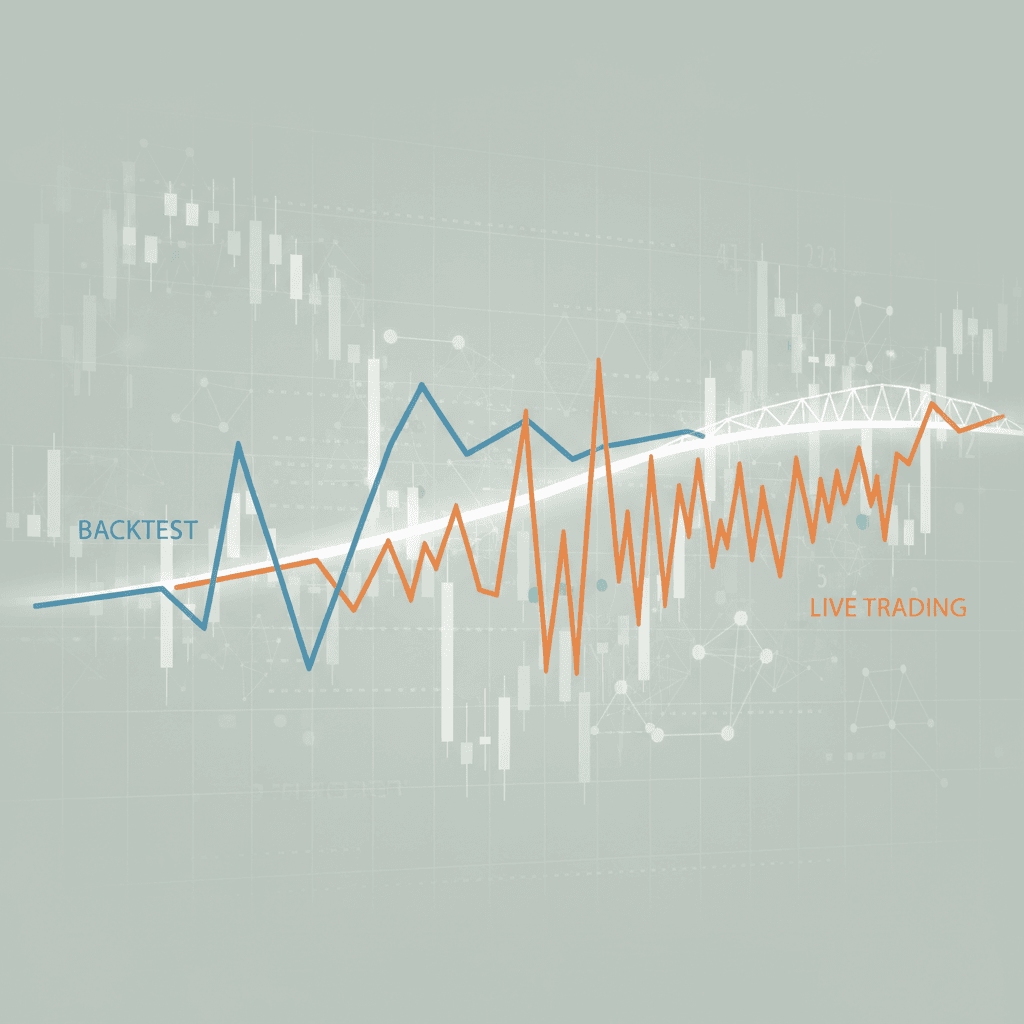
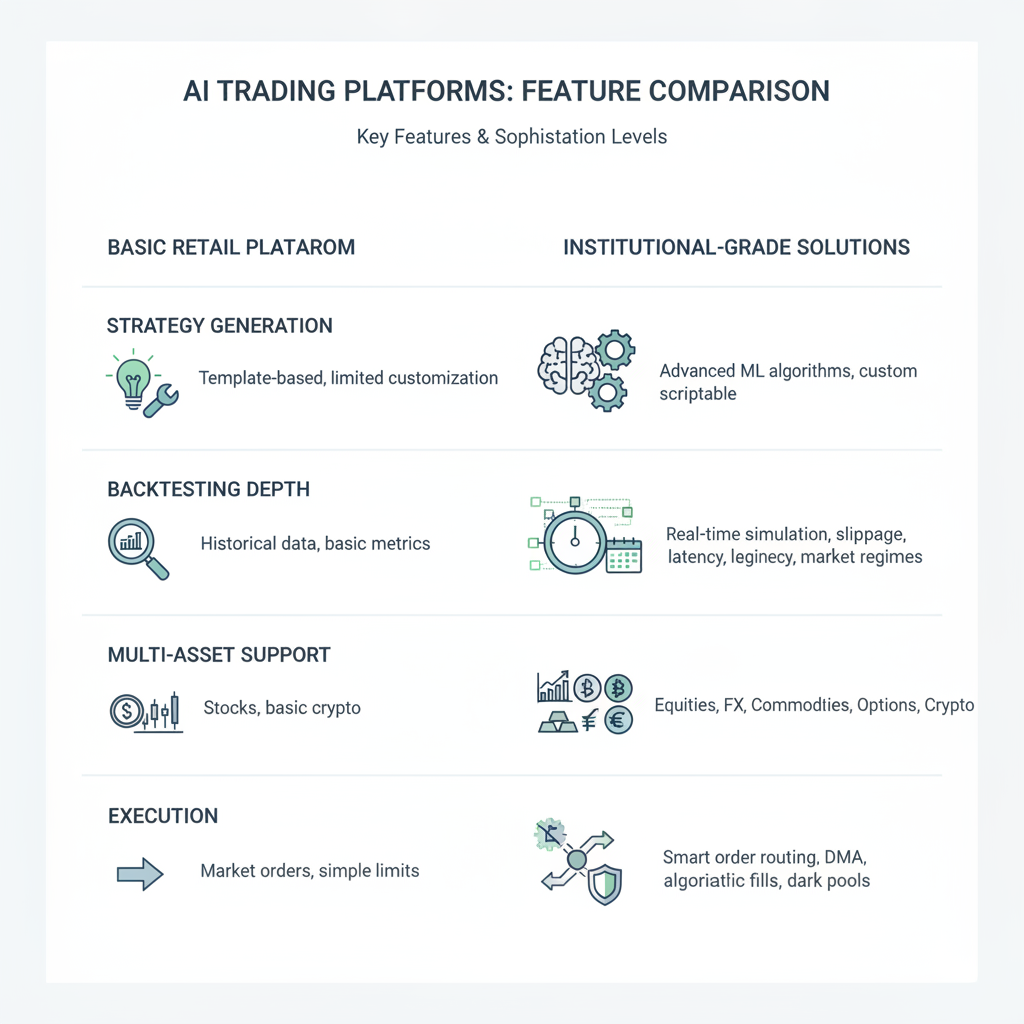
Many retail-oriented platforms offer basic backtesting, showing a strategy's performance on historical data. However, this often provides an overfitted result, where the strategy performs well only on the specific data it was optimized on. This is where institutional-grade backtesting—featuring out-of-sample testing, Monte Carlo simulations, and sensitivity analysis with heatmaps—becomes a non-negotiable. These advanced methods expose potential weaknesses, measure statistical significance, and provide a realistic understanding of a strategy's risk profile and expected performance in unforeseen market environments.
Without such rigorous validation, even the most innovative AI-generated strategy is merely an untested hypothesis. Systematic traders operate on probabilities and statistical edges, and these require proof beyond a simple equity curve on past data. The ability to simulate countless market futures through Monte Carlo analysis, or to see how a strategy breaks down when parameters are slightly tweaked via a heatmap, is what separates a truly robust system from a fragile one.
The actionable takeaway is that systematic traders must demand comprehensive backtesting capabilities that go beyond basic historical performance. A platform's true strength is measured by its ability to rigorously validate strategies, ensuring they are truly robust and not just victims of curve-fitting.
How Horizon Addresses This
For serious traders who think systematically but cannot code, the challenge has always been bridging the gap between strategic insight and automated, disciplined execution. Traditional retail apps treat trading like a gamble, while institutional terminals require a dedicated quant team. Horizon is built for the professional in the middle—intelligent, capitalized, and ready to operate at the next level.
Horizon directly addresses the pain points discussed by offering an AI-powered algorithmic trading platform that transforms your trading ideas into automated strategies without requiring any coding. Our platform empowers you to:
- Generate Custom Trading Strategies with AI: Simply articulate your edge or idea, and our AI assists in building a custom strategy, democratizing algorithmic development.
- Conduct Institutional-Grade Backtesting: Validate your strategies against historical market data with unparalleled depth, including detailed performance metrics, out-of-sample backtesting, Monte Carlo simulations for robustness, and heatmaps to explore parameter sensitivity. This ensures your strategy is genuinely robust and not overfitted.
- Deploy and Monitor with Confidence: Connect seamlessly with your broker for automated live trading and monitor performance with real-time analytics, maintaining complete control over your capital and strategies across multi-asset classes including stocks, forex, crypto, futures, and options.
- Leverage a Strategy Marketplace: Access a community of proven strategies, or sell access to your own, building a verifiable reputation based on real performance.
By providing an institutional-grade toolkit accessible without coding, Horizon empowers systematic traders to transform their unique edge into disciplined, automated execution, moving beyond the limitations of manual trading and less sophisticated platforms.
Conclusion
The evolution of AI trading platforms marks a pivotal moment for systematic traders. The tools once exclusive to large institutions are now becoming accessible, allowing individuals to leverage sophisticated algorithms for strategy generation, rigorous backtesting, and automated execution. While many platforms offer AI features, the discerning systematic trader must prioritize those that provide institutional-grade validation, multi-asset support, and a genuinely intuitive interface that eliminates coding barriers. The future of systematic trading is one where human insight, augmented by AI, drives unprecedented efficiency and precision. To explore how you can elevate your trading to the next level, visit Horizon and discover the power of AI-driven systematic trading.
Sources
- 10 Best AI Trading Apps (June 2026) - Koinly
- Top AI Trading Tools in 2026 - Pragmatic Coders
- 3 Best AI Trading Bots for 2026 - StockBrokers.com
- AI Trading Platform Market Size, Share | CAGR of 20.7% - market.us
- Best AI for Trading (I Tested Them All) - YouTube
- AI Trading Tools That Actually Work (2025 Edition) - For Traders
- Best AI Trading Bots for Beginners (Top 3 Platforms 2026) - YouTube
Share this post: